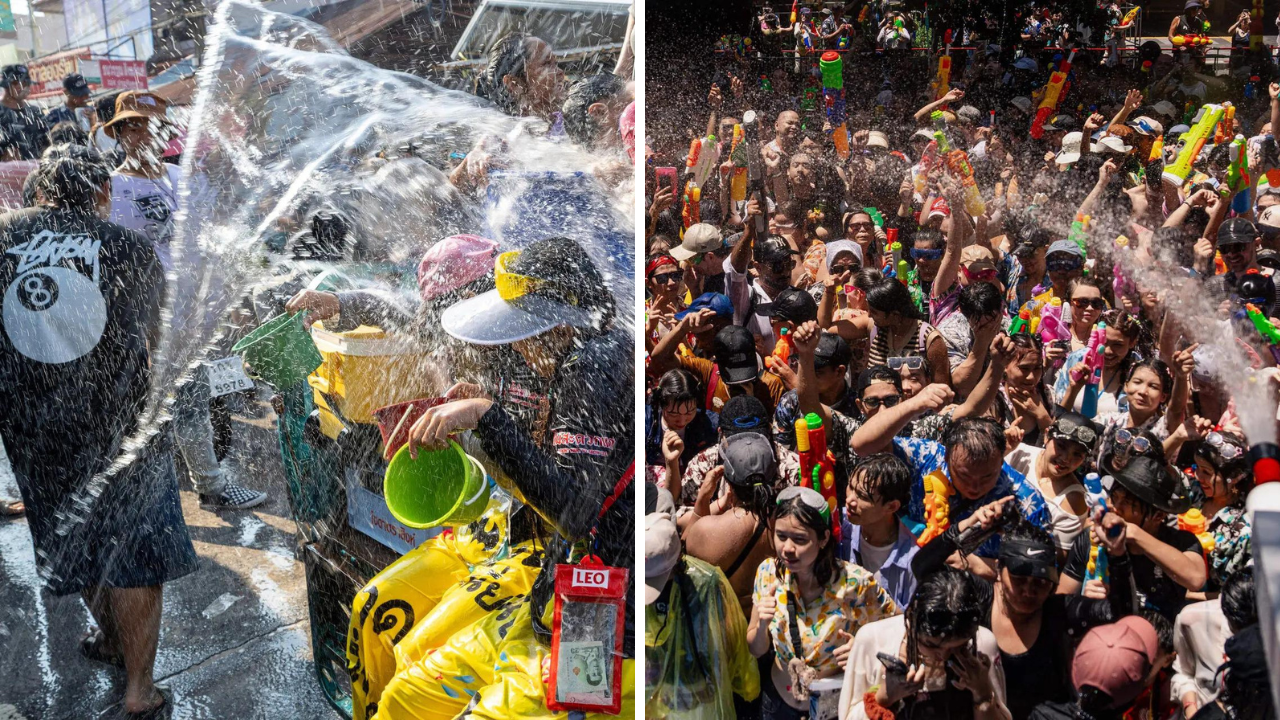
Water guns are pumping and the streets are soaked, but the carnage on the asphalt tells a different story. Thailand's Songkran festival, famously dubbed the world’s largest water fight, just wrapped up its first five days with a staggering 191 deaths. While tourists see a giant party, the Thai government sees a logistical nightmare known as the "Seven Dangerous Days." This isn't just a bad luck streak. It's a systemic collision of tradition, alcohol, and millions of people rushing home at once.
If you’re wondering why a New Year celebration turns into a survival gauntlet, look at the numbers. Between April 10 and April 14, 2026, there were 951 recorded road accidents. That’s nearly 200 crashes every single day. Most news outlets focus on the spectacle of the water fights in Bangkok or Chiang Mai, but the real tragedy happens on the provincial highways and local village roads where visibility is low and the stakes are high.
The math behind the chaos
Don't let the "water fight" label fool you into thinking these deaths are from drowning or festival mishaps. This is a road safety crisis. Statistics from the Road Safety Directing Centre show that speeding is the number one killer, accounting for about 38.5% of accidents this year. Drink-driving follows closely behind at 28%.
Check out the breakdown of what's actually happening on the ground:
- Motorcycles are death traps: Nearly 75% of all accidents involve motorbikes.
- The prime danger zone: Most crashes happen between 3:00 PM and 6:00 PM when the sun is going down and the partying is at its peak.
- Bangkok leads the toll: The capital recorded 16 deaths, the highest in the country so far.
- Young lives lost: People aged 20 to 29 are the most frequent victims.
It’s easy to blame the drivers, but the environment is rigged against them. During Songkran, "water play" zones often spill over onto main roads. Imagine driving a scooter at 50km/h and suddenly getting hit in the face with a bucket of ice water. It’s not just a prank; it’s a recipe for a wipeout.
Why the Seven Dangerous Days never get safer
Every year, authorities set up thousands of checkpoints. They promise "strict enforcement" and "zero tolerance." Yet, the death toll remains high. In 2025, the festival claimed 253 lives. We’re currently on track to hit similar numbers by the time the seventh day concludes.
The problem is cultural as much as it is legal. Songkran isn't just about water; it's about Sanuk—the Thai concept of fun. For many, that fun includes heavy drinking. When you combine alcohol with the frantic "homecoming" rush where millions of people leave Bangkok simultaneously, the infrastructure simply buckles. Straight roads and local village paths see the most fatalities because drivers feel "safe" enough to speed or skip the helmet. Honestly, it’s a miracle the number isn't higher given the sheer volume of traffic.
Local hotspots for accidents
Phrae province currently holds the grim title for the highest number of cumulative accidents (45) and injuries (47). While the big cities get the media coverage, these smaller provinces struggle with less-regulated local roads and fewer emergency response teams.
How to stay alive during the festival
If you're in Thailand during this period, you need to change how you move. Don't assume that because it's a holiday, the roads are empty. They're the opposite.
- Avoid motorcycles entirely. If you must use one, wear a helmet with a visor. A face full of water at high speed will blind you instantly.
- Stay off the roads after 3:00 PM. This is when the "drunk-driving window" opens.
- Use public transport. Stick to the BTS or MRT in Bangkok. For long distances, take the train rather than a private van or bus.
- Expect the unexpected. Pedestrians will jump into the street to splash your car. Drivers will stop abruptly to engage in a water battle.
The government has deployed the 1784 hotline for emergencies, and if you’re witnessing a crash, you should use it. But the best strategy is simply to stay put once the water starts flying.
The economic cost of the party
There’s a weird tension here. Thailand expects over 500,000 foreign tourists this year, generating billions of baht in revenue. The festival is a massive win for the economy. But how do you quantify the cost of nearly 200 lives in less than a week?
Authorities are now pushing for "Family Checkpoints," where relatives are encouraged to stop their loved ones from driving if they've been drinking. It’s a grassroots attempt to solve a problem that heavy-handed policing hasn't fixed. Whether it works depends on whether the desire for Sanuk can be tempered by a bit of common sense.
If you’re planning to travel back to the city, do it early or wait until the 17th. The final day of the "Seven Dangerous Days" is usually the bloodiest as everyone rushes back to work. Don't be part of the statistic. Stay off the highways, keep your eyes on the road, and remember that a bucket of water is the least of your worries on a Thai highway.