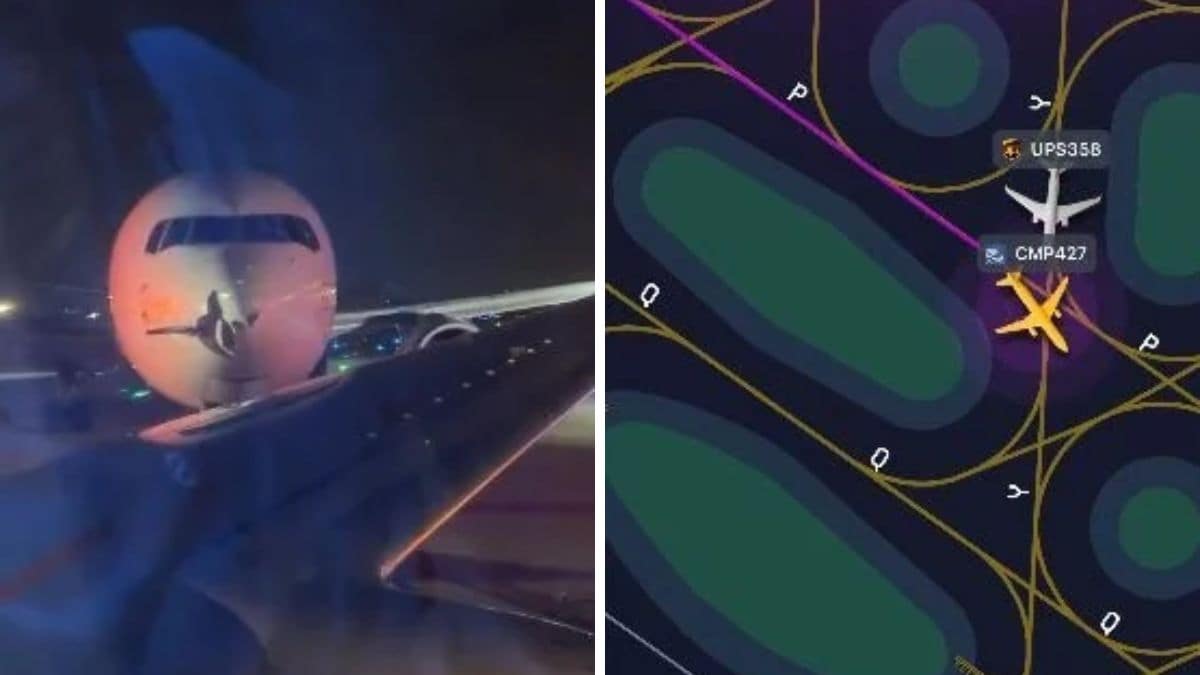
When a pilot keys the microphone on a live ground frequency and says, "Somebody hit us," aviation safety systems have already failed multiple times over. Ground collisions between cargo aircraft and passenger jets at major hubs like Miami International Airport rarely come down to a single blind spot or one distracted operator. They happen because modern commercial ramps operate at razor-thin margins of physical space, compressed turnaround schedules, and divided operational authority between air traffic control and private ground handlers.
The competitor’s headline captures the visceral shock of metal tearing into metal on an active tarmac. What it misses is the systemic pressure cooker underneath every major international hub. Miami handles a staggering volume of both international passenger traffic and heavy freight, creating an operational environment where widebody freighters and narrowbody airliners routinely share congested taxiways, tight alleyways, and poorly lit ramp aprons.
The Anatomy Of A Tarmac Collision
Aviation gets most of its public scrutiny at thirty-five thousand feet, yet a massive percentage of hull damage and aircraft downtime occurs at speeds under fifteen knots. On the ground, a commercial jet is essentially a massive, fragile aluminum tube with limited cockpit visibility and massive blind spots behind the flight deck.
Pilots sitting in the cockpit of a commercial airliner cannot see their own wingtips. On large cargo aircraft, the forward fuselage sits high off the pavement, creating a blind zone extending dozens of feet directly in front of the nose gear. Once an aircraft leaves the active runway and enters the non-movement area—the ramp and gate aprons—control shifts away from Federal Aviation Administration air traffic controllers.
In these non-movement zones, movement relies on airline ramp controllers, third-party ground handlers, and visual wing-walkers. Communication fragments across different radio frequencies. A cargo flight crew might be talking to their company operations desk while a passenger jet nearby is holding short for a gate assignment on a separate frequency.
Why Wingtip Strikes Happen So Easily
Consider the geometry of a modern airport apron. Taxiway centerlines are painted to provide specific wingtip clearances based on aircraft design groups. When an airport originally laid out its concrete decades ago, regional jets had shorter wingspans and freighters were smaller. Today, winglets and raked wingtips add feet of vulnerable composite material to both passenger and cargo fleets.
If a pushback tug pushes a passenger aircraft just ten feet past its designated stop line, or if a taxiing freighter drifts slightly off the yellow centerline to avoid ground service equipment parked too close to the edge, that clearance vanishes. In low-light conditions, rain, or ramp glare, depth perception degrades rapidly. By the time a pilot feels the shudder of an impact through the airframe, a wingtip has already sliced into a vertical stabilizer or torn open a fuselage skin panel.
The Miami International Airport Bottleneck
Miami International Airport presents a unique operational profile that amplifies these risks. Unlike hubs dedicated almost exclusively to passenger connections, Miami serves as the primary freight gateway between North America and Latin America. That means heavy cargo carriers operate around the clock alongside dense waves of domestic and international passenger flights.
Cargo operations run on a completely different rhythm than passenger schedules. Freighters often move during off-peak passenger hours, yet delays in customs clearance, weather disruptions across the Caribbean, or mechanical hold-ups frequently push heavy cargo movements straight into peak afternoon passenger banks.
When schedules collide, ramp space evaporates. Taxiways bordering the cargo aprons become bottlenecks. Ground crews face intense pressure to keep aircraft moving so gates do not gridlock, because a single occupied gate backs up arriving flights onto active taxiways within minutes.
Who Actually Controls The Ground
Most travelers assume air traffic control watches every inch of an airport from the glass cab of the control tower. That assumption is wrong. Tower controllers manage runways and primary taxiways, known as the movement area. Once an aircraft crosses the boundary line onto the ramp, it enters the non-movement area.
Here, legal and operational responsibility splinters.
- Air Traffic Control clears aircraft up to the ramp entry point and takes over again only when the aircraft is ready to enter an active taxiway for departure.
- Airline Ramp Towers manage gate assignments and pushback sequences within specific terminal zones, often using separate frequencies and visual observation.
- Ground Handling Contractors operate the tugs, baggage carts, fuel trucks, and wing-walker teams that physically guide planes in and out of tight spaces.
This patchwork creates dangerous seams. A flight crew holding on a taxiway edge waiting for ramp clearance sits in a gray zone. If a cargo aircraft taxis behind them or turns onto an adjacent apron without clear visual guidance from marshallers, neither the FAA tower nor the passenger airline's ramp controller may have full situational awareness of both aircraft simultaneously.
The Economics Of Rush And Fatigue
Behind every ground incident sits an economic engine that punishes delay. Airlines measure performance in minutes. A ten-minute delay on a morning departure cascades through an entire day of connecting flights, crew duty limits, and gate allocations. Cargo carriers face equally brutal penalties if time-sensitive freight misses sorting windows.
That financial pressure lands squarely on the people working the asphalt.
Ground handling has struggled with chronic turnover and staffing shortages across major airports for years. When a ramp crew is short-handed, the first safety protocol to erode is wing-walking. A proper pushback or tight taxi maneuver requires dedicated personnel walking alongside each wingtip with illuminated wands, maintaining constant eye contact with the tug driver or marshaller.
When staffing runs thin, a crew of four becomes a crew of two. One person drives the tug while another disconnects the towbar, leaving nobody watching the outer wingtip as the tail swings across an adjacent taxilane. Fatigue compounds the problem. Ramp workers endure extreme heat, deafening noise, exhaust fumes, and mandatory overtime shifts during irregular operations. Human vigilance drops sharply under those conditions.
The High Cost Of A Low-Speed Bump
Even a minor contact at five miles per hour triggers massive operational and financial consequences. Modern aircraft structures rely heavily on advanced composites and precision-milled aluminum alloys. Unlike an automobile fender, you cannot simply hammer out a dent in an aircraft fuselage or wing spar.
A single ground collision sets off an immediate chain reaction:
- Mandatory Evacuation Or Deplaning: Passengers must exit via jet bridge or mobile stairs, throwing hundreds of itineraries into chaos.
- Structural Nondestructive Testing: Engineers must inspect the airframe using ultrasound and X-ray equipment to detect hidden delamination or micro-fractures beneath the paint.
- Regulatory Investigation: The National Transportation Safety Board and the FAA impound cockpit voice recorders and flight data recorders, pulling both crews off the line for interviews and drug testing.
- Fleet Disruption: Taking a widebody freighter or commercial jet out of service for weeks of structural repair costs millions in lost revenue and wet-lease replacements.
Technology Gaps On The Tarmac
Commercial cockpits feature extraordinary collision-avoidance technology in the air. Traffic Alert and Collision Avoidance Systems (TCAS) track nearby aircraft, calculate closure rates, and issue automated vocal commands to climb or descend.
On the ground, pilots have far less help.
While major airports utilize surface movement radar and runway status lights to prevent catastrophic runway incursions, those systems focus primarily on active runways and high-speed taxiways. Once an aircraft enters the congested ramp environment, cockpit displays offer minimal detail about nearby vehicles, parked tugs, or the exact wingtip clearance between two adjacent planes.
Some newer aircraft feature external tail-mounted cameras that display the wings and landing gear on cockpit monitors. While helpful, cameras have blind spots, distort distance, and suffer from glare or water droplets during storms. They cannot replace disciplined ground marshalling or clear physical separation.
How Hypothetical Breakdowns Unfold In Real Time
To understand how easily two professional crews end up in a collision, consider a hypothetical scenario on a busy evening ramp. A passenger jet finishes boarding and receives clearance from its ramp controller to push back from the gate onto an alley taxilane. At the exact same moment, a cargo flight finishes unloading across the apron and receives clearance from a different frequency to taxi toward the main departure taxiway.
Neither crew can see the other's wingtips. The passenger jet's tug driver focuses on aligning the nose gear with the painted pushback line, relying on a single wing-walker who glances down to avoid a puddle or a loose chock. Meanwhile, the cargo pilots are running through their before-takeoff checklist, heads down for three seconds while rolling forward at taxi speed.
In those three seconds, the passenger jet's tail swings four feet wider than anticipated, and the cargo jet's right wingtip clips the passenger plane's horizontal stabilizer. Nobody was reckless. Nobody ignored a red light. Yet multiple small tolerances stacked up in the exact same direction at the exact same moment.
Why Passengers Rarely Hear The Full Story
Initial news reports of ramp collisions almost always rely on dramatic snippets of LiveATC audio and blurry terminal window photos. Within hours, the news cycle moves on because nobody died and no fireballs erupted on the runway.
That quick fade hides a troubling trend. Ground damage costs the global aviation industry billions of dollars every year, and the congestion driving those incidents is getting worse, not better. Airports are landlocked facilities. Miami cannot easily stretch its concrete footprint to add wider taxiways or larger ramp aprons, yet airlines continue packing larger aircraft and tighter schedules into the exact same square footage.
Investigators will eventually measure tire marks, review ramp camera footage, listen to cockpit voice recorders, and issue a factual report months down the line. Until airports unify ramp communications, enforce strict ground-staffing minimums, and deploy true proximity-warning sensors on aircraft wingtips, pilots sitting at the gate will keep feeling that sudden, sickening jolt of steel hitting aluminum—and reaching for the microphone to tell the tower they have just been hit.