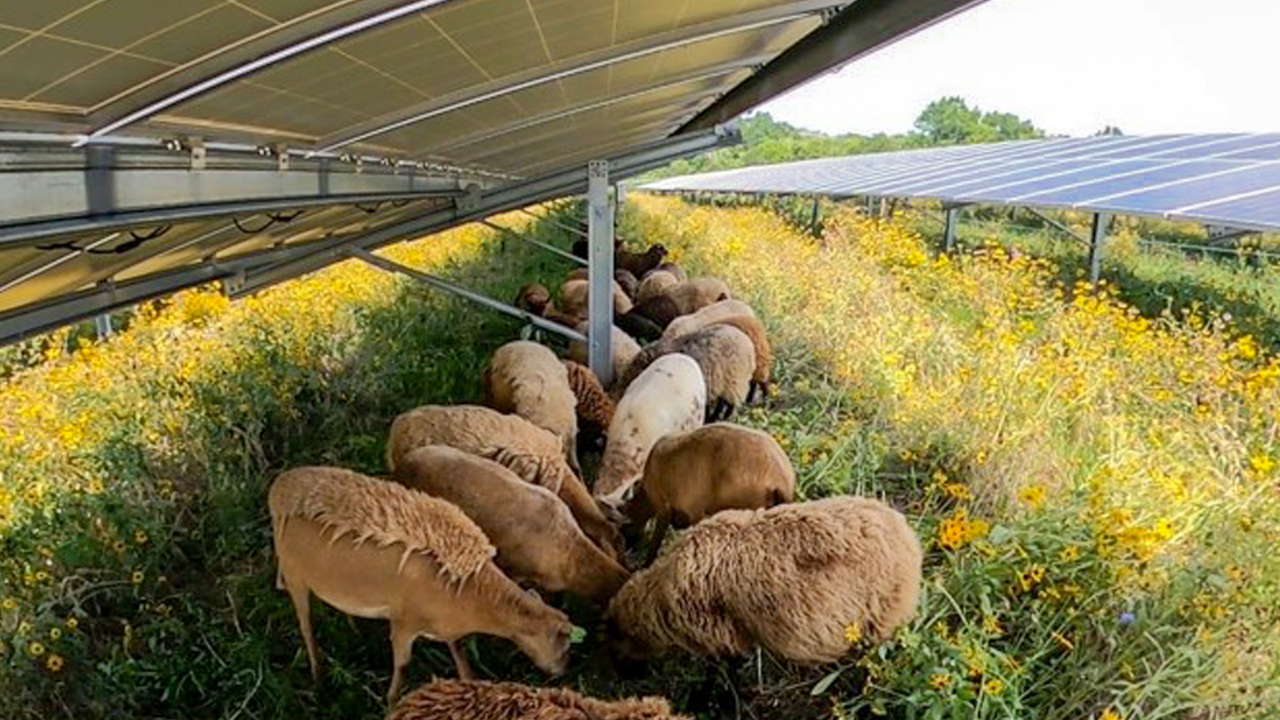
Every agricultural journalist in the country is currently writing the exact same feel-good fable about a couple scaling up sheep flocks on solar arrays. The narrative follows a predictable script: trade corporate cubicles for pastoral serenity, pitch photovoltaic developers on organic vegetation management, and watch the cash roll in while wooly ruminants mow the grass for free. It sounds like an environmental fairy tale. It is also an operational disaster waiting to happen for anyone who fails to look past the idyllic press releases.
I have watched greenhorns blow hundreds of thousands of dollars on heavy wire fencing, mineral supplements, and emergency veterinary bills because they bought into the myth of passive agricultural income under solar panels. The lazy consensus states that pairing livestock with clean energy is a frictionless win-win. Energy companies get low-impact weed control. Farmers get cheap pasture access. Everyone holds hands and sings around the inverter pad.
The reality on the ground is infinitely more hostile.
The Margin Illusion That is Bankrupting New Entrants
Let us dismantle the basic economics that the mainstream media refuses to scrutinize. The pitch goes like this: you land a contract with a utility-scale solar operator, bring in a few hundred head of sheep, and collect a per-acre maintenance fee while your flock gets fat on shaded forage.
What the glossy magazines leave out is the capital expenditure required just to meet basic liability and infrastructure demands. Commercial solar sites are not bucolic pastures. They are industrial energy plants disguised as meadows. You are dealing with miles of perimeter fence, locked gates, stringent OSHA compliance training, safety gear requirements, high-voltage proximity protocols, and zero margin for error when an animal chews through a monitoring cable or knocks down a string inverter.
When a solar developer pays you thirty dollars an acre, they are not subsidizing your homestead dream. They are outsourcing their regulatory weed-abatement liability to the cheapest available contractor. If your sheep get bloat, if foot rot sweeps through the flock during an unseasonable wet spring, or if a rogue dog breaches the perimeter fence and kills a dozen ewes, the solar developer does not care about your veterinary bills. They care that the grass is two inches too high near the combiner boxes, and they will fine you or pull your contract if you miss the deadline.
Operating a commercial grazing business inside a fenced industrial zone requires the logistical precision of a supply chain manager combined with the veterinary stamina of a large-animal surgeon. Treating it like an environmental hobby is a fast track to insolvency.
Why Traditional Flock Management Fails Inside a Power Plant
The second major fallacy plaguing this sector is the belief that standard sheep husbandry translates directly to photovoltaic environments. It does not.
Traditional sheep farming relies on open acreage, rotational grazing across natural topography, and shelter provided by barns, tree lines, or rolling hills. A modern solar installation is an obstacle course of steel racking, DC wiring, and glass panels.
Consider the water logistics. On a standard pasture, you can run a hundred-foot hose or set up a simple gravity-fed stock tank. On a fifty-acre solar array, water points are often restricted to specific maintenance pads. Hauling thousands of gallons of water daily across rocky, uneven terrain beneath racking structures will break your back and your truck transmission. If you think you can just hook up a garden hose, spend an afternoon walking fifty rows of solar panels to ensure every ewe has hydration during a July heatwave, you are entirely mistaken.
Then there is the forage quality issue. Solar developers seed sites with specific native grass mixes designed to satisfy local zoning requirements and stormwater runoff permits. Many of these mixes include plants that are either unpalatable to sheep, nutritionally deficient, or downright toxic in large quantities. Furthermore, the microclimate beneath a solar panel is radically different from the open field. The shade alters sugar accumulation in the plants, and the runoff from slick glass panels creates localized erosion gullies that can shatter a sheep's leg in a single misstep.
The Liability Trap Nobody Talks About
Let us address the elephant in the room that every optimist sweeps under the rug: equipment damage and legal liability.
Imagine a scenario where a frustrated ram decides a steel support pillar is a scratching post and manages to shift a torque tube out of alignment. Or worse, imagine a lamb gnawing through the protective conduit of a low-hanging DC homer run. A single grounding fault caused by livestock can trip an entire inverter station, taking millions of watts of generation offline.
When that happens, the energy company's legal team does not send a friendly warning letter. They send a bill for lost generation revenue.
Standard agricultural liability insurance rarely covers industrial energy infrastructure damage unless you are paying through the nose for specialized commercial riders. Most small-scale graziers operate on razor-thin cash flow, completely unaware that a single structural breach by a horned animal could trigger a lawsuit that wipes out their entire farm assets. The mainstream narrative conveniently forgets to mention the insurance premiums required to graze livestock worth thousands of dollars among multi-million-dollar electrical hardware.
How to Actually Make Solar Grazing Profitable
Despite these brutal realities, grazing livestock on industrial sites can work. But it requires abandoning the pastoral romanticism and treating the operation as what it is: heavy industrial vegetation management.
First, you stop pricing your services per acre. Acreage pricing is a relic of the lawn-mowing industry that penalizes efficiency and ignores stocking density. You price your services based on biomass removal velocity and the specific weed pressure of the site. If a solar array is choked with dense, woody invasive species, you do not send naive ewes in to starve; you bring in heavy-duty hair sheep or meat breeds capable of browsing rough forage, and you charge a premium for land remediation.
Second, you automate your infrastructure. If you are still spending four hours a day manually moving net fencing and checking manual water troughs across a hundred-acre array, your labor costs will consume every cent of profit. Invest in high-tensile mobile electric fencing systems, solar-powered remote well pumps, and automated mineral feeders. Treat the solar array like a confinement feedlot with green walls, not a natural pasture.
Third, you diversify your revenue streams aggressively. Relying solely on vegetation management fees is financial suicide. You need to stack enterprises: meat sales, breeding stock marketing, and agritourism where permitted. If the wool and lamb markets dip, your vegetation contract needs to be lean enough to carry the flock, and vice versa.
The romance of the Vermont couple turning thirty sheep into five hundred is a great bedtime story for urbanites yearning for a simpler life. But behind every successful large-scale solar grazing operation is not a dreamy poet communing with nature. It is a ruthless logistics operator who understands asset protection, contractual risk management, and the unforgiving math of animal husbandry inside an industrial power plant.
Stop looking at solar panels as a pastoral sanctuary. Look at them as a high-stakes industrial lease. Respect the machinery, calculate the risk, and stop listening to anyone who tells you that farming under glass is easy money.