You can smell the failure of an emergency system long before you see the data.
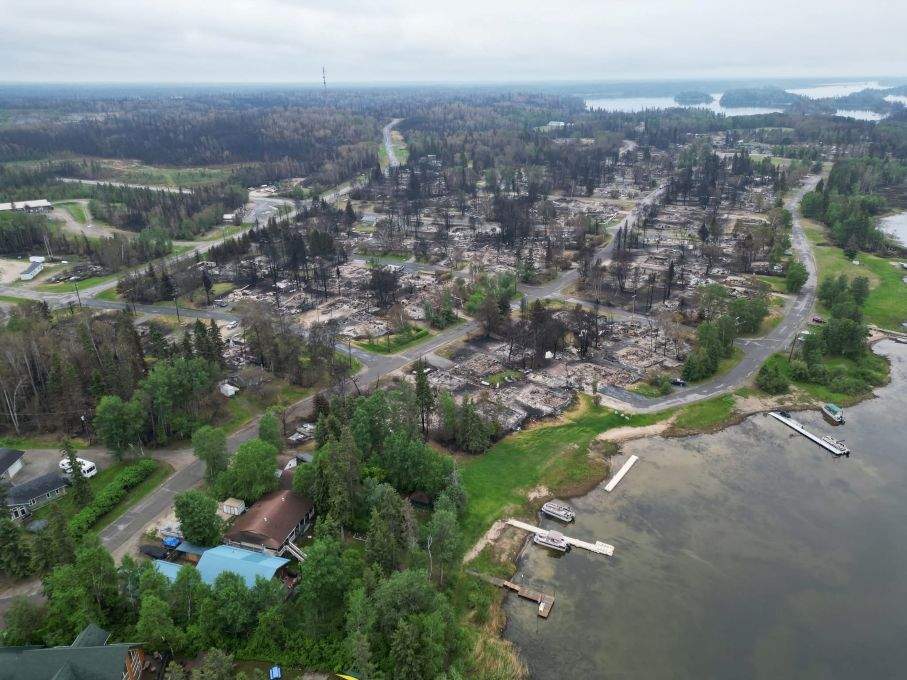
It starts with an unfamiliar haze on the horizon, a orange-tinted noon that makes the birds stop singing. Then comes the ash, falling like grey snow onto empty pickup trucks parked in driveways where families used to decide what to save and what to abandon. When 2.9 million hectares of forest burn, as they did during Saskatchewan's devastating wildfire season, the numbers cease to mean anything to the human mind. Millions of hectares are an abstraction. Ten thousand people running for their lives from 500 distinct walls of flame is not an abstraction. That is a collective trauma.
When the smoke finally lifts from the black stumps of Denare Beach and East Trout Lake, it leaves behind a quiet, bureaucratic reckoning.
A few days ago, an accounting firm named MNP delivered a 107-page post-mortem on that terrifying season. It did not use emotional language. It used the sterile vocabulary of corporate governance to describe what felt to northern residents like an apocalyptic abandonment. The review found "significant gaps" in the Saskatchewan Public Safety Agency's preparation, mitigation, and emergency readiness. It painted a picture of a centralized apparatus that failed to communicate with the very communities facing the fire, a system that lacked the foresight to deploy proper fire modeling or train enough local reservists before the wind picked up.
Then, the inevitable happened.
Steve Roberts, the SPSA vice-president of operations, agreed to "mutually advance" his retirement. After more than two decades in public service, his career at the agency will end abruptly on June 30. The official government press releases thank him for his twenty-plus years of contribution, wrapping his exit in the polite linen of a scheduled departure. Nobody will say out loud that he is the human sacrifice offered to appease the anger of a province that spent a summer choking on smoke.
But anyone who has ever watched the gears of government turn knows exactly how this script ends. When a system breaks under pressure, the institution rarely blames itself. It finds a person, labels them the author of the chaos, and sends them out the door.
The problem is that firing the general doesn't fix the lack of boots on the ground.
Consider how a wildfire actually behaves. It does not wait for a provincial emergency committee to schedule a daily briefing. It relies on instantaneous, local conditions—the dryness of the muskeg, the sudden shift of a northern gale, the readiness of a crew stationed five minutes away rather than five hours away. The independent review exposed an agency that had grown detached from the geography it was built to protect. While senior officials discussed detection technology and listed their assets during spring briefings, the real infrastructure of safety was eroding.
Northern leaders had warned for years that the traditional networks of Type 1 and Type 2 wildland firefighters—local people who knew the trails, the water sources, and the temperament of the local bush—were being underutilized or replaced by a top-heavy administrative structure. When the crisis hit, the communication broke down entirely. Communities were left in the dark, wondering whether to flee or fight, while the agency’s centralized command tried to manage a multi-front disaster from office buildings far south of the tree line.
It is easy to look at a 107-page report and see a failure of management. It is much harder to admit that the management style itself is the flaw.
The Saskatchewan government has responded to the crisis by announcing eleven immediate action items. They are promising structure reviews, daily provincial operation calls, a FireSmart grant program offering forty thousand dollars to vulnerable towns, and a renewed focus on training community wildfire reservists. These are good steps. They are necessary steps. But they are also an admission of a fundamental truth that should have been obvious before the first spark flew: you cannot manage a rural crisis entirely from a city center.
Michael Weger, the minister now responsible for the SPSA, stated plainly that the agency must do better. The political opposition is demanding apologies and further cabinet resignations, turning a tragedy of land and displacement into a chess match of political survival. Meanwhile, the people who actually live where the boreal forest meets the sky are left to look at their charred property lines and wonder if the next season will be any different.
An institutional culture cannot be reformed merely by changing the name on an office door. Steve Roberts will walk away into a retirement that was accelerated by the heat of a historic disaster. The SPSA will look for a replacement, someone who can speak the modern language of risk mitigation and modern fire modeling with fluency. But until the agency yields its centralized authority back to the people who actually watch the smoke rise from their own backyards, the system remains fragile.
The trees will grow back, eventually. The charcoal coats the soil, and the jack pines will release their seeds in the aftermath of the heat. Nature has an old, brutal rhythm for dealing with fire. Bureaucracy has a different rhythm entirely—one marked by reports, advanced retirements, and promises of restructuring. The real test of the SPSA will not be found in how smoothly it transitions its leadership this month, but in whether the next time the sky turns orange, the people living under it are given the tools to save themselves.