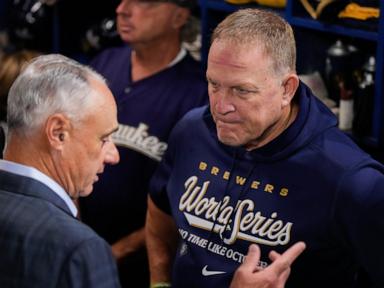
Winning a World Series after 57 years is not the result of sudden luck or romantic narrative; it is the compound output of asymmetric asset allocation, aggressive player development, and variance mitigation over a 162-game sample. When a small-market franchise like the Milwaukee Brewers captures a title, standard sports coverage treats the event as a fairy tale. From an operational standpoint, that framing obscures the actual mechanics of competitive survival in Major League Baseball. Because MLB lacks a hard salary cap, franchises operating in bottom-quartile media markets face a structural revenue deficit that makes linear spending strategies mathematically unviable. Overcoming a 57-year drought requires building a closed-loop talent pipeline capable of generating surplus production value before players reach salary arbitration or free agency.
The Structural Constraint of Small Market Economics
To understand the significance of a 57-year franchise breakthrough, one must first define the economic asymmetry of professional baseball. Large-market organizations monetize massive local television contracts, corporate sponsorships, and high-capacity stadium revenues, allowing them to absorb the financial drag of underperforming multi-year contracts. A small-market organization possesses zero margin for error on capital allocation. One poorly timed nine-figure contract can paralyze a roster for half a decade.
The operational constraint forces small-market front offices to optimize for cost per marginal win rather than raw talent acquisition. In open-market free agency, the price of a single Wins Above Replacement (WAR) inflates exponentially as teams bid on proven veterans whose peak athletic years are already behind them. A franchise operating under strict budget ceilings cannot win an auction against competitors with double or triple the gross revenue. Instead, the competitive edge must be manufactured internally through three distinct mechanisms:
- Pre-Arbitration Surplus Extraction: Under MLB's collective bargaining structure, players earn near the league minimum during their first three years of service time. If a club's scouting and development apparatus can produce above-average major league contributors within this window, the organization captures immense on-field value at a fraction of market cost.
- Arbitration Timing and Asset Liquidation: As homegrown stars enter years four through six of service time, their salaries escalate rapidly toward market rates. Disciplined small-market front offices treat peak-value assets as depreciating financial instruments, executing trades one to two years prior to free agency to replenish the lower tiers of the minor league system.
- Contract Restructuring and Risk Sharing: Rather than bidding on 30-year-old free agents, capital is deployed toward buying out the arbitration years—and occasionally the first two free-agent years—of emerging core players at age 22 or 23. This transfers injury and performance risk onto the franchise in exchange for cost certainty during a defined championship window.
Deconstructing the Roster Architecture
A 57-year drought spanning from the franchise's 1969 inception as the Seattle Pilots through decades of relocation and league realignment demonstrates how difficult it is to synchronize a championship window. The primary failure mode for mid-to-small market clubs is temporal misalignment: pitching peaks while the lineup is still in Double-A, or an elite offensive core matures just as the starting rotation departs in free agency.
Breaking that cycle requires constructing a roster around controllable, high-variance suppression rather than expensive power hitting. Run prevention scales more efficiently than run creation in small markets because defensive positioning, pitch framing, and bullpen optimization rely on proprietary data models rather than payroll size.
The Bullpen Leverage Model
Historically, baseball teams allocated pitching resources linearly: five starters throwing seven innings each, followed by a rigid closer in the ninth. That model leaves massive efficiency on the table. Starting pitchers experience a measurable decline in effectiveness the third time through a batting order, as hitters adjust to velocity, release points, and pitch sequencing.
By shifting capital away from fragile, high-priced starting pitchers and toward a deep stable of high-velocity, multi-inning relievers, a front office can compress the game. In this framework, the objective is not to secure 200 innings from a single ace, but to deploy distinct arsenal profiles across high-leverage pockets of the game. When a manager can match specific pitch movement profiles—such as high-spin four-seam fastballs paired with sweeping sliders—against opposing lineup clusters in the sixth, seventh, and eighth innings, the team neutralizes the payroll advantage of top-heavy opposing lineups.
Defensive Run Prevention as a Market Inefficiency
While home runs command the highest price tags on the open market, defensive metrics often remain undervalued relative to their impact on team ERA. Converting balls in play into outs requires elite athleticism up the middle—catcher, shortstop, second base, and center field. Speed and defensive range do not slump over a 162-game grind, nor do they suffer from the extreme variance that plagues power hitters against elite postseason pitching.
Prioritizing plus-defenders across the central axis of the diamond creates a compounding benefit for the pitching staff. Pitchers can attack the strike zone aggressively without fear of soft contact turning into base hits, which reduces pitch counts, limits walks, and preserves bullpen arms over the course of a six-month regular season.
Navigating Postseason Variance
The central paradox of Major League Baseball is that the skills required to survive a 162-game marathon differ fundamentally from those required to win a five- or seven-game postseason series. Over six months, depth and durability dictate standings; a team's 26th through 40th roster spots absorb injuries and fatigue. In October, expanded rest days allow teams to concentrate workload among their top three starting pitchers and top four relief arms.
In short series, sample size shrinks to the point where variance frequently overwhelms talent disparities. To survive this environment and end a multi-decade title drought, an organization must engineer its roster specifically to reduce postseason failure points:
- Strikeout-to-Walk Dominance: In October, offensive environments tighten because every opposing pitcher throws high-velocity, high-movement stuff. Relying on three-hit rallies to score runs becomes statistically improbable. Teams must generate swing-and-miss volume on the mound while minimizing base-on-balls, effectively eliminating free baserunners before solo home runs can inflict damage.
- Contact Quality and Baserunning Pressure: When facing elite postseason rotations, lineups built entirely on launch angle and home run dependency risk prolonged offensive blackouts against top-tier breaking balls. Integrating high-contact hitters who control the strike zone and apply constant pressure on the basepaths forces opposing defenses into rushed throws and suboptimal positioning.
- Tactical Pliability: Postseason series are chess matches played across consecutive days against the same opponent. A roster stocked with versatile utility players capable of playing multiple defensive positions allows a manager to aggressively pinch-hit and deploy platoon advantages from the fifth inning onward without compromising late-inning defense.
The Operational Reality of Sustaining the Window
Capturing a first championship after 57 years validates a front office's analytical infrastructure, but it simultaneously introduces severe organizational hazards. Success inevitably triggers brain drain: rival large-market franchises immediately target the assistant general managers, directors of pitching development, and quantitative analysts who built the model, offering compensation packages a small-market club cannot match.
At the same time, the championship core rapidly transitions from cheap, pre-arbitration labor to expensive arbitration awards and impending free agency. Emotional attachment to the roster that ended a half-century drought routinely tempts ownership groups into abandoning the exact financial discipline that produced the title. Signing aging heroes to legacy contracts consumes the capital needed to sign international amateurs, invest in biomechanical training labs, and extend the next wave of 21-year-old prospects.
Strategic Imperatives Following a Breakthrough Title
For a small-market franchise, the immediate aftermath of a historic World Series victory is the most dangerous inflection point in its lifecycle. To prevent a single championship from becoming an isolated anomaly followed by another decade of irrelevance, leadership must execute three non-negotiable directives:
- Monetize the Peak Without Extending the Drag: Capitalize on the surge in ticket sales, merchandise revenue, and regional broadcast ratings to pay down debt and reinvest in infrastructure—specifically scouting technology and minor league player nutrition—rather than funneling short-term cash windfalls into long-term player payroll commitments.
- Execute Disciplined Asset Turnover: Evaluate every member of the championship roster strictly on projected future WAR per dollar. If a franchise icon enters his final year of arbitration and his extension price exceeds internal valuation thresholds, trade him at peak market value before Opening Day to acquire top-100 prospects who will reach the majors three years later.
- Institutionalize the Process Over the Personnel: Document and codify the proprietary pitch-design models, biomechanics protocols, and game-planning workflows so that when rival clubs poach key executives and coaches, the operational engine continues running without interruption.