Smell is the oldest sense we have, wired directly into the primitive parts of the human brain that govern memory and fear. You cannot blink away a stench. You cannot plug your ears against an odor that slips under the weatherstripping of your front door at three in the morning, wakes you from a dead sleep, and coats the back of your tongue with the metallic, sweet-rotten taste of wet trash and industrial solvents.
In the Santa Clarita Valley, just north of Los Angeles, people have spent years trying to describe what the air tastes like now.
Imagine, for a moment, a mother named Elena—a composite drawn from the hundreds of real parents living in the neighborhoods of Castaic and Val Verde. It is a Tuesday evening in autumn. Outside, the Santa Ana winds are picking up, kicking dust across the chaparral hills. Inside, Elena is taping blue painter's tape along the edges of her seven-year-old son’s bedroom window. She has already run three HEPA air purifiers on their highest setting until the hum sounds like a small aircraft idling in the hallway. Her son has a nosebleed. Again. On the kitchen counter sits a stack of medical bills, an inhaler, and a printed flyer for a public hearing hosted by the Los Angeles County Board of Supervisors.
Elena goes to that hearing. Hundreds of her neighbors go, too. They take time off work, arrange childcare, and drive down into the concrete canyons of downtown Los Angeles to sit under fluorescent lights and beg the people who govern them to look at what is burning beneath their feet.
And when it is time for the officials who hold the real power over the crisis to answer for it, the chairs are empty.
Ghosting. In modern dating, the word describes the cowardly disappearance of someone who would rather vanish than have a difficult conversation. When county officials and top decision-makers fail to show up—or duck the substantive accountability demanded at a crisis hearing—while a subterranean chemical reaction roils inside the Chiquita Canyon Landfill, it is not a social slight. It is an abdication of the most basic social contract in human civilization.
We pay taxes. We follow laws. In return, the state ensures that the ground beneath our homes is not quietly cooking us from the inside out.
The Fire You Cannot See
To understand why the people of Castaic are terrified, you first have to abandon everything you think you know about fire.
When Californians hear the word fire, we picture orange walls of flame cresting a ridge, water-dropping helicopters silhouetted against smoke, and firefighters digging trenches in the dirt. You can fight a wildfire. You can spray water on it. Eventually, it runs out of fuel and dies.
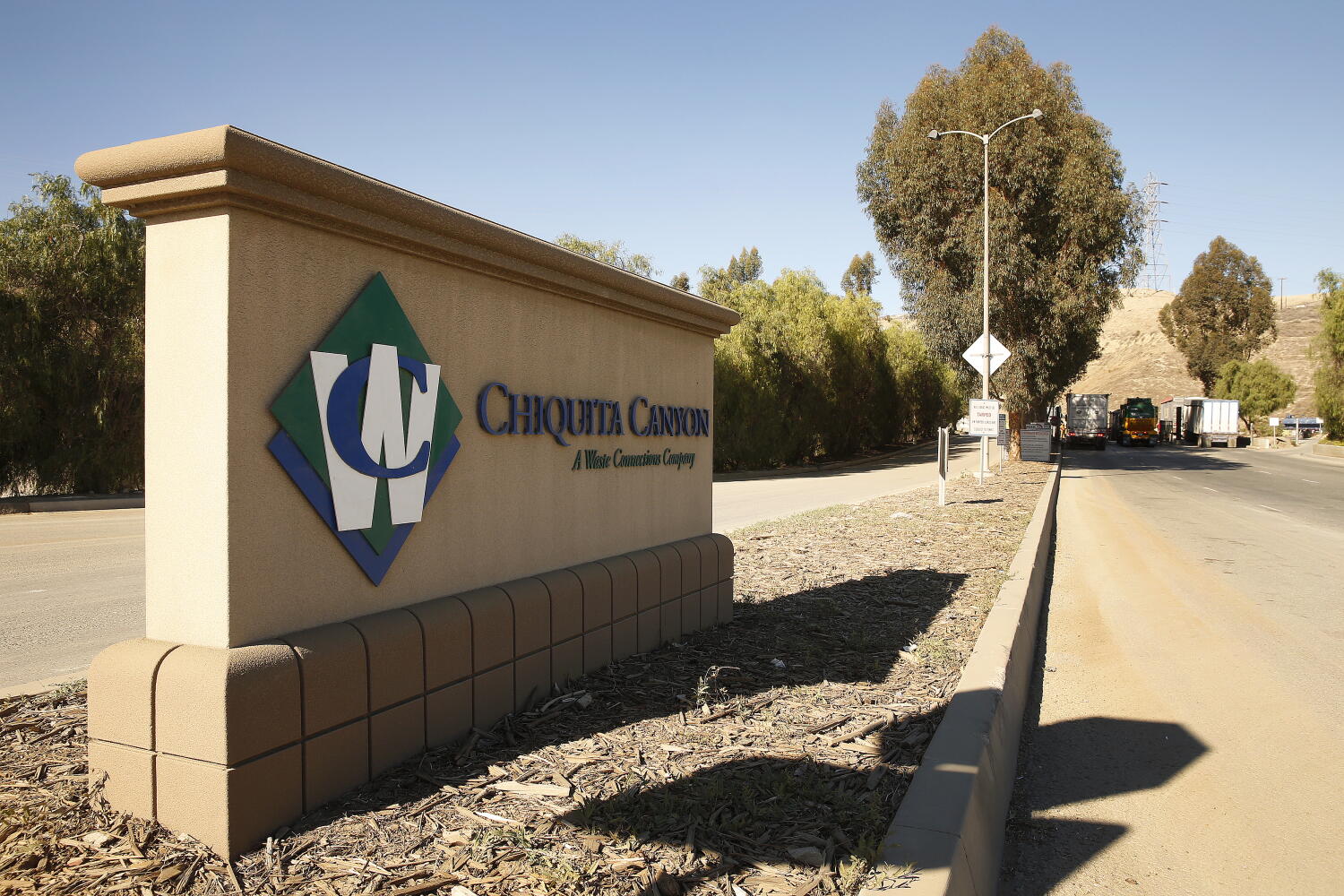
What is happening inside the Chiquita Canyon Landfill is not a flame. It is an elevated temperature landfill event—a sterile, bureaucratic euphemism for a massive, subterranean chemical slow-cooker.
Deep beneath millions of tons of compacted garbage in a retired section of the dump, an exothermic reaction began accelerating in 2022 and spiraled out of control through 2023 and 2024. Think of a compost pile in your backyard that gets warm in the center as microbes break down grass clippings. Now scale that up to a mountain of municipal waste mixed with industrial byproducts, trapped under hundreds of feet of pressure, starved of oxygen, and generating internal temperatures exceeding 200 degrees Fahrenheit.
Water does not put this out. Pouring water into an elevated temperature landfill is like throwing gasoline on grease; it feeds the chemical breakdown, creates scalding leachate—a toxic garbage juice that bubbles up through cracks in the earth—and forces massive plumes of hazardous gas upward through the soil.
Benzene. Dimethyl sulfide. Hydrogen sulfide. Carbon monoxide.
If those names sound like abstract chemistry textbook terms, ask an oncologist what benzene does to human bone marrow. It is a known human carcinogen with no safe level of exposure. Ask a neurologist what chronic exposure to hydrogen sulfide—the gas that smells like rotten eggs before it deadens your olfactory nerves entirely—does to the central nervous system.
For residents living less than a mile from the landfill’s perimeter, these chemicals are not theoretical. They are the invisible fog their children walk through on the way to the school bus.
A History Written in Trash
None of this happened by accident, and none of it was unforeseeable.
Los Angeles has always had a geography of convenience. The wealth, the studios, the coastal breezes, and the political power sit in the basin and along the Pacific. The infrastructure that keeps the metropolis alive—the power plants, the refineries, the freeways, and the mountains of trash generated by ten million people—gets pushed over the mountains into the valleys.
Chiquita Canyon has operated since 1972. For decades, it was just another dusty canyon taking in the city's castoffs. Then, in 2017, despite fierce opposition from local residents who warned that the site was too close to growing suburban communities, Los Angeles County approved a massive expansion. The permit allowed Waste Connections, the Texas-based waste giant operating the facility, to dramatically increase the daily tonnage of trash dumped into the canyon and extend the landfill's life for decades.
Regulators promised strict oversight. They promised buffer zones, odor mitigation, and modern engineering that would keep the waste sealed away from the surrounding neighborhoods.
That promise lasted roughly five years.
By 2023, the complaints pouring into the South Coast Air Quality Management District had shifted from thousands to tens of thousands. The numbers became so staggering they broke records in the agency's history. Over 20,000 formal odor complaints in a single stretch, each one representing a real person sitting in their living room, feeling their throat tighten, their eyes burn, or a migraine clamp down behind their temples.
I remember speaking with residents who had kept meticulous logs—spiral notebooks filled with timestamps, wind directions, and symptoms. 4:15 AM: Woke up gagging. Metallic taste. Dog throwing up on the rug. 6:30 PM: Kids came inside crying, eyes red. You read those pages and you realize you are not looking at NIMBYism—the reflexive suburban complaint about property values. You are reading the field notes of a population being subjected to an unconsented chemical experiment.
The Anatomy of Institutional Cowardice
When a disaster strikes suddenly—an earthquake, a bridge collapse, a flash flood—politicians rush to the cameras. They put on windbreakers, stand in front of the wreckage, and promise that every resource of the state will be brought to bear.
Slow-motion disasters are different. They do not offer clean photo opportunities. They come tangled in jurisdictional knots, corporate liability shields, and regulatory finger-pointing.
At the Chiquita Canyon hearing, the frustration of the community boiled over not merely because the air was toxic, but because the architecture of accountability seemed designed to exhaust them into silence. When key Los Angeles County officials failed to appear or left empty seats where leadership should have sat, it sent an unmistakable message to the residents of Castaic and Val Verde: Your suffering is an administrative inconvenience.
Look at how the bureaucratic shell game works when a landfill goes rogue.
The landfill operator, Waste Connections, points to its compliance with complex mitigation orders, arguing that capping wells, pumping out hundreds of thousands of gallons of toxic leachate a week, and installing flare systems takes time and engineering finesse. County health officials conduct surveys and issue cautious statements noting that while symptoms like headaches, nausea, and respiratory irritation are widespread, proving direct long-term causation requires years of epidemiological study. Air quality regulators issue hundreds of notices of violation, levying fines that, to a multi-billion-dollar waste corporation, function less like a deterrent and more like a routine cost of doing business.
Meanwhile, the County Board of Supervisors—the body that actually granted the 2017 expansion permit against the screaming protests of the community—sits at the top of the pyramid, insulated by layers of agencies, task forces, and legal counsel.
When officials skip a hearing or send low-level proxies to read prepared talking points, they are exploiting a dark truth about public outrage: anger requires energy, and poison makes you tired. If you stall long enough, people run out of sick days to attend meetings. They run out of money to fight. Eventually, the ones who can afford to sell their homes at a loss pack up and leave, and the ones who cannot afford to leave stop screaming because screaming hurts their lungs.
The Trap of the American Dream
There is a particular cruelty reserved for the people caught in the blast radius of Chiquita Canyon.
Many of them moved to Castaic and Val Verde for the exact reasons Americans have always moved to the edge of the suburbs. They wanted a backyard where their kids could ride bikes. They wanted decent schools, quiet streets, and a mortgage that didn't require a Hollywood executive's salary. Many are working-class families, first-generation homeowners, or retirees who poured every dime of their life savings into the equity of their houses.
Now, those houses are cages.
California real estate law requires sellers to disclose known environmental hazards and neighborhood nuisances. Try listing a three-bedroom ranch house when you have to legally disclose to prospective buyers that the property sits downwind of an active, subterranean chemical reaction emitting carcinogenic gases, generating tens of thousands of regulatory complaints, and causing widespread acute illness.
You cannot sell. Not without taking a catastrophic financial loss that would wipe out your retirement or leave you unable to afford rent anywhere else in Southern California.
So you stay. You tape your windows. You buy expensive air filters that burn out their motors every four months from the particulate load. You argue with your spouse at two in the morning about whether that faint sweet smell in the hallway is coming from the vents or if you are just losing your mind from stress and sleep deprivation.
That psychological toll—the hypervigilance—is the invisible injury that never shows up in air quality monitoring data. When you cannot trust the air in your own bedroom, your nervous system never stands down. You live in a permanent state of low-grade fight-or-flight. Every headache becomes a question: Is this just dehydration, or is this benzene? Every cough from your child becomes a source of crushing parental guilt: What am I doing to them by keeping them here?
What Accountability Actually Looks Like
It is easy to feel helpless in the face of a crisis where the earth itself is sick and the people in charge refuse to show up. Confusion is a rational response here. Even the engineers working on the site admit that subsurface reactions of this magnitude are notoriously difficult to predict and slow to cool. Nobody has a magic switch to turn off a chemical reaction buried under millions of tons of garbage.
Yet admitting technical complexity is not the same thing as accepting political paralysis.
If Los Angeles County officials cannot instantly extinguish the reaction beneath Chiquita Canyon, they possess immense, immediate power over the human consequences unfolding above ground.
First, an immediate, unconditional halt to all active dumping at the site. Allowing a facility to continue accepting thousands of tons of fresh waste every day while an uncontrolled hazardous reaction rages in an adjacent cell is indefensible. You do not keep stacking firewood next to a house that is already smoldering.
Second, state and county leaders must declare a formal local emergency that unlocks direct relocation assistance—not symbolic gift cards for air purifiers, not bureaucratic reimbursement portals that reject receipts on technicalities, but real, upfront housing stipends and buyout options for families living in the immediate impact zone who need to get their children out of the plume now.
Third, independent, real-time, fenceline air monitoring controlled entirely by public health advocates and independent scientists—not data filtered through the landfill operator's consultants—with automatic triggers that mandate immediate community alerts and school closures whenever volatile organic compounds spike.
And finally, there must be political reckoning. Accountability in a democracy is not supposed to be voluntary. When public officials approve an expansion over community objections, watch their worst predictions come true, and then leave empty chairs at a public hearing, voters have to remember those empty chairs when the ballot arrives.
The Dust on the Sill
Late at night in Castaic, when the traffic on the Interstate 5 dies down to a distant hum, the valley goes very quiet.
In thousands of dark bedrooms, small red and blue LED lights glow on the tops of plastic air purifiers, their fans whirring steadily against the dark. Outside, beneath the moonlit hills of the canyon, the ground is hot. Invisible plumes rise through the clay, catch the night breeze, and drift downward toward the roofs where families are trying to sleep.
Somewhere in downtown Los Angeles, miles away from the smell, the county chambers are locked up for the night, the leather chairs neatly tucked under polished wooden tables, waiting for the next meeting.


