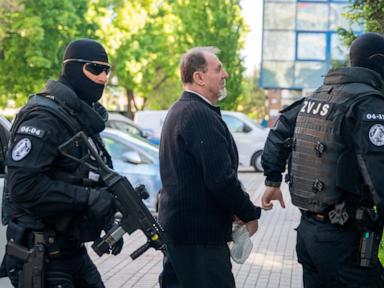
Justice is not a blunt instrument, though the Slovak Supreme Court seems to think otherwise. By upholding a 21-year sentence for the attempted assassination of Prime Minister Robert Fico, the court hasn't "secured democracy." It has merely checked a box in a failing bureaucratic script.
Mainstream media outlets are busy painting this as a victory for the rule of law. They want you to believe that a heavy gavel equals a stable society. They are wrong. This isn't about the law; it's about the optics of order in a state that is fundamentally fractured. To understand why this sentence is a hollow gesture, we have to look past the courtroom walls and into the mechanics of political violence and judicial signaling.
The Deterrence Delusion
The "lazy consensus" among legal analysts is that long sentences deter future extremists. This is a fundamental misunderstanding of the radicalized mind. I have watched political systems across Eastern Europe tighten the screws for decades, and the result is rarely compliance. It is usually a deeper, more quiet resentment.
When a man decides to pull a trigger on a head of state, he has already priced in the cost of his life. A 21-year sentence is an abstract number to someone operating on the edge of ideological martyrdom. In these high-stakes scenarios, the state uses the judiciary to perform "strength" because it cannot address the actual root causes of the instability.
- The Logic Gap: Deterrence works on rational actors. Assassination attempts are rarely the product of a cost-benefit analysis.
- The Martyrdom Loop: Every year added to a sentence in a hyper-polarized environment becomes a badge of honor for the fringe groups that supported the act in the first place.
The Judicial Echo Chamber
Slovakia's Supreme Court acted with predictable speed. They had to. In a country where the Prime Minister himself has been accused of eroding judicial independence, the court was in a double-bind. Upholding the sentence was the only way to avoid looking weak or complicit.
But look at the nuance the headlines ignored: the court focused entirely on the act and ignored the environment that birthed it. We are seeing a global trend where the judiciary treats the symptoms of political rot while the rot itself continues to spread through the legislative and executive branches.
I’ve seen this play out in various jurisdictions. When the state feels threatened, it stops practicing law and starts practicing survival. The 21-year term isn't a measured response to a crime; it's a defensive crouch by an institution trying to prove its relevance in a polarized era.
The Myth of the "Lone Wolf"
The competitor articles love the "lone wolf" narrative. It’s clean. It’s easy. It implies that if you lock up the one "madman," the problem goes away.
This is a dangerous lie.
Political violence is never a vacuum. It is the pressurized output of a specific social climate. By focusing the entire legal weight on one individual’s sentence, the state avoids the uncomfortable conversation about the rhetoric, the media Echo chambers, and the policy failures that led to that moment in Handlová.
If we want to discuss actual safety, we should be dismantling the mechanisms of radicalization, not just building bigger cages for the results.
A Superior Path: Transparency over Punishment
What if the court had the courage to be unconventional? A truly disruptive judicial approach would involve a radical level of transparency regarding the investigation—exposing the networks, the digital trails, and the systemic failures that allowed a security breach of this magnitude.
Instead, we get a closed-loop confirmation of a prison term.
Why this fails the public:
- Zero Closure: The sentence doesn't heal the divide; it deepens the "us vs. them" narrative.
- False Security: It suggests the threat is contained, when the underlying social friction remains untouched.
- Bureaucratic Stagnation: It allows the security services to avoid a public reckoning for their own failures during the event.
The Cost of Professional Silence
Legal "experts" will tell you that the court's hands were tied by the criminal code. That’s a convenient excuse for a lack of institutional imagination. The judiciary should be the ballast of a nation, not just a rubber stamp for the highest bidder’s sense of vengeance.
I’ve stood in rooms where "stability" was prioritized over truth. It’s a expensive mistake. You can bury a man in a cell for two decades, but you cannot bury the grievance that put him there. The Slovak Supreme Court has provided a temporary anesthetic for a gaping wound.
The Brutal Reality of Political Sentencing
Let’s be honest about what 21 years actually means. It is a life sentence for an older man. The court knows this. The public knows this. By not calling it a life sentence, the state tries to maintain a veneer of "proportionality."
This is a classic maneuver: use the maximum available weight while pretending to be moderate. It’s a strategy designed to appease the international community while satisfying the domestic demand for blood.
The Downside of My Argument
The contrarian view here is admittedly grim. If you don't believe in the power of the sentence, you are left with the reality that the state is largely powerless against the next motivated actor. That is an uncomfortable truth that most people aren't ready to face. They want the comfort of the 21-year headline. They want to believe the monster is under lock and key and the world is safe.
It isn't.
Reforming the Perspective
Stop asking if the sentence was "fair." Start asking if the sentence was effective.
If the goal is to prevent another assassination attempt, the answer is a resounding no. History shows that heavy-handed judicial crackdowns often precede more intense cycles of violence. You don't fix a broken social contract with a prison guard's keys.
The Slovak judiciary had a chance to be a voice of reason in a chaotic time. Instead, it chose to be an echo.
The gavel has dropped, the cell door has closed, and the underlying fire is still burning.
Stop looking at the prisoner. Start looking at the system that needs him to stay there so it doesn't have to look at itself.