The radar screen does not care about diplomacy. To the operator watching a green terminal in the damp heat of the Pacific, a blip is simply a vector, a speed, and an altitude. But when that blip represents an intercontinental ballistic missile screaming into the upper atmosphere, the quiet inside the tracking station turns brittle.
For decades, the waters stretching between Australia, Fiji, and the vast expanse of the northern Pacific were defined by their isolation. Today, they are the stage for a high-stakes game of geopolitical chicken where nothing happens by accident, even when the politicians insist it does.
Recently, the skies and the diplomatic cables lit up at the exact same time.
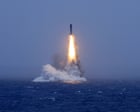
Australia and Fiji had just finalized a major defense pact, a handshake meant to tighten policing, maritime security, and military cooperation in a region suddenly heavily contested. Almost simultaneously, China launched an intercontinental ballistic missile into the Pacific Ocean. It was the first time Beijing had fired such a weapon into these international waters in forty years.
The official word from Canberra came quickly. Australian Defence Industry Minister Pat Conroy stepped to the microphone to cool the temperature. He stated the timing was more likely a coincidence than a direct reaction to the Australia-Fiji agreement.
But out here, where the deep ocean trenches meet the sky, the word coincidence feels heavy. It feels engineered.
The Friction of New Alliances
Imagine a small village where two neighbors who have shared a fence for generations suddenly decide to build a reinforced gate. They say it is just to keep out stray dogs and manage the evening traffic. But the largest landlord down the street watches them dig the posts. The next morning, that landlord tests a high-powered security system, letting the alarm wail across the neighborhood.
That is the Pacific right now.
The agreement between Australia and Fiji is not a wartime alliance, but it changes the locks on the door. It allows for smoother military deployment, shared training, and a unified front on maritime surveillance. For Fiji, a nation navigating the immense pressures of rising sea levels and economic vulnerability, the pact offers a steady anchor. For Australia, it is a way to ensure that its northern and eastern approaches remain under friendly eyes.
Then came the missile.
It rose from the Chinese mainland, tracing a long, terrifying arc before splashing down thousands of kilometers away in the open ocean. To the average citizen scrolling through a news feed in Suva or Sydney, the event felt like a distant tremor. To defense analysts, it was a thunderclap.
The official narrative tells us to look at the calendar and see two separate events. Military exercises of that scale require months, sometimes years, of logistical planning. Fuel must be moved. Telemetry ships must be positioned. Airspace must be cleared. You do not simply press a button to launch an ICBM because a politician signed a piece of paper in Suva yesterday morning.
Logistically, Conroy is right. The launch was on the books long before the ink dried on the Australia-Fiji pact.
Politically, however, timing is a malleable weapon. The choice to proceed, the choice of the specific trajectory, and the choice to let the world watch were deliberate acts of communication.
The Language of the Unsaid
In international relations, the most important messages are rarely spoken aloud. They are sent via payload.
When a government launches a missile capable of carrying a nuclear warhead across continents, it is not just testing hardware. It is establishing a baseline of fear. It reminds smaller nations that while pacts and treaties are comforting pieces of parchment, the physical reality of hard power remains absolute.
Consider the perspective of a Fijian coastal villager. For generations, the ocean was a source of sustenance and story. Now, the waters beyond the reef are an arena where global superpowers draw lines in the current. The anxiety is not about an immediate strike; it is about the loss of agency. It is the realization that your home has become the coordinates for someone else’s chess game.
Australia’s response—calling it a coincidence—is a calculated piece of rhetorical gymnastics. By downplaying the connection, Canberra deprives Beijing of the satisfaction of a panicked reaction. If Australia reacts with outrage, it signals that the Chinese message was received and caused fear. By shrugging it off as a scheduling quirk, Australia maintains its stance that its regional partnerships are normal, bureaucratic, and unstoppable.
It is a delicate dance. You must acknowledge the muscle flexing without validating the intimidation.
The View from the Water
The Pacific is not empty space. Maps treat the ocean as a blue void between landmasses, but it is a network of trade, culture, and deep historical memory. The people living across these islands have seen foreign powers arrive before. They remember the nuclear testing of the mid-twentieth century, the fallout that lingered in the soil and the bone, and the promises made and broken by larger nations.
When modern security pacts are signed, they are sold as shields. The Australia-Fiji agreement focuses heavily on practicalities: disaster response, illegal fishing mitigation, and capacity building. These are the daily anxieties of Pacific island nations. A rogue fishing trawler stealing resources hurts a local economy far more immediately than a theoretical missile tracking overhead.
Yet, the shield draws attention. The more Australia attempts to fortify its relationships in the Pacific to counter Chinese influence, the more China will feel compelled to demonstrate that its reach cannot be contained by regional agreements.
We are entering an era where the quiet of the Pacific will be broken more frequently. The tracking stations will watch more blips. The politicians will offer more carefully worded press releases minimizing the tension.
The truth is found in the gap between the official statements and the raw physics of a rocket booster falling into the sea. The timing might have been born in separate bureaucratic pipelines, but the reality is singular. The Pacific is no longer just a vast ocean separating giants. It is the room where they are standing face-to-face, watching to see who blinks first.


