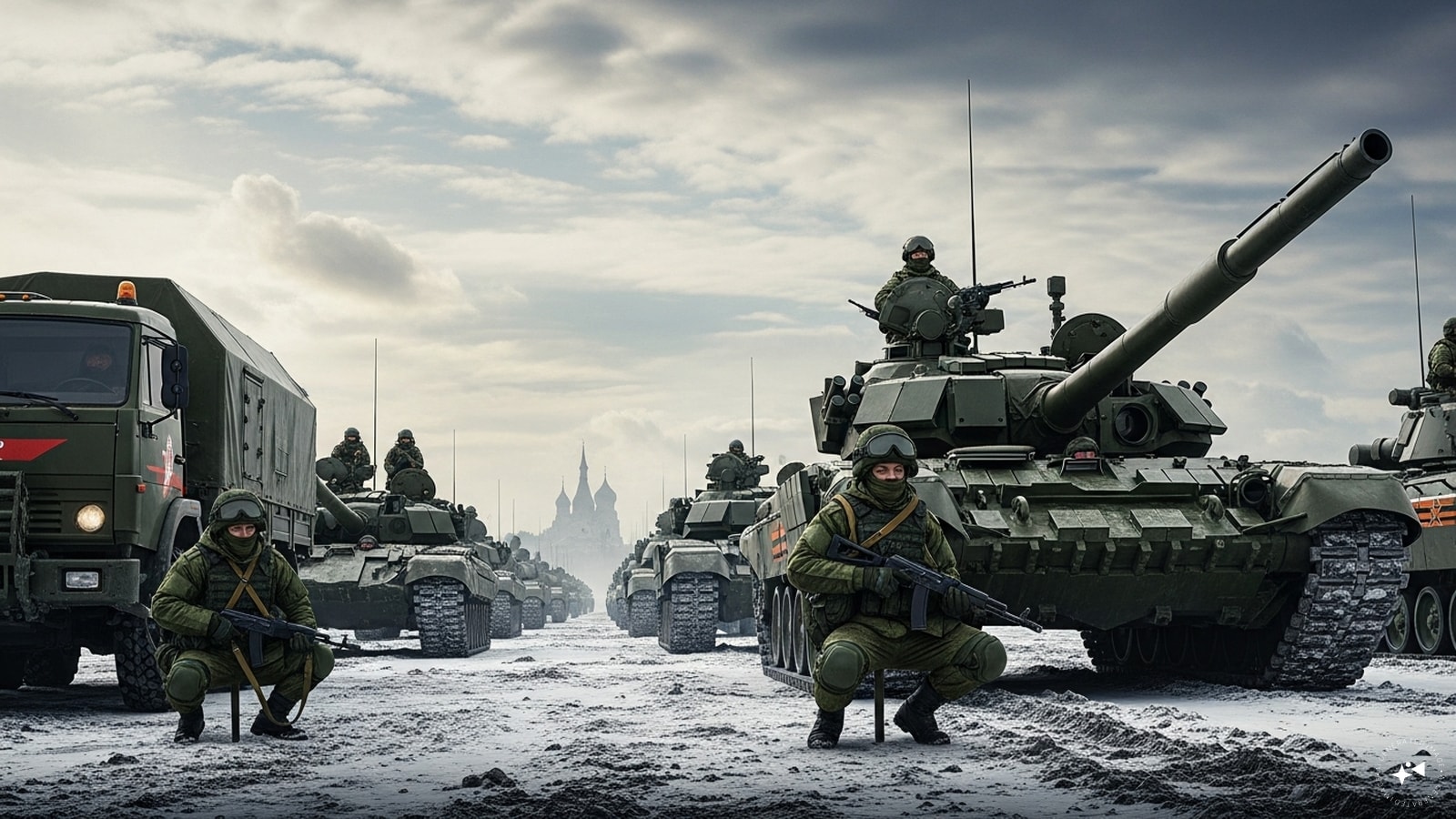
The air above central Europe smells different when the seasons turn, but lately, the chill has nothing to do with winter. Walk through the outskirts of a town like Siauliai in Lithuania or Rzeszów in Poland, and you will eventually hear it. A distant, low-frequency hum. It is the sound of airspace that has suddenly become very small, very loud, and deeply unpredictable.
For decades, the sky was just the sky. It was a blank canvas for budget airlines and rain clouds. Today, it is a frontier.
When Russia launched its full-scale invasion of Ukraine, a collective shudder ran through the ministries of defense from Helsinki to Bucharest. It wasn't just panic; it was a cold realization that the continent’s security architecture was built for a world that no longer existed. The assumptions of the post-Cold War era—that massive state-on-state artillery duels and missile barrages were relics of the twentieth century—evaporated in a single morning. European leaders looked up and realized their ceilings were made of glass.
Now, they are looking to the Middle East for a hammer.
The Geography of Anxiety
To understand why billions of euros are moving from European taxpayers to Israeli defense contractors, you have to sit in a room with someone whose job it is to watch a radar screen in Munich or Warsaw.
Imagine a young air traffic controller. Let’s call her Anna. For years, her biggest headache was tracking a delayed flight from London or navigating a summer thunderstorm. Now, her monitor reflects a crowded theater. There are military transport planes with their transponders turned off. There are reconnaissance drones looping over the Baltic Sea. And lurking just beyond the border, there is the permanent, silent threat of ballistic missiles that can cross continents in the time it takes to brew a cup of coffee.
This isn't about paranoia. It is about geometry.
If a missile is launched from the Kaliningrad enclave, it doesn't give a city like Warsaw minutes to react. It gives them seconds. In that brief window, human panic is a certainty. The only thing that can counter that panic is a system that thinks, tracks, and fires faster than the human nervous system can process fear.
For a long time, Europe relied on its own industrial giants to build these shields. But conventional defense procurement in the West is a slow, bureaucratic beast. It involves committees, multi-nation compromises, and years of testing. Europe has money, but it does not have time. Israel, by contrast, has spent the last thirty years living in a state of perpetual aerial siege. Its technology was not born in a peaceful laboratory; it was forged under a sky that regularly rains fire.
That practical reality is rewriting the geopolitics of defense.
Shifting the Weight of the Shield
Germany made the first massive move, spearheading the European Sky Shield Initiative. It was a confession, wrapped in a multi-billion-euro budget line, that the continent could not protect itself alone. Berlin bypassed its traditional partners in Paris and Rome to purchase the Arrow 3 system from Israel Aerospace Industries.
It was a historic moment, and a bitter pill for some in Europe to swallow.
The Arrow 3 does not just intercept threats; it strikes them down in the upper atmosphere, practically in space. Think of it as a goalkeeper who doesn't wait for the ball to get near the net, but leaps out into the parking lot to stop the kick before it even enters the stadium. For Germany and the fourteen other nations that joined the initiative, this wasn't an ideological choice. It was a consumer choice made by a terrified shopper.
But the Arrow 3 is only the top tier of the architecture. The anxiety runs much deeper, down to the low-flying drones and loitering munitions that have redefined modern warfare in Ukraine.
These aren't million-dollar stealth bombers. They are cheap, loud, lawnmower-engined drones packed with explosives. They fly low, hugging the tree line, hiding in the radar shadows of hills and valleys. A traditional air defense system firing a two-million-dollar missile at a twenty-thousand-dollar drone is a losing mathematical equation. It drains the treasury faster than it clears the sky.
This is where systems like David’s Sling and the Iron Dome enter the conversation. They offer a different kind of math. They provide a tiered defense, a multi-layered net that catches everything from a massive ballistic missile to a stray mortar shell. European delegations are quietly arriving in Tel Aviv with empty briefcases and leaving with contracts. They are buying experience.
The Friction of Dependency
Yet, this massive pivot toward Israeli tech introduces a profound vulnerability that many European leaders prefer not to discuss in public.
When you buy an air defense system, you are not just buying a piece of hardware. You are not buying a truck with a missile launcher bolted to the back. You are buying a long-term relationship. You are buying software updates, replacement interceptors, proprietary radar algorithms, and technical support. You are tying your national survival to the political stability and goodwill of a nation thousands of miles away.
Consider what happens next if a diplomatic crisis erupts between Europe and the Middle East. What happens if global supply chains choke? An air defense system without a steady supply of interceptor missiles is just a very expensive collection of radar dishes and empty tubes.
Some defense analysts in Paris argue that Europe is trading one form of dependency for another. They believe the continent should spend its billions inward, building its own sovereign capabilities, even if it takes a decade. But a decade is an eternity when the news cycle is dominated by satellite imagery of troop movements and missile silos being dug along the eastern flank.
The debate is no longer about strategy. It is about the ticking of a clock.
The Sound of the Quiet Sky
The transition from peace to preparation changes a society in ways that are hard to quantify. It starts with the subtle things. The highway signs that suddenly feature routes for military convoys. The recruitment posters at the local train station that look a little more urgent than they did three years ago. The realization that the cloudless blue sky above your house is being monitored by an algorithm designed to detect anomalies in milliseconds.
We used to look at the sky and see infinity. Now, we look at it and see a ceiling that requires maintenance.
Back on the ground in the eastern reaches of the continent, the installations are being built. Concrete is being poured. Massive radar arrays are turning their faces toward the east, blinking their electronic eyes against the horizon. They are waiting for a threat everyone hopes will never come, using technology born from a conflict that never seems to end.
The ledger books will show a massive spike in defense spending this year. The stock prices of aerospace firms will climb. Politicians will shake hands in front of flags, signing pieces of paper that guarantee mutual protection. But beneath the ink and the money is a simple, human truth. A continent that once believed it had outgrown the need for fortresses is busy building one in the clouds.