The Silence After the Rotor Blades
Metal remembers stress long before it gives up. It twists, groans, and micro-fractures in places the human eye cannot see, waiting for a single moment of high altitude and unforgiving kinetic force to claim its debt.
When a military helicopter comes down, there is no cinematic delay. There is only the violent, sudden rupture of physics. For a more detailed analysis into similar topics, we suggest: this related article.
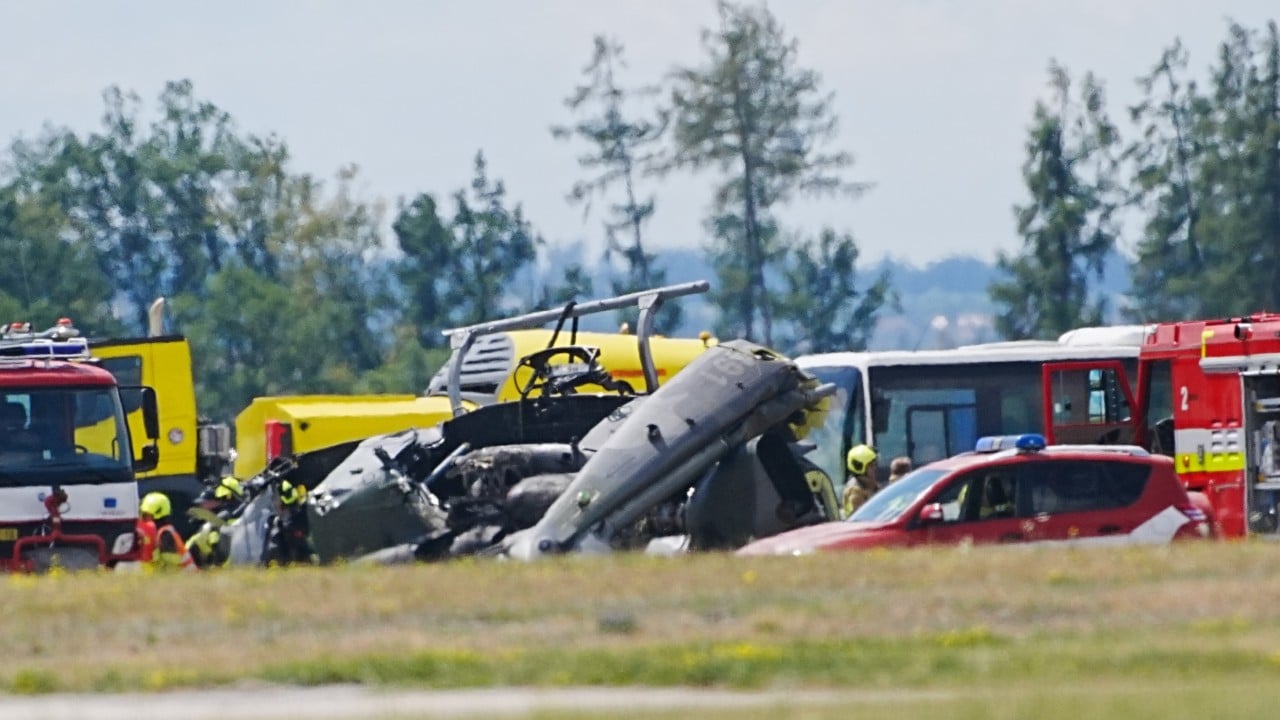
In a quiet stretch of the Czech countryside, that rupture claimed a life. Five soldiers boarded a Czech Army helicopter for what should have been a routine flight—a high-stakes dance of mechanical precision and trained human discipline. Only four survived. The wreckage left behind was more than just burned steel and shattered rotors; it was a devastating reminder of the invisible weight carried by those who step into the air under a flag.
Military aviation operates on a knife's edge. We tend to view air defense through the grand lens of geopolitics, strategic readiness, and hardware procurement budgets. But strips of cold news headlines strip away the human pulse of these events. They reduce a human life to a single digit in a casualty count. For additional details on this issue, detailed analysis can also be found at Associated Press.
One dead. Four injured.
To understand the real impact of this tragedy, you have to look past the official press releases and stand in the dirt where the smoke rises.
The Invisible Stakes of Routine Flight
Flight is an artificial environment for human beings. We buy our way into the sky with engineering, maintenance schedules, and relentless training. When you strap into a military transport helicopter, the sensory input is overwhelming. The deafening roar of the turbines vibrates through your teeth. The smell of aviation fuel lingers in the back of your throat. Every movement is deliberate, dictated by strict protocols written in the aftermath of past mistakes.
Consider a hypothetical crew member on that flight—let us call him Marek.
Marek isn't thinking about international defense policy when he double-checks his harness. He is thinking about his shift schedule, the cold breeze biting at his neck, and the familiar rhythm of the pre-flight checklist. The crew operates as a single organism. The pilot's hands on the cyclic and collective controls, the co-pilot watching the instrument panel, the crew chief monitoring the cabin—they rely on absolute trust. Trust in each other. Trust in the ground crews who prepped the aircraft hours before dawn. Trust in the machine itself.
Then, in a fraction of a second, that trust is tested by an unforeseen variable.
Whether it was a sudden mechanical failure, an catastrophic environmental shift, or a split-second spatial disorientation, the sky stops supporting the aircraft. The rotor blades, which moments before generated thousands of pounds of lift, become useless weight. The ground rushes up.
Impact.
The physical reality of a helicopter crash is chaotic and brutal. The airframe absorbs what energy it can, crumpling by design to protect the human occupants inside. But geometry and steel can only mitigate so much force. In those agonizing seconds, the distinction between routine operation and mortal peril vanishes entirely.
What the Headlines Miss
When the official statement was released, it followed the standard template of modern military communications. It gave the location, confirmed the involvement of the Czech Armed Forces, noted the casualty figures, and announced an immediate investigation into the cause.
It was precise. It was factual. It was utterly cold.
What it omitted was the ripple effect.
The four injured soldiers were rushed to nearby medical facilities, their lives forever altered by physical trauma and the psychological scar of surviving what their comrade did not. For their families, the phone call arrived in the middle of a normal day, shattering the mundane comfort of everyday life. For the unit left behind at the airbase, the empty locker in the hangar serves as a constant, heavy presence.
Military culture demands resilience. The mission continues. Aircraft are inspected, ground crews return to work, and other pilots climb back into the cockpit to take to the air again. But the grief is real, even if it is borne quietly behind uniform lines.
We often take military readiness for granted during peacetime or training operations. We assume that danger only exists in active conflict zones. Yet the reality is that training for war is inherently dangerous. Every low-altitude maneuver, every night-vision insertion, and every routine transport flight carries a baseline of extreme risk. The men and women who step onto those crew decks accept that risk every day, long before any battle is fought.
The Price of Readiness
Investigating an aviation accident is an agonizingly slow process. Investigators will comb through the debris field, recovering flight data recorders, analyzing structural failures, and reviewing telemetry logs. They will check weather reports, maintenance histories, and pilot hours. They will look for answers because answers provide the illusion of control—a way to guarantee that this specific failure won't happen again.
Yet no amount of data can undo the split-second where everything went wrong.
The loss of a soldier in a training incident leaves an open wound in the defense community. It forces a hard evaluation of equipment lifespans, operational tempos, and safety margins. It reminds us that behind every strategic force projection, every air show demonstration, and every news alert about military capabilities, there are human beings taking real, physical risks in complex machines.
As the wreckage is cleared from the Czech countryside and the investigation runs its silent course, four soldiers begin the long, slow process of recovery. One family prepares for a funeral.
The sky, vast and indifferent, remains clear. But on the ground, the weight of what happened hangs heavy over every hangar door that opens tomorrow morning.