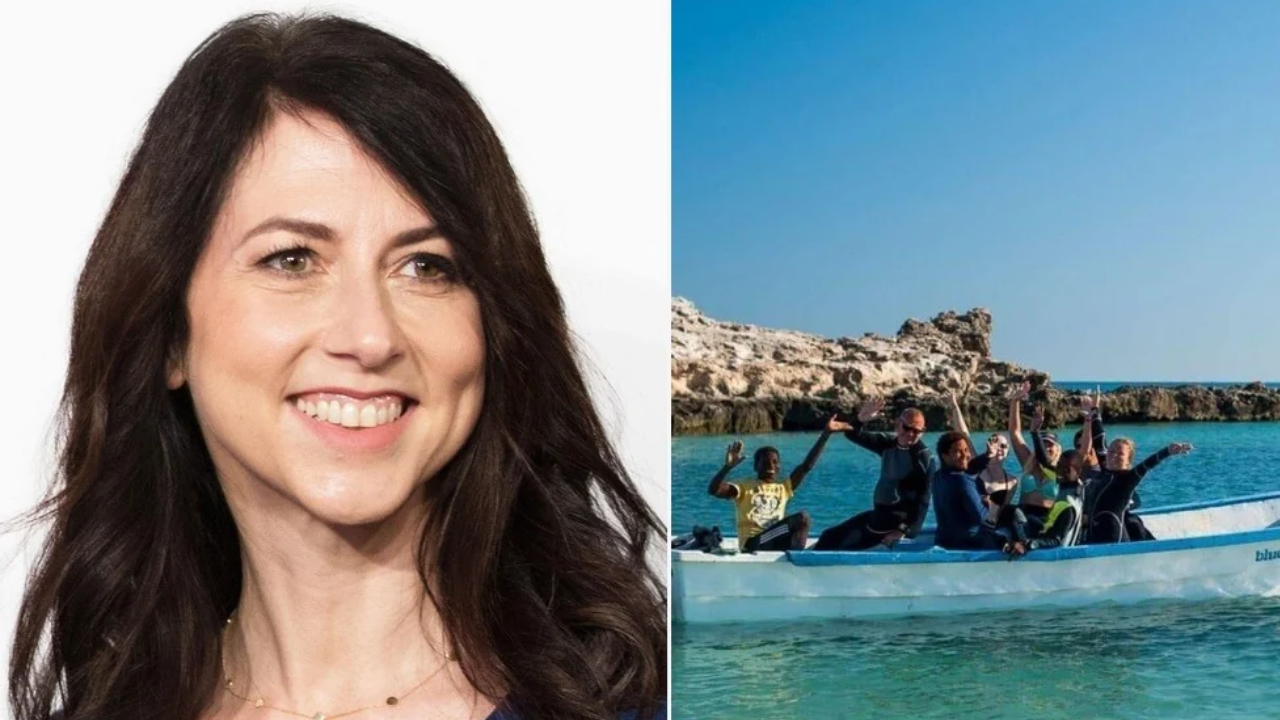
The water warms first. You do not notice it on your ankles when you wade out at dawn to check the gillnets, because the tropical sun is already climbing fast and the shallows always feel like bathwater by eight in the morning. You notice it in the silence.
Picture a fisherman—let us call him Mateo, a composite of thousands of men and women working the littoral zones from the Coral Triangle to the Mesoamerican Barrier Reef—standing knee-deep in a lagoon that fed his grandfather, his father, and his three children. Five years ago, that reef hummed. Parrotfish scraped algae off brain coral with a sound like static on an old radio. Snappers darted through staghorn thickets in silver flashes. Today, the coral is the color of bone, bleached white by marine heatwaves that refuse to break, and the nets come up heavy only with plastic bags and jellyfish. For another perspective, check out: this related article.
When the reef dies, the village does not just lose dinner. It loses its seawall. Without that jagged, living limestone barrier absorbing up to ninety-seven percent of wave energy before it hits the sand, every tropical storm turns into an existential threat. The saltwater creeps into the freshwater wells. The mangrove roots, choked by silt and coastal runoff, rot away. And within a decade, the people who never emitted a fraction of a percent of the carbon warming the atmosphere are packed onto rusted ferries, becoming climate refugees in sprawling inland slums.
This is the quiet catastrophe unfolding across the Earth's tropical coastlines. For decades, the standard philanthropic response to this crisis looked a lot like colonial administration dressed up in spreadsheet software. Wealthy foundations in New York, London, and Geneva would pledge millions to save the oceans, then funnel that money through layers of Western consultants, academic fellowships, and multi-year compliance audits. By the time a single dollar reached the coastline—if it ever did—it came tethered to rigid deliverables written by people who had never mended a net or navigated a monsoon. Similar insight on the subject has been shared by Associated Press.
Then came a wire transfer that broke the mold.
When MacKenzie Scott committed $62 million to protect tropical oceans and back 10,000 coastal communities, the headlines treated it like another line item in a billionaire's ledger. Sixty-two million dollars. Ten thousand communities. Clean numbers, neatly rounded, easy to skim over morning coffee before clicking on celebrity gossip or stock tickers.
Numbers like that anesthetize us. They turn human survival into accounting. To understand why this specific $62 million matters—and why the way it was given is arguably more radical than the sum itself—you have to look closely at the architecture of global conservation and the people who have spent generations holding back the tide with bare hands.
The Architecture of Trust
To appreciate the shockwave this gift sent through the environmental sector, you first have to understand how broken traditional philanthropy actually is.
Think of conventional grantmaking like trying to put out a house fire by requiring the homeowner to submit a forty-page risk assessment, form a steering committee, and wait eighteen months for a committee in another hemisphere to approve the purchase of a garden hose. By the time the check clears, the roof has caved in.
I have sat in air-conditioned conference rooms in coastal capitals watching local marine biologists—people who know every current, spawning ground, and illegal trawler route in their archipelago—beg Western program officers for $15,000 to buy fuel for patrol boats. The officers nodded sympathetically, praised the "local engagement," and then explained that their funding cycle only covered "capacity-building workshops" and "data harmonization frameworks." Meanwhile, industrial bottom-trawlers scraped the seabed clean three miles offshore.
MacKenzie Scott, through her Yield Giving initiative, operates on a thesis that terrifies traditional institutional donors: the people closest to the problem already know the solution. They do not need another consultant from Boston to teach them how to manage a fishery they have sustained for centuries. They need capital, legal recognition, and the autonomy to deploy resources when the tide shifts.
Her $62 million commitment targets organizations working directly at the intersection of marine conservation and community livelihoods—groups like Rare, which has spent decades equipping small-scale fishers with the legal rights and behavioral tools to manage their own coastal waters, alongside grassroots networks spanning the Pacific, Southeast Asia, Latin America, and East Africa.
Unrestricted funding. No strings. No micromanagement from Seattle.
In the world of institutional philanthropy, giving away tens of millions of dollars without dictating every line item is considered reckless. Critics whisper about lack of oversight, warning that without strict guardrails, money disappears into administrative bloat or poorly tracked projects. Those critics rarely mention the staggering administrative bloat required to police poor people in the first place—the millions spent flying auditors around the globe to verify receipts for outboard motor oil while mega-corporations dump millions of tons of industrial waste into the exact same watersheds.
Scott's approach flips the burden of proof. Instead of forcing frontline communities to prove they are worthy of survival, it asks why we ever doubted the stewardship of the people whose lives literally depend on the health of the reef.
Why Tropical Coasts Hold the Planet Together
Step back from the boardroom politics for a moment and look at the biology. Why focus on tropical oceans? Why 10,000 coastal communities?
Because the tropics are the beating heart of the global marine ecosystem, and small-scale fishers are its immune system.
Tropical coral reefs cover less than one percent of the ocean floor—an area roughly the size of France—yet they support at least twenty-five percent of all marine species. They are the nurseries of the sea. Groupers, tuna, sharks, and sea turtles begin their lives in the tangled roots of tropical mangroves and the sheltered crevices of coral gardens before migrating out into the open ocean. When those coastal nurseries collapse, industrial fisheries thousands of miles away collapse right behind them.
At the same time, coastal ecosystems like mangroves, seagrass meadows, and tidal marshes are among the most powerful carbon sinks on Earth. Scientists call it "blue carbon." Acre for acre, a healthy mangrove forest sequesters up to four times more carbon than a tropical rainforest, locking it away in waterlogged soils for millennia. Cut down those mangroves to build shrimp farms or luxury resorts, and all that ancient carbon vents straight back into the atmosphere.
Now consider who actually lives along those shorelines.
More than one billion people across the developing world rely on coastal fisheries as their primary source of animal protein. Hundreds of millions work directly in small-scale fishing, processing, and boat building. Unlike industrial fleets—which burn massive amounts of subsidized diesel to drag weighted nets across the seafloor, dumping thirty percent of their catch overboard as dead bycatch—artisanal fishers operate in small wooden skiffs, canoes, and outriggers. They fish within a few miles of shore. They know the reefs by name.
For centuries, these communities enforced their own conservation laws. Across the Pacific Islands, traditions like ra'ui or tabu temporarily closed sections of a reef to fishing after a chief died or before a major festival, allowing fish stocks to rebound naturally. In Indonesia, sasi rules dictated exact seasons when sea cucumbers and trochus shells could be harvested.
Then came colonization, centralized state ownership of coastlines, and the globalized seafood market. Governments declared coastal waters "open access," stripping villages of their ancestral authority. Suddenly, any outside boat could drop anchor and strip a local reef bare. When everyone owns the ocean, nobody protects it. Economists call it the tragedy of the commons, though for coastal villages, it felt less like an economic theory and more like daylight robbery.
The Math of $6,200 Per Community
Divide $62 million by 10,000 communities, and you get $6,200 per community.
On paper, in an era where tech executives spend more than that on a single weekend in Aspen or a pair of bespoke sneakers, six thousand dollars sounds almost quaint. You cannot buy a satellite with $6,200. You cannot build a desalination plant or fund a university oceanography department.
So what does $6,200 actually buy on a tropical coastline?
Let us return to our hypothetical village—Mateo's community on a rugged peninsula in the western Pacific.
Six thousand dollars buys two high-efficiency four-stroke engines for the village patrol boats, replacing sputtering, fuel-guzzling two-strokes that broke down every third week. It buys waterproof solar lanterns and VHF radios so the community watch team can document illegal commercial vessels entering their protected zone at night and radio the coast guard with GPS coordinates.
It buys PVC piping, cement, and nursery racks for local women to propagate heat-resistant coral fragments and replant five acres of degraded mangrove shoreline. It funds a village savings-and-loan cooperative—a simple metal lockbox with three padlocks held by three elected women—where fishers can borrow $150 at zero interest during monsoon season when the seas are too rough to launch boats, eliminating the desperate need to dynamite-fish the reef just to buy rice.
Most importantly, pooled across regional networks, that capital funds the legal battles required to secure territorial use rights in fisheries—the formal, government-backed recognition that the waters off a village's beach belong to that village to manage, harvest, and defend.
Consider what happens next when a community wins legal control over its own waters.
Within three years, fish biomass inside community-managed no-take zones routinely doubles or triples. Bigger fish produce exponentially more eggs—a single large female red snapper can produce as many eggs as two hundred smaller ones. Those larvae drift out of the protected sanctuary and repopulate the surrounding fishing grounds, where villagers can legally catch them.
Incomes rise. Children stay in school instead of dropping out to mend nets. The mangrove buffer thickens, absorbing storm surges that used to flood the clinic every November. And the villagers become the fiercest conservationists on the planet, not because a foreign NGO lectured them about biodiversity, but because protecting the reef is now protecting their own bank account and their children's inheritance.
The Skeptic's Doubt
It would be dishonest to pretend that money alone solves a planetary crisis. If you have ever watched a well-intentioned development project unravel, you know how fragile progress can be along the coast.
Even with $62 million flowing toward community-led marine protection, the headwinds are ferocious. A local village patrol boat can chase away an unlicensed trawler, but it cannot stop a marine heatwave driven by coal plants burning half a world away. A women's mangrove cooperative can plant ten thousand saplings, only to watch a Category 5 typhoon—supercharged by record ocean temperatures—rip them out of the mud in four hours.
There is also the grinding, unglamorous friction of human politics. Communities are not monolithic utopias. Within any coastal town, there are rivalries between families, tensions between full-time fishers and seasonal migrants, and corrupt local officials willing to take bribes from mining companies looking to dump tailings into the bay. Money, even unrestricted money, can inflame old grievances if local governance structures are weak.
I used to believe that global treaties and massive top-down marine reserves—drawing giant squares on maps in the middle of the empty ocean—were the only way to save marine life at scale. It felt cleaner, more decisive, easier to measure from orbit.
Watching how those paper parks actually function changed my mind. A marine reserve drawn by diplomats in Geneva without the buy-in of the people living along its borders is just lines on a screen. Without local eyes on the water and local hearts invested in the outcome, enforcement is a phantom. Meanwhile, the data coming out of community-managed coastal zones across Fiji, the Philippines, Mozambique, and Belize tells a stubbornly hopeful story: when local people hold the title to their waters, compliance skyrockets and ecosystems recover faster than models predicted possible.
Beyond the Billionaire Ledger
Since signing the Giving Pledge in 2019, MacKenzie Scott has distributed well over $19 billion to more than 2,400 nonprofits, moving capital faster than almost any modern philanthropist in history. Inevitably, every major announcement sparks the same tired debate in financial columns: Is billionaire philanthropy democratic? Should one person have the power to redirect tens of millions of dollars based on private research teams, even when the recipients are unquestionably worthy?
That debate is worth having in tax policy seminars. Out on the reef, nobody cares about the philosophy of wealth redistribution. They care about whether the tide comes in tomorrow carrying life or death.
What makes this $62 million commitment notable is not the personal wealth behind it, nor the publicity surrounding the announcement—Scott famously writes brief, understated essays on her website and declines media interviews, refusing to put her name on buildings or demand gala dinners in her honor. What matters is the signal it sends to the rest of the environmental and philanthropic world.
For decades, climate finance has suffered from a catastrophic distribution failure. According to recent analyses of global climate funding, less than ten percent of international climate finance ever reaches the local level, and less than two percent goes directly to Indigenous peoples and local communities—despite overwhelming scientific evidence that Indigenous- and community-managed lands and waters hold vastly higher biodiversity and store more carbon than state-run parks.
We have been funding the bureaucracy of conservation while starving the practitioners. We have been paying for conferences about saving the ocean while the people living on the ocean's edge struggle to afford fuel to patrol it.
By moving $62 million directly into the ecosystem of organizations championing community-led marine conservation, Scott has effectively called the bluff of traditional foundations. She has demonstrated that you can deploy massive capital rapidly, trust local leadership, skip the theatrical gatekeeping, and back 10,000 coastal communities simultaneously.
Low Tide at Dawn
Return once more to the water's edge, just before sunrise.
The tide is out, exposing the dark, glistening ridge of the barrier reef three hundred yards offshore. In a village that finally holds the legal deed to its bay, the morning looks different than it did five years ago.
Along the inner edge of the lagoon, knee-high mangrove shoots—planted two seasons ago by a cooperative funded through a small community grant—catch the first pink light of dawn, their roots already trapping sediment and sheltering tiny blue crabs. Out past the reef crest, a small fiberglass skiff with a quiet four-stroke engine idles near the boundary buoys of the village sanctuary, two young men logging water temperatures and checking the perimeter before heading to the open fishing grounds.
Nobody in that boat knows the name of a billionaire in Seattle, and nobody in Seattle needs to know theirs. The wind picks up off the sea, carrying the sharp, unmistakable smell of salt, kelp, and wet limestone—the smell of an ocean that is breathing again, guarded by the people who never left it.