Dirt does not care who holds the deed.
It holds moisture. It grows crabgrass. It swallows the runoff from a sudden downpour and forgets your name by morning. Yet, to human beings, a strip of soil five feet wide can become a physical manifestation of pride, grievance, and boundary lines drawn in blood and salt.
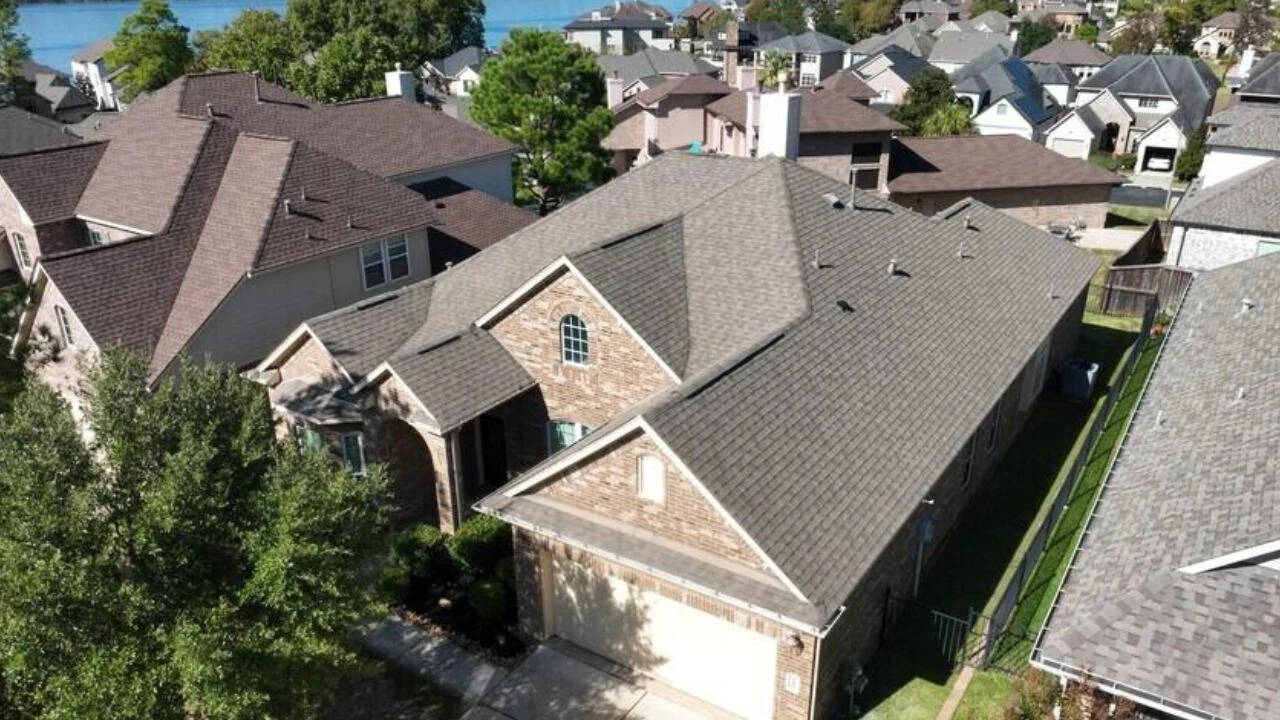
Imagine waking up on a Tuesday morning in suburban Texas, stepping onto your back porch with a ceramic mug of hot black coffee, and realizing that the concrete path you have walked every single day for ten years does not technically belong to you anymore. Or worse: it never did.
That is the quiet terror of the property line. It is an invisible scar running straight through the Bermuda grass, separating neighbors who once waved over the chain-link fence, borrowed hedge trimmers, and watched each other's children learn how to ride bicycles without training wheels. Until the day they didn't.
The Anatomy of a Neighborhood War
Property disputes rarely start with shouting. They start in the municipal archives.
Consider the anatomy of a typical suburban grievance. One neighbor decides to put up a privacy fence, or plant a row of Leyland cypress trees, or expand a driveway so an adolescent driver can park a beat-up sedan without blocking the mailbox. A surveyor arrives with a tripod, wearing a high-visibility vest, squinting through a digital lens at iron pins buried six inches beneath the sod.
The transit clicks. The numbers are read. The math disagrees with forty years of neighborly assumption.
Suddenly, a concrete slab that felt entirely domestic—a place where children left chalk drawings and golden retrievers buried chewed-up tennis balls—is revealed to sit three feet, five feet, maybe only six inches over an ancient, unyielding line drawn by a draftsman who died during the Eisenhower administration.
In the case that recently wound its way through the Texas courts, two neighbors found themselves locked in a trench warfare of wills over precisely five feet of unremarkable earth. Five feet. You can pace it out in two long strides. You can clear it with a running jump. But across those sixty inches, civil war broke out.
It wasn't about the dirt. It was about the principle. It was about who had the right to say mine.
The Illusion of Absolute Ownership
We are taught from childhood that land is absolute. You buy a plot, you get the keys, you plant a rosebush, and the dirt is yours from the center of the earth to the apex of the sky.
The law is far more poetic, and far more frustrating, than that.
Real estate lawyers talk about easements the way priests talk about grace: invisible obligations that bind us to one another whether we want them to be there or not. An easement is a legal ghost. It is a right held by someone else to cross or use your land for a specific purpose. A utility company needs to bury a water line? Easement. A neighbor needs a sliver of access to reach their garage because the original subdivision was mapped by someone who had too much bourbon at lunch? Easement.
When the Texas judge finally banged the gavel on that five-foot strip, the ruling did not grant the aggrieved homeowner the dramatic, absolute victory movies promise. Instead, the court did something far more pragmatic and far more painful: it upheld an existing easement and tagged the trespasser with a one-hundred-dollar award.
One hundred dollars.
Think about the emotional toll of that figure. Months, perhaps years, of lost sleep. Legal retainers paid by the hour. Acid reflux, tense dinners where no one speaks, slamming doors, security cameras mounted to stare directly into a former friend's kitchen window—all for a judgment that values the infraction at less than the cost of a decent pair of work boots.
The court looked at the maps, listened to the testimonies of men and women whose faces had grown pinched and old with bitterness, and essentially said: You may use the path, but you do not own the ground. And for stepping out of bounds, pay your penance.
What We Fight Over When We Fight Over Borders
We project our anxieties onto our perimeters.
When the modern world feels chaotic, loud, and entirely outside of our control—when inflation eats our savings, when algorithms dictate our moods, when national politics resemble a screaming match in a parking lot—our homes are supposed to be our absolute sovereign states.
The perimeter fence is the last line of defense against the overwhelming fluidity of existence. If I cannot control the six inches of soil beside my driveway, what can I control? If my neighbor can plant azaleas where I believe my property marker rests, then my entire sense of order is a fragile fiction.
This is why neighborhood disputes are so notoriously vicious. They are fueled by proximity. You cannot escape a corporate rival by going home; your rival is thirty feet away, washing his SUV in his driveway while wearing the exact same smug expression that caused you to call a real estate attorney in the first place. You smell his barbecue. You hear his lawnmower at eight o'clock on a Saturday morning when your head is pounding. Every weed that creeps under the fence is interpreted as a personal insult, an act of territorial aggression, a declaration of hostility.
The Cost of Winning
The Texas ruling teaches us something brutal about the American obsession with victory.
Winning a legal battle over a strip of land rarely feels like triumph. It feels like an eviction from community. Once a court decides who has an easement and who owes a hundred dollars for trespassing, the dispute is technically over. But the neighborhood is dead.
You do not borrow sugar from someone you paid a hundred dollars to keep off your grass. You do not ask them to feed your cat when you go to Florida. You pull your car into the garage, hit the remote button, watch the heavy metal door slide down into the concrete groove, and pretend the house next door is an empty lot.
That is the true price of the five-foot strip. Not the legal fees, not the surveyor's invoice, not the hundred-dollar fine. It is the quiet, grinding isolation of living beside an enemy of your own making, separated only by a line that nobody can see, but everyone can feel.
Next time you walk down your sidewalk, look down at the grass near the edge of the pavement. Notice how the blades grow right over the concrete, indifferent to the property lines, crossing back and forth without permission, green and oblivious to the human drama unfolding above their roots. The dirt doesn't care. Only we do. And sometimes, our caring costs us everything that matters.