Two minutes.
In emergency medicine, two minutes is the difference between a brain starved of oxygen recovering its memories and a family learning how to operate a feeding tube. It is the margin between a tourniquet holding back a femoral bleed and a paramedic pronouncing a time of death on wet asphalt. Every protocol, every flashing light, every screaming siren is engineered to shave seconds off that clock.
Now picture a Tuesday night in a residential neighborhood—a hypothetical composite drawn from dozens of real dispatch logs across Europe and North America over the last few years. A call comes through at 11:14 PM. Someone is down on the pavement near a concrete plaza, bleeding from a head wound. An ambulance rolls out, followed by a single patrol car to secure the perimeter. The paramedics aren't thinking about politics, policing scandals, or holiday festivities. They are checking their airway bags, calibrating dosages in their heads, and bracing their knees against the lurch of the truck as it takes a corner at fifty miles an hour.
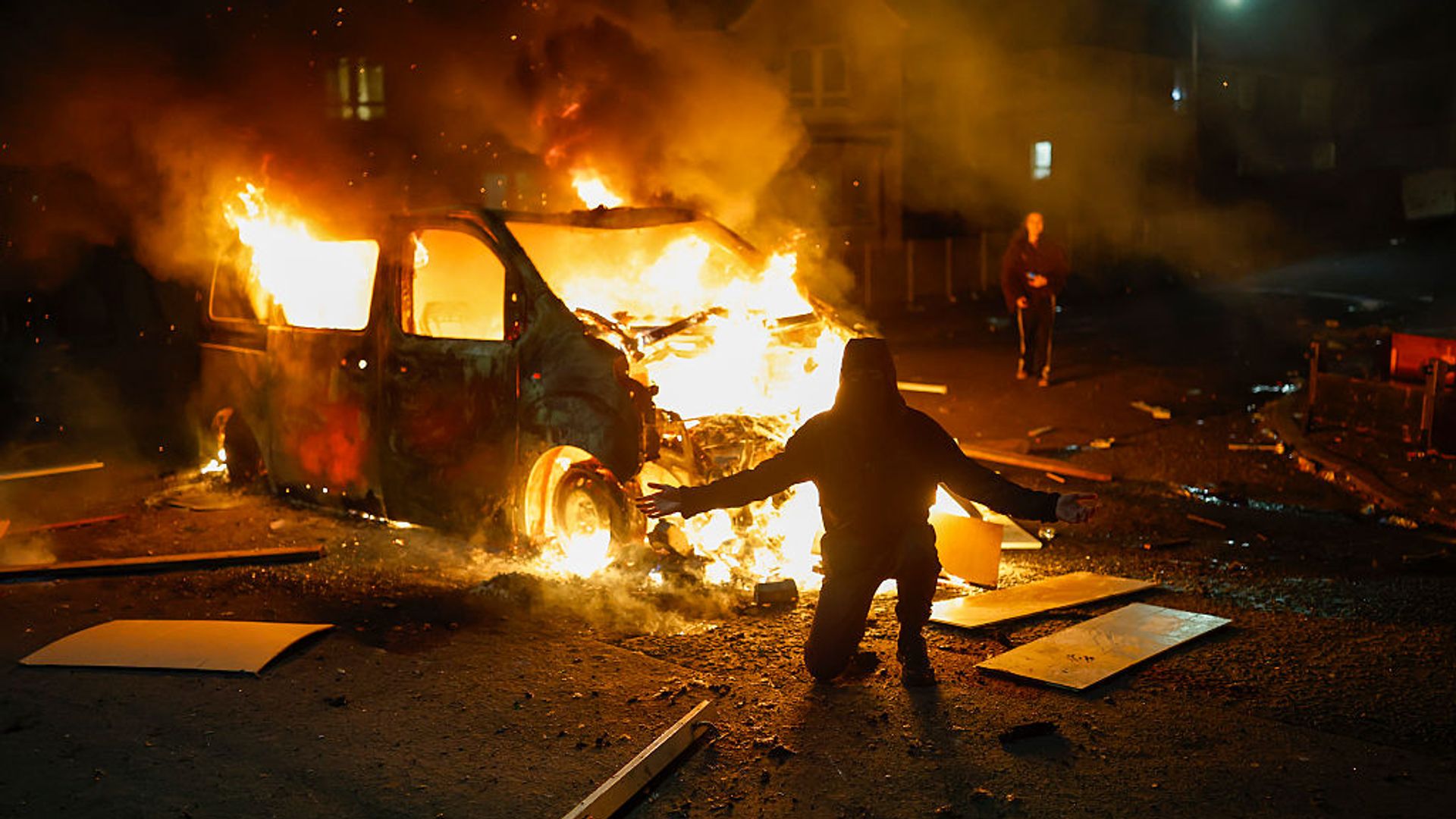
They arrive. The back doors swing open. And before the stretcher wheels even touch the street, a whistling streak of red phosphorus arcs out from behind a parked van and detonates three feet from the paramedic’s ear.
Flash. Concussion. The acrid, metallic bite of black powder and burning cardboard filling the cab of the ambulance.
This is no longer a freak anomaly reserved for riot zones or New Year’s Eve chaos. Across cities from Berlin and Rotterdam to Manchester and Minneapolis, police officers and paramedics responding to routine medical emergencies are being ambushed with commercial-grade fireworks. And when we read the dry, three-paragraph police blotters describing these incidents—usually buried on page four under a headline like Police and paramedics attacked with fireworks while responding to injured person—we miss the entire architecture of what is actually breaking down.
The Physics of a Cheap Weapon
To understand why a tube of cardboard and flash powder has become the weapon of choice for street ambushes, you have to understand what a modern consumer firework actually is. We still carry the childhood memory of sparklers on a summer lawn and fountains fizzling in a driveway. That nostalgia blinds us to the reality of what sits inside illegal or misappropriated Category F3 and F4 pyrotechnics.
These are not party favors. A heavy aerial shell or a modified "cobra" firecracker carries an explosive charge comparable to a small military concussion grenade. When launched horizontally down a narrow street rather than vertically into an open sky, a Roman candle ceases to be a celebration; it becomes a repeating, low-velocity incendiary launcher. A mortar shell fired at chest height turns into an unguided projectile capable of shattering safety glass, igniting synthetic uniform fabric, and causing permanent sensorineural hearing loss.
I remember the first time a mortar went off ten yards from an engine company I was riding with during a ride-along research stint years ago. The sound doesn't just hit your eardrums; it punches your sternum. Your vision whites out for a fraction of a second, and your inner ear scrambles your balance so violently that you grab the nearest door handle just to keep from pitching forward onto your face. For ten seconds afterward, all you hear is a high-pitched, screaming sine wave—and in those ten seconds, you cannot hear a patient gasping, you cannot hear a partner yelling for a trauma kit, and you cannot hear the next rocket coming.
That disorientation is precisely the point. Fireworks offer a terrifying asymmetric advantage to anyone looking to disrupt an emergency response:
- Plausible deniability: Carrying a box of rockets in a backpack doesn't trigger the immediate legal tripwires that carrying a firearm or a knife does, even in jurisdictions with strict weapons laws.
- Acoustic cover: The explosions mask the location of the thrower while simultaneously drowning out emergency radio traffic.
- Psychological shock: The combination of blinding magnesium flashes, thick smoke, and concussive blasts triggers an instant, involuntary flinch reflex that forces trained responders to seek cover rather than treat the wounded.
The Invisible Third Victim
When a crowd pelts an ambulance with pyrotechnics, the headlines focus on the damaged vehicles and the bruised officers. Rarely does the story circle back to the person lying on the concrete—the reason the sirens were turned on in the first place.
Consider the mechanics of an emergency call. Paramedics are not armed. They wear high-visibility polyester jackets designed to make them stand out in traffic, which happens to make them luminous targets in a dark alley. Their training is built around one foundational rule: scene safety first. You cannot save a drowning person if you drown on the way out to them.
When fireworks begin exploding around an ambulance, that rule forces an agonizing calculation. Do the medics push forward through burning debris to reach the bleeding teenager on the sidewalk, risking a rocket to the face? Or do they retreat into the cab, lock the doors, and wait for tactical police units to clear the block?
Every instinct in a paramedic’s body screams to go forward. They didn't take a high-stress, underpaid job lifting heavy stretchers at three in the morning because they enjoy sitting behind locked doors. Yet if they step out and take a direct hit, there is nobody left to treat either the original patient or themselves. So they wait. Five minutes. Ten minutes. Fifteen minutes while armored vans mobilize from across town.
Meanwhile, ten yards away, the original victim—maybe a neighbor who suffered a seizure, maybe a cyclist hit by a car, maybe a friend of the very people lighting the fuses—lies unattended. That is the quiet, brutal irony of attacking first responders. The people throwing the explosives often believe they are striking a blow against authority, or staging a chaotic spectacle for a smartphone camera. In reality, they are severing their own community's lifeline.
Why It Happens Now
It is tempting to dismiss these attacks as mindless hooliganism—a sudden, inexplicable outbreak of bad behavior. That explanation is comforting because it requires nothing from us except moral outrage. It is also wrong.
Behavioral criminologists and urban sociologists who study assaults on emergency workers point to a convergence of three distinct pressures. First is the erosion of institutional neutrality. Historically, even in neighborhoods deeply hostile to law enforcement, the red cross or the star of life on the side of an ambulance functioned as an unofficial truce flag. Medics were seen as healers, separate from the state’s enforcement arm. Over the last decade, as police and medical crews increasingly respond in tandem to mental health crises, overdoses, and street violence, that boundary has blurred. To an angry or intoxicated crowd, flashing blue lights are flashing blue lights. The uniform no longer signals help; it signals intrusion.
Second is the economics of attention. In the pre-smartphone era, throwing a firecracker at a patrol car yielded a fleeting adrenaline rush witnessed by four friends. Today, a thirty-second vertical video of a police cruiser retreating under a shower of sparks can harvest half a million views before sunrise. The attack becomes content. The crowd isn't even angry at the specific officers arriving on scene; the officers are merely props in a high-stakes performance staged for an invisible audience online.
Third—and hardest to admit—is the accessibility of high-grade pyrotechnics combined with patchy enforcement. Across Europe, open borders mean that heavy-duty explosives banned in one country can be bought legally across a border twenty miles away and hauled back in the trunk of a hatchback. In North America, commercial-grade mortars sit in roadside tents every summer, sold with a shrug and a printed warning label that nobody reads after midnight.
The Slow Drain Behind the Station Doors
You can replace a cracked windshield on a squad car in forty-eight hours. You can buff scorch marks off the aluminum siding of an ambulance over a weekend. What you cannot easily repair is the quiet psychological erosion happening inside firehouses and ambulance depots after the smoke clears.
Talk to veteran paramedics—the ones with fifteen or twenty years on the street—and they will tell you that the job has always carried risk. They expect drunk drivers on highway shoulders. They expect combative patients waking up from an opioid reversal, swinging wildly because their brain thinks they are suffocating. They accept those hazards because those hazards make sense. They are part of the human wreckage paramedics signed up to navigate.
Being hunted while kneeling over an unconscious stranger is different. It violates the unspoken social contract that makes emergency medicine possible.
When a crew gets ambushed on a Tuesday night, they don't get six months of paid leave to process it. They finish their shift, file an incident report, wash the soot off their boots, and clock back in forty-eight hours later. Only now, something subtle has shifted in how they work. The next time the radio crackles with a call to that same housing estate, the driver’s shoulders tighten. They park two blocks away instead of pulling right up to the curb. They wait for a police escort before stepping out, even when the dispatch notes say difficulty breathing or chest pain.
Nobody blames them. They have families to go home to. Yet the net result is an invisible tax levied on the entire neighborhood: slower response times, hesitant care, and experienced medics quietly handing in their badges to go work in quiet urgent-care clinics where nobody throws explosives at the front door. Emergency services across the Western world are already bleeding staff; turning routine night shifts into low-grade combat patrols accelerates that exodus faster than any budget cut ever could.
Rebuilding the Truce
If you ask frontline responders what needs to change, they rarely ask for armored ambulances or military gear. Turning paramedics into tactical operators destroys the very trust they need to do their jobs; nobody wants to open their front door at 2 AM to someone dressed like a stormtrooper when their child is having an asthma attack.
Instead, the real solutions require a mix of hard legal boundaries and stubborn community work:
- Reclassifying pyrotechnic assaults: In too many jurisdictions, throwing a heavy firework at an emergency vehicle is still prosecuted as simple criminal mischief or disorderly conduct—resulting in a fine or community service. Treating commercial-grade pyrotechnics used against people as assault with a deadly weapon changes the legal math immediately, giving prosecutors leverage to seek real deterrence.
- Choking the illegal supply chain: Targeting the teenagers lighting fuses on a street corner is like mopping the floor while the pipe is still burst. The real leverage lies in tracking the cross-border distributors and bulk warehouses moving Category F4 explosives onto the black market before the holiday seasons even begin.
- Decoupling medical and police responses where safe: When mental health crises or minor injuries can be handled by unarmed crisis teams in unmarked or distinctly non-police vehicles, the visual trigger that sparks crowd hostility often vanishes before it can ignite.
- Community accountability before the siren sounds: The cities that have successfully curbed ambulance attacks didn't do it with batons; they did it by bringing local youth workers, neighborhood elders, and off-duty paramedics into schools and community centers to show what actually happens inside the back of that truck when every second counts.
I still think about that Tuesday night composite—not the noise, and not the bright orange streaks tearing through the dark, but the quiet moment right after the last rocket fizzled out in a puddle.
Somewhere down the block, a group of young men was probably jogging away, laughing, replaying a shaky video on a cracked phone screen to see if they caught the moment the cruiser’s headlights shattered. And fifty yards behind them, beside an ambulance with black scorch marks blistering the paint above its rear wheel, a paramedic with ringing ears and trembling hands was finally kneeling on the cold asphalt, pressing gauze against a stranger’s head, praying that two minutes hadn't already come and gone.