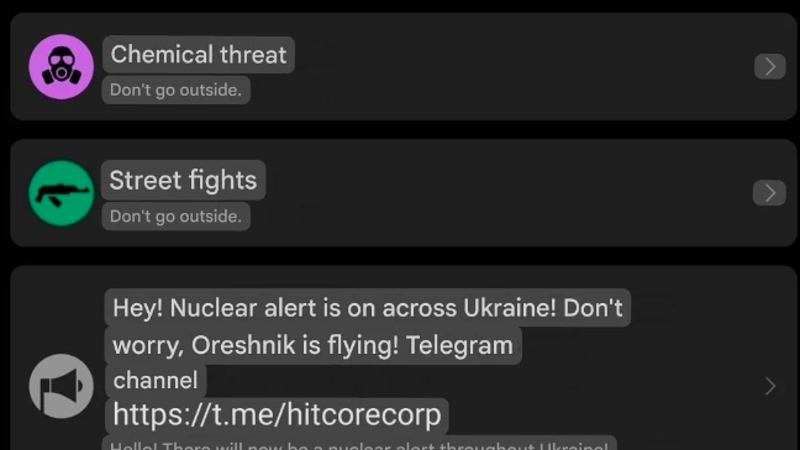
When Ukraine’s public air raid alert app began blaring false alarms across smartphones, officials immediately urged citizens to stay calm after confirming the system had been compromised by hackers. While no physical missiles were inbound during the spoofing incident, the intrusion exposed a glaring vulnerability in modern civilian defense. Turning millions of personal devices into instant early-warning sirens saves lives during conventional bombardments, yet that exact same connectivity creates an irresistible target for adversaries looking to weaponize panic without firing a single shot.
The Anatomy of a Digital Siren
To understand how an attacker hijacks an early-warning network, you have to look at how these platforms are built under pressure. In peacetime, critical civil defense infrastructure takes years to architect, audit, and deploy. During a full-scale invasion, engineers do not have the luxury of multi-year security reviews. They build fast to keep people alive.
Ukraine’s primary mobile alert application, Air Alert, was developed rapidly by private tech firms in coordination with the Ministry of Digital Transformation. Its architecture relies on a straightforward premise. Regional military administrations detect an incoming aerial threat via radar or intelligence channels, trigger an alert inside a centralized administrative dashboard, and push notifications instantly to millions of devices subscribed to those specific geographic zones.
Speed is everything. If a ballistic missile launches from a neighboring border, civilians might have less than three minutes to reach a basement or subway station. Developers deliberately stripped away friction between the trigger and the broadcast to shave precious seconds off delivery times.
That speed introduces fragility. Any system designed to push high-priority override alerts to millions of endpoints simultaneously depends on centralized API gateways, push-notification brokers like Firebase or Apple Push Notification Service, and administrative authentication portals. An attacker does not need to breach the military radar network itself to cause chaos. They only need to compromise the middleman—the software layer responsible for telling phones to scream.
How Adversaries Spoof Emergency Broadcasts
In cybersecurity circles, compromising an alert system is rarely about sophisticated zero-day exploits. Most breaches of public notification systems come down to credential harvesting, misconfigured cloud permissions, or compromised third-party administrative accounts.
Consider a hypothetical example of how this unfolds in practice. A regional operator uses an administrative web portal to manage local alert statuses. If that operator falls victim to a targeted phishing campaign, or if an API key used by an automated integration is inadvertently exposed in a code repository, an intruder gains the exact same privileges as an authorized civil defense official. Once inside, the attacker does not need to steal data or install ransomware. They simply toggle the alert state from green to red.
This is not merely a theoretical risk, nor is it unique to Eastern Europe. In 2018, a Hawaii Emergency Management Agency employee accidentally triggered a false ballistic missile alert because the user interface placed the test button right next to the live broadcast button. Five years earlier, hackers compromised the Associated Press Twitter account and posted a fake message claiming explosions had injured the U.S. President, briefly wiping out over one hundred billion dollars in stock market value before traders realized the feed was spoofed.
When state-sponsored threat actors target an active warzone, the intent shifts from accidental panic to calculated psychological warfare. By triggering false air raid alerts in the middle of the night, hackers deprive millions of civilians of sleep, erode trust in official government channels, and clog emergency hotlines with frantic callers.
The Psychological Toll of Alarm Fatigue
Every veteran emergency manager knows that a broken warning system is worse than no warning system at all. When an alarm cries wolf, human psychology takes over.
Alarm fatigue is a documented behavioral phenomenon where repeated false positives desensitize people to urgent warnings. In hospital intensive care units, nurses surrounded by constant beeping monitors eventually tune out critical alerts, sometimes with fatal consequences. On a national scale, during an active military conflict, alarm fatigue becomes a lethal force multiplier for the aggressor.
If a hacker successfully spoofs the Ukraine air raid alert app on a Tuesday night, forcing families to huddle in damp basements for an hour while nothing happens, those same families will hesitate on Wednesday morning when an actual cruise missile is inbound. They will check Telegram channels first. They will look out the window. They will wait for confirmation. Those lost thirty seconds are often the difference between surviving a blast wave and getting caught in shattering glass.
The attackers know this. Information operations do not require physical destruction to achieve strategic objectives. By forcing government officials to issue statements telling the public to ignore their own safety apps, hackers plant a seed of doubt that lingers long after engineers patch the vulnerability.
Why App-Based Alerts Outpace Traditional Broadcasts
Given the cybersecurity risks, some observers ask why governments rely on smartphone apps at all instead of sticking to physical air raid sirens and traditional cell broadcast networks. The answer lies in the limitations of legacy hardware.
Physical sirens mounted on rooftops have blind spots. Modern double-glazed windows, heavy traffic, and subterranean metro stations easily muffle outdoor acoustic warnings. Furthermore, older siren networks are often wired into aging municipal grids that can be knocked offline by localized power outages or physical sabotage.
Cell Broadcast technology—the standard behind systems like America’s Wireless Emergency Alerts—offers much stronger security because it communicates directly through cellular towers without requiring an internet connection or a third-party app store. However, Cell Broadcast is notoriously rigid. It cannot easily be updated with custom user interfaces, granular neighborhood mapping, or multi-layered instructions on where the nearest open shelter is located.
Mobile applications bridge that gap. They work over Wi-Fi even when local cell towers are congested or damaged. They allow users to monitor multiple regions simultaneously, letting someone in Kyiv know immediately if their elderly parents in Lviv are under threat. They also provide distinct audio cues—like Mark Hamill’s voice urging citizens to seek shelter in the English version of the Ukrainian app—that cut through the ambient noise of daily life far better than a generic phone vibration.
The trade-off is an expanded attack surface. Every feature added to make an app more useful to civilians creates another potential entry point for hostile actors.
The Hidden Weaknesses in Rapid Wartime Software
When software is built under fire, technical debt accumulates at breakneck speed. In standard enterprise software development, security teams enforce strict zero-trust architecture, meaning no user or system is trusted by default, even if they are already inside the network perimeter. Every request must be authenticated, authorized, and encrypted.
During a national emergency, enforcing zero-trust across dozens of municipal offices is notoriously difficult. Local administrators rotate frequently. Backup communication channels are improvised on the fly. Sometimes, to ensure an alert goes out without delay, system architects implement fallback mechanisms—secondary login portals or simplified webhook integrations—that bypass standard multi-factor authentication.
Hackers actively hunt for these backdoors. Automated reconnaissance tools constantly scan public-facing IP addresses associated with government infrastructure, looking for exposed administrative panels, outdated server software, or weak authentication tokens.
Even if the core application servers are locked down tight, attackers often pivot to the surrounding ecosystem. Push notifications rely on external cloud infrastructure. If an attacker compromises a developer account tied to the push-notification service, they can blast arbitrary messages directly to user devices without ever touching the government's primary backend servers. The app itself remains untouched, yet the user's phone still displays an official-looking warning.
Redundancy as the Only Real Defense
Securing a public alert system against nation-state adversaries is a game of asymmetric warfare. Defenders have to block every conceivable intrusion vector around the clock, while attackers only need to find one unlocked window to cause a national headline.
Because absolute security is impossible in an active cyber conflict, resilience depends entirely on multi-channel redundancy. Relying on a single application, no matter how well-engineered, is a single point of failure.
Effective civil defense requires layering independent verification systems on top of one another. When the mobile app triggers an alarm, citizens cross-reference it immediately against local Telegram channels run by regional governors, physical street sirens, and community monitoring groups that track aircraft movements visually.
From an engineering standpoint, hardening these systems requires moving away from single-key authentication toward multi-party authorization for critical broadcasts. In high-security environments, triggering a nationwide alert should require cryptographic approval from at least two independent operators—similar to the two-man rule used in military launch facilities. While this adds a few seconds to the deployment workflow, it prevents a single compromised laptop or phished password from hijacking the entire network.
Additionally, developers must implement strict rate-limiting and anomaly detection on notification gateways. If an administrative account suddenly attempts to trigger alerts across twenty regions simultaneously at three in the morning without corresponding radar telemetry, automated circuit breakers should freeze the broadcast and force manual out-of-band verification.
The New Frontline of Civilian Infrastructure
The breach of Ukraine’s air raid alert app is a preview of how future conflicts will be fought everywhere. Modern societies have digitized their most critical safety nets, from electrical grids and water treatment plants to hospital networks and emergency dispatchers.
We traded isolated, analog reliability for connected, digital convenience. That trade brought undeniable benefits, saving lives through instant communication and precise targeting of emergency resources. Yet it also permanently blurred the line between the battlefield and the living room.
When your smartphone becomes your primary survival tool, securing the code behind it stops being an IT problem and becomes a matter of national survival. Engineers can patch compromised servers, rotate API keys, and enforce stricter authentication protocols overnight. Rebuilding public trust once the siren starts lying takes far longer.