The dust in the Syrian desert does not settle; it hangs. It clings to uniform collars, coats the teeth, and bakes under a sun that offers no mercy. Thousands of miles away, in air-conditioned briefing rooms and soundproofed television studios, war is discussed in abstract terms: red lines, strategic deterrence, and proportional responses.
On the ground, war sounds like the low, constant hum of diesel generators. It smells like aviation fuel and burned coffee.
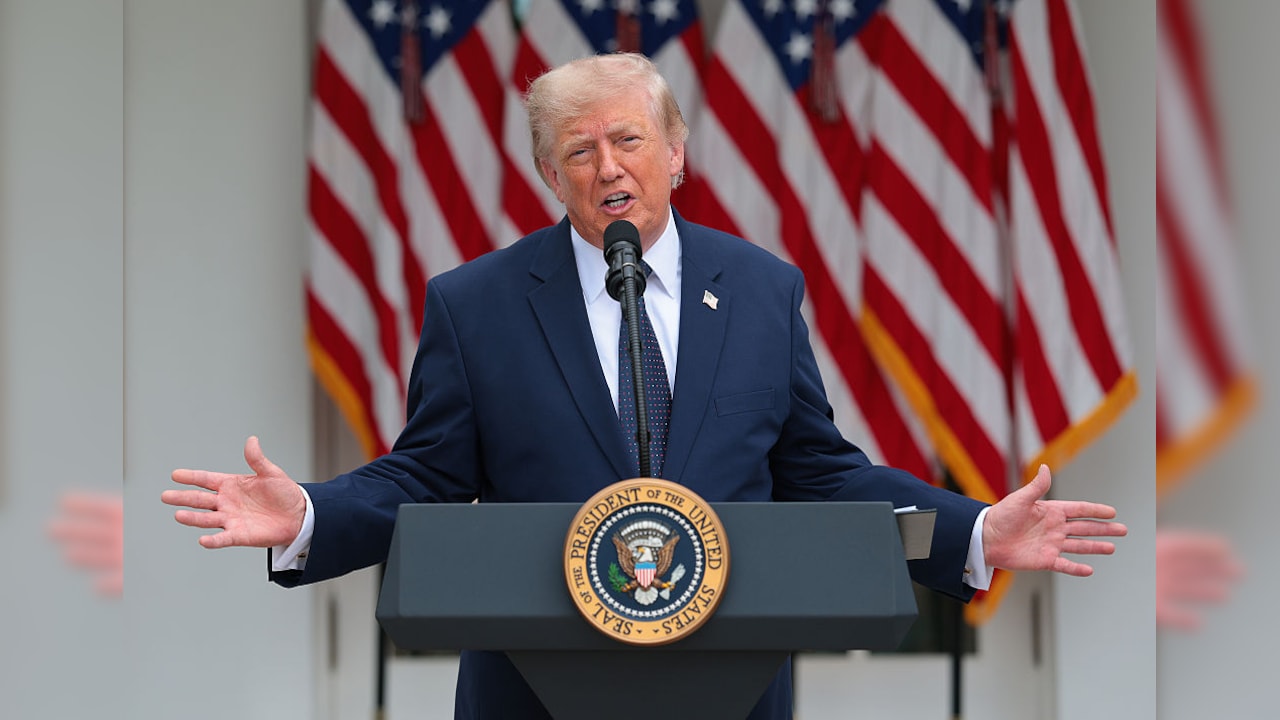
When news broke that a drone strike had pierced the defenses of a remote outpost near the Syrian border, killing three American service members and injuring dozens more, the political machinery in Washington moved instantly into gear. Statements were drafted. Cable news anchors raised their voices. From a golf club in Florida to the podiums of Capitol Hill, warnings were issued with calculated fury. "Iran would pay many times over," came the stark, echoing decree.
Yet behind the thunderous rhetoric of national leaders lies an older, quieter story about the human lives caught between the gears of empire and proxy war.
A Post on the Edge of Nowhere
To understand what happened on that quiet morning, one must first picture where these soldiers were stationed. Tower 22 sits on a patch of flat, desolate ground where the borders of Jordan, Iraq, and Syria converge. It is not a sprawling base with grand defenses; it is a logistical hub, a fortress of concrete barriers, dirt berms, and shipping containers transformed into quarters.
The men and women stationed there are not fighting on a traditional front line. They are maintaining equipment, monitoring skies, and supporting anti-terror operations in a region thick with overlapping tensions.
Night shifts at these remote bases are long and quiet. You listen to the wind. You watch thermal displays that render the world in ghostly shades of gray. You think about home—about a daughter’s baseball game you missed, a cold beer on a porch, or the simple joy of driving down a green, tree-lined highway without looking at the sky for incoming threats.
Then, in a fraction of a second, the quiet shatters.
A small, low-flying drone, moving under the radar threshold, slammed into the living quarters early in the morning while service members were still in their cots. Silence was replaced by smoke, twisted metal, and panic.
The Words That Follow the Fire
In the immediate aftermath of a military tragedy, language undergoes a rapid transformation. Grief is quickly translated into political currency.
The immediate public reaction was swift and uncompromising. Public declarations promised swift vengeance, framing the attack as a direct provocation that demanded an overwhelming display of force. The message sent across the globe was clear: blood would be met with iron, and those who directed the proxy militias behind the attack would suffer severe consequences.
Political commentary quickly focused on the mechanics of retaliation. Which targets should be hit? Should the strikes fall on proxy bases in Iraq and Syria, or directly on targets inside Iran?
This debate is familiar. It is a script refined over decades of Middle Eastern conflict. But looking strictly at diplomatic grandstanding overlooks the stark divide between those who issue warnings and those who must absorb the counterpunches.
Consider the young sergeant standing guard at a nearby outpost the night after such warnings are delivered. They do not hear the applause of a political rally. They hear the sudden alarm klaxon telling them another retaliatory drone has been launched. They scramble into full armor in the dark, heart hammering against their ribs, waiting to see if their shelter will hold.
The Logic of Deterrence and Its Human Shadow
Deterrence is the core theory of modern military strategy. The idea is simple: convince your enemy that the price of attacking you is far higher than any potential gain. If the threat is credible, the enemy backs down.
When a leader declares that an adversary will pay "many times over," they are attempting to project absolute resolve. They are trying to draw a line in the sand so deep that no opponent dares step across it.
History shows us that deterrence is rarely a clean equation.
Instead of a simple physics problem where action equals reaction, geopolitics operates like a hall of mirrors. A strike meant to demonstrate strength can be perceived by the other side as a provocation that demands its own retaliatory response. Each escalation cycle is driven by leaders who feel they cannot afford to look weak.
Meanwhile, the people bearing the physical brunt of this grand strategy are almost always the ones with the least say in its execution.
Take the families waiting for news back home. For them, a headline about rising geopolitical tensions is not an interesting news cycle; it is a tight knot in the stomach every time an unfamiliar car drives down the street. When three families received the visit no military spouse or parent ever wants to receive, the abstract debate over foreign policy suddenly froze into permanent, unyielding grief.
The Invisible Stakes in the Sand
It is easy to view Middle Eastern military operations through the lens of map markers and geopolitical strategy. We talk about troop numbers, regional influence, and proxy networks as if they were pieces on a chessboard.
Chess pieces do not have names. They do not have favorite songs, unfinished letters, or plans for the weekend.
The three soldiers killed in that quiet border post were real people with distinct stories. They were sons and daughters, comrades and friends. They joined the military for various reasons—some for education, some for adventure, some out of a deep sense of service to a country far across the ocean.
When a drone strikes a military bunker, it does not just destroy property or shift political leverage. It snaps a thread that connects a human being to everyone who loved them.
When threats of massive retaliation are traded between powerful capitals, the stakes are elevated for thousands of other soldiers scattered across small, isolated bases throughout the region. Every harsh statement delivered to a bank of television cameras changes the threat level on the ground. It tightens the alertness of every sentry. It turns every unidentifiable sound in the night into a potential attack.
Beyond the Rhetoric
Public warnings and displays of anger serve a purpose in statecraft. They signal boundaries to adversaries and reassure allies that acts of violence will not go unanswered. But when the dust clears and the news cameras move on to the next crisis, the fundamental reality of the conflict remains unchanged.
The desert stays hot. The outposts remain vulnerable. The threat of low-cost, high-impact weaponry like suicide drones continues to redefine how small units protect themselves in remote corners of the world.
Leaders will continue to declare that their enemies will pay heavy prices. Counter-declarations will be issued from foreign capitals promising resistance and defiance. The cycle will continue to spin, driven by pride, strategy, and political necessity.
A few days after the attack, as heavy cargo planes flew east to carry three flag-draped caskets back home to American soil, the sun rose again over the desolate triangle of sand near the Syrian border. Sentries stepped up to their posts, adjusted their body armor, and scanned the empty, shimmering horizon.