The Atlantic Ocean does not negotiate. Along the rugged edges of Biarritz, where the Basque country meets the crushing weight of the sea, the water speaks in a constant, low roar. For centuries, people have come to this corner of southwest France to stand at the edge of the world. They look out from the high promenade, watching the white foam smash against ancient stone, feeling small. It is a place of breathtaking beauty, but beauty on the coast is never static. It is carved out of violence.
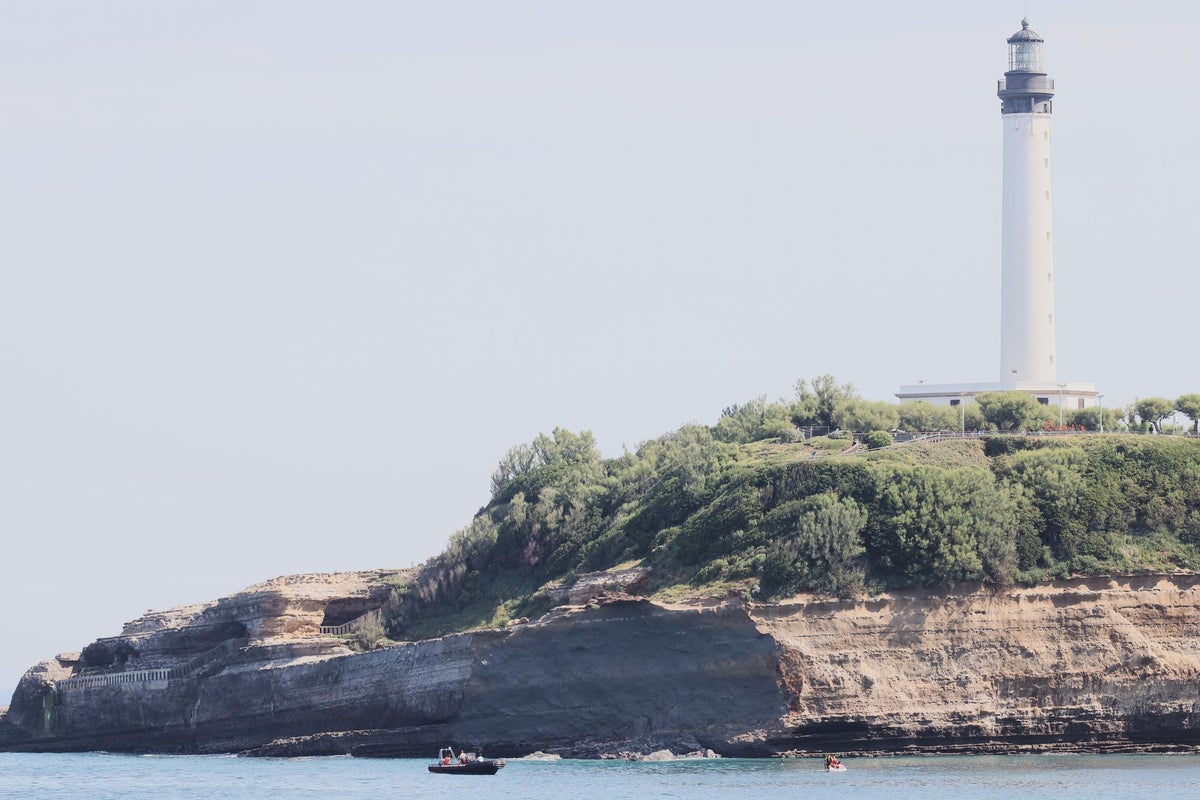
Towering over the cliffs sits the Biarritz lighthouse. The Phare de Biarritz has stood as a white sentinel since 1834, casting its beam across the Bay of Biscay, warning sailors of the treacherous, jagged rock formations below. To visitors, the cliffs look permanent. They look like the definition of eternity.
They are not.
Below the surface, a quiet, invisible countdown is always ticking. The limestone and flysch rock strata that define this famous resort town are under constant assault. Every wave that crashes into the base of the cliffs forces air into tiny fissures. The pressure builds. The water retreats. The air expands violently. Bit by bit, microscopic fractures become deep caverns. The land grows heavy. And sometimes, without a single sound of warning, the earth simply gives way.
On a clear afternoon, a diver stepped into the water near the base of these very cliffs. The sun was hitting the water, turning the Atlantic into a brilliant sheet of turquoise. It was the kind of day that draws thousands of tourists to the French resort town every year, the kind of day where danger feels like a concept meant for other people, in other places.
Then, the cliff fell.
The Illusion of Permanence
We live with an innate trust in the ground beneath our feet. When we walk along a mountain trail or stand on a coastal overlook, our brains categorize the rock as a solid, unmoving variable. It is the backdrop to our lives, the stage upon which our fleeting human stories unfold.
But talk to any geologist who studies the coastline of southwest France, and they will tell you that the map is being rewritten every single day. The cliffs of Biarritz are a living, changing entity. They are composed of layers of sedimentary rock that have been tilted, folded, and cracked by tectonic forces over millions of years.
Consider the sheer physics of the Atlantic. A single wave hitting a cliff face can exert a pressure of several tons per square meter. During winter storms, that force multiplies exponentially. But it is not just the spectacular, crashing storms that do the damage. The quiet summer days do their part too. The sun heats the rock, causing it to expand. The cool tide rolls in, causing it to contract. This thermal cycling creates internal stress within the stone, weakening the invisible bonds holding the cliff together.
Imagine holding a heavy book at arm's length. At first, it feels light. You can hold it easily. But as the minutes tick by, your muscles tire. The weight stays the same, but your ability to support it diminishes until, inevitably, your arm drops. The cliffs above the Biarritz waters are holding up thousands of tons of earth against the relentless pull of gravity. The ocean spends decades weakening the muscles of the rock.
The diver who entered the water that afternoon was operating in a world of immediate sensory experience. The weightlessness of the water. The cool press of the neoprene suit. The rhythmic, mechanical sound of breathing through a regulator. Underneath the surface, the chaos of the surface world fades into a soothing, blue silence. You feel entirely disconnected from the land. You forget that the world above still possesses gravity.
The collapse happened in an instant. A section of the cliff face, destabilized by years of unseen erosion, detached itself from the mainland. Tons of rock, dirt, and debris plummeted into the surf, transforming the clear water into a churning, chaotic mass of suffocating stone and sediment.
The Price of Exploration
The rescue services arrived quickly. Sirens cut through the ambient sound of the resort town, drawing onlookers to the railings near the lighthouse. Helicopters hovered over the water, their rotors whipping the sea into a frenzy. Divers from the local emergency services plunged into the murky, debris-filled water, searching for a sign of life.
But the ocean is a unforgiving environment when the land decides to invade it. The sheer mass of the falling rock left no room for survival. The victim, a local resident who knew these waters well, was pronounced dead at the scene.
It is easy to look at a tragedy like this and dismiss it as a freak accident. A case of terrible timing. An act of God. But looking at it through that lens misses the larger, more unsettling truth about our relationship with the natural world. The boundaries we draw between the safe, civilized spaces of our resort towns and the wild untamed elements are entirely artificial.
Biarritz has spent millions of dollars over the decades trying to tame its coastline. Engineers have drilled massive steel rods deep into the cliffs to anchor the shifting rock. They have sprayed tons of reinforced concrete onto the cliff faces to protect them from the spray. They have built breakwaters and seawalls to absorb the energy of the Atlantic before it can strike the town's foundations.
Walk along the main promenade of the Grande Plage, and you can see the scale of this human effort. It is a masterpiece of civil engineering. It gives the illusion of total control. We eat ice cream, take photos, and watch the sunset from concrete terraces that feel as secure as a fortress.
But just a few hundred meters away, near the lighthouse, the engineering stops and nature resumes its raw, uninterrupted work. The line between absolute safety and extreme peril is often nothing more than a few steps across a sandy beach.
The Changing Architecture of the Shore
The tragedy near the lighthouse highlights a growing reality for coastal communities worldwide. Climate change is accelerating the natural cycles of erosion. Sea levels are rising, allowing waves to strike higher up on the vulnerable cliff faces, reaching sections of rock that were previously protected. Storms are becoming more frequent and intense, delivering hammering blows to coastlines that are already structurally compromised.
Local authorities in the Basque region have been tracking these changes with growing concern. They use laser scanners mounted on drones to map the cliff faces, comparing the data month by month to detect microscopic movements in the stone. They look for the warning signs: a new crack appearing in the soil above, a small pile of pebbles accumulating at the base of a cliff, a sudden discoloration in the rock indicating water seepage.
But even with the best technology available, predicting the exact moment of a failure is impossible. Rock mechanics are notoriously unpredictable. A cliff face can show signs of instability for years without moving an inch, and then collapse entirely on a warm, windless day when the sea is as flat as glass.
The danger is not limited to those in the water. For years, officials have warned tourists against walking too close to the edges of the cliffs or setting up their towels directly beneath the overhangs. Signs are posted along the coastal paths, written in multiple languages, bearing stark warnings. Yet, every summer, people ignore them. They want the perfect photograph. They want the shade provided by the cliff face. They assume that because the rock looks solid, it is.
Consider what happens next when a community experiences a loss like this. The immediate reaction is one of shock and grief. A family is shattered. A local community of divers and ocean lovers mourns one of their own. Then comes the scrutiny. Questions are asked in town halls and local government offices. Should the paths be closed permanently? Should more fences be built? Should we spend millions more to cover every square inch of the coast in concrete?
But there is a point of diminishing returns when it comes to fighting the ocean. You cannot pave the world. To destroy the wild, unpredictable nature of the Biarritz cliffs in the name of absolute safety would be to destroy the very thing that makes the town beautiful. It would turn a place of natural wonder into a sterile, concrete ditch.
The Rhythm of the Sea
The day after the collapse, the emergency vehicles were gone. The yellow police tape that had cordoned off the access paths fluttered gently in the sea breeze. The Atlantic had already washed away the plume of dust and mud, returning the water to its deep, signature blue.
People walked their dogs along the path near the lighthouse. Couples stood at the railing, looking out toward the horizon, perhaps unaware of what had occurred beneath their feet just twenty-four hours earlier. The lighthouse continued its steady, rhythmic rotation, casting its light into the darkening sky as the sun dipped below the water.
We are drawn to the edge of the sea because it reminds us of the scale of time. Our lives are measured in hours, days, and years. The coast is measured in epochs. The rock that fell yesterday had been waiting to fall since before human beings walked the earth. It was a single beat in the long, slow respiration of the planet.
To explore the ocean, to climb the mountains, or to simply walk along the edge of a cliff is to accept a quiet contract with nature. It is a contract that states we are guests in a house that was not built for us. We can study the engineering, we can read the warning signs, and we can mitigate the risks as much as humanly possible. But we must never mistake our presence for permanence.
The water will continue to hit the stone. The stone will continue to hold its ground for as long as it can. And the coast will keep changing, one silent, heavy block at a time.