Dawn in the Arabian Gulf does not arrive gently. It arrives as an intense, blinding hammer of white light that bleaches the color from the water, turning the deep turquoise of the shipping lanes into a flat, molten sheet of glass.
Long before the tourist ferries begin their crawl toward the artificial islands of Dubai, or the mega-container ships start queuing for berths in Jebel Ali, the air belongs to the radars.
On a gray-hulled corvette cutting silently through the swells just outside territorial limits, the watchstander blinks against the glare of a green-phosphor display. His uniform is damp with salt and the exhausting humidity of an early morning that refuses to cool. He has been staring at this console for four hours. His coffee is cold.
Then, a pixel stutters.
It is a tiny, insignificant ghost on the periphery of the scope. To an untrained eye, it might be a sea bird riding a thermal current, or a stray return from a coastal oil rig. But the system flags it. Vector: inbound. Speed: consistent with a low-flying, propeller-driven engine. Altitude: uncomfortably low, hugging the curvature of the horizon to evade long-range detection.
An Iranian Shahed-class loitering munition. Or something very much like it. A flying bomb built from commercial lawnmower parts and carbon fiber, carrying a shaped charge capable of splitting a steel hull like a dry reed.
Quiet. Uninvited. Moving fast.
Consider what happens next in the air-conditioned, high-stakes theater of modern defense operations. There is no time for committee meetings. There is no diplomatic cable sent across the Gulf asking for intentions. There are seconds.
In the operations room, the tension snaps tight like a guitar string tuned past its limit. Orders are barked in clipped Arabic. Fingers fly across keyboards. The air defense battery ashore—or the missile systems mounted on the prow of the defending vessel—lock their guidance radars onto the phantom.
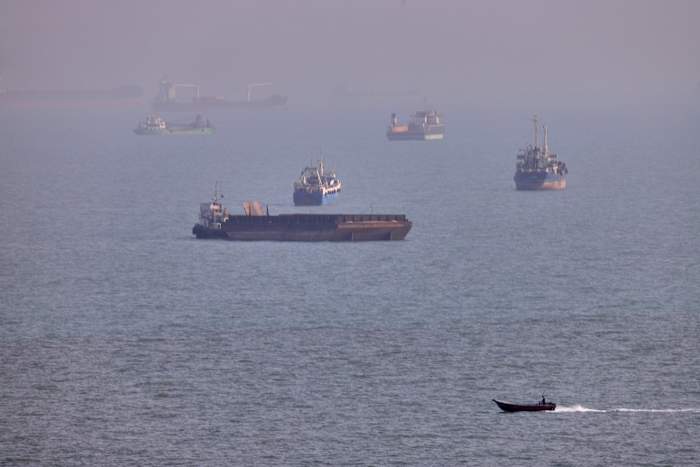
To understand why this moment carries such a heavy weight, you have to step away from the radar screen and look at the map. The United Arab Emirates sits on one of the most vital maritime bottlenecks on Earth. Through the Strait of Hormuz and the adjacent Gulf waters flows a staggering percentage of the global energy supply. Millions of barrels of oil, countless liquefied natural gas tankers, and billions in consumer goods transit these waters daily.
When an unidentified drone breaches territorial airspace, it is not merely a violation of a national border. It is a match struck inside a powder keg.
The defense is calculated, brutal, and breathtakingly fast.
A streak of white smoke tears across the azure sky, leaving a jagged scar of vapor that vanishes almost as quickly as it forms. The sound follows seconds later—a deafening, concussive rip that rattles the teeth in your skull and shakes the salt crust off the ship's railings.
Direct hit.
High above the water, a sudden blossoming of orange fire and black smoke flowers against the morning clouds. Shrapnel hisses into the sea, raising tiny, momentary geysers a mile off the starboard beam. The radar screen clears. The ghost is gone.
Silence returns, heavier than before.
Hours later, the official statements are drafted. Cold. Measured. Diplomatic. The Ministry of Defense in Abu Dhabi issues a brief communiqué confirming that an Iranian drone was successfully intercepted over territorial waters. No panic. No grandstanding. Just a statement of fact designed to reassure markets, citizens, and international partners that the shield is holding.
Yet, dry headlines do not capture the reality of the men and women who stand at the edge of that shield. They do not convey the sudden spike in a twenty-year-old sailor's heart rate, or the quiet, agonizing calculation made by leaders who know that a single missed target could spark a regional conflagration.
The public reads the news on their phones over morning coffee, scrolling past the notification between weather updates and stock tickers. They swipe away, returning to the predictable rhythms of traffic jams, office emails, and school runs.
They forget that peace is not a natural state.
Peace here is an artificial construct, held together by millions of lines of computer code, millions of dollars of hardware, and the unblinking, exhausted eyes of people standing watch in the dark, waiting for the sky to fall.
Out on the water, the smoke from the interception has long since dissolved into the humid air. The sea is flat again, deceptive and calm, mirroring a sky that looks entirely empty until the next invisible thing decides to fly.