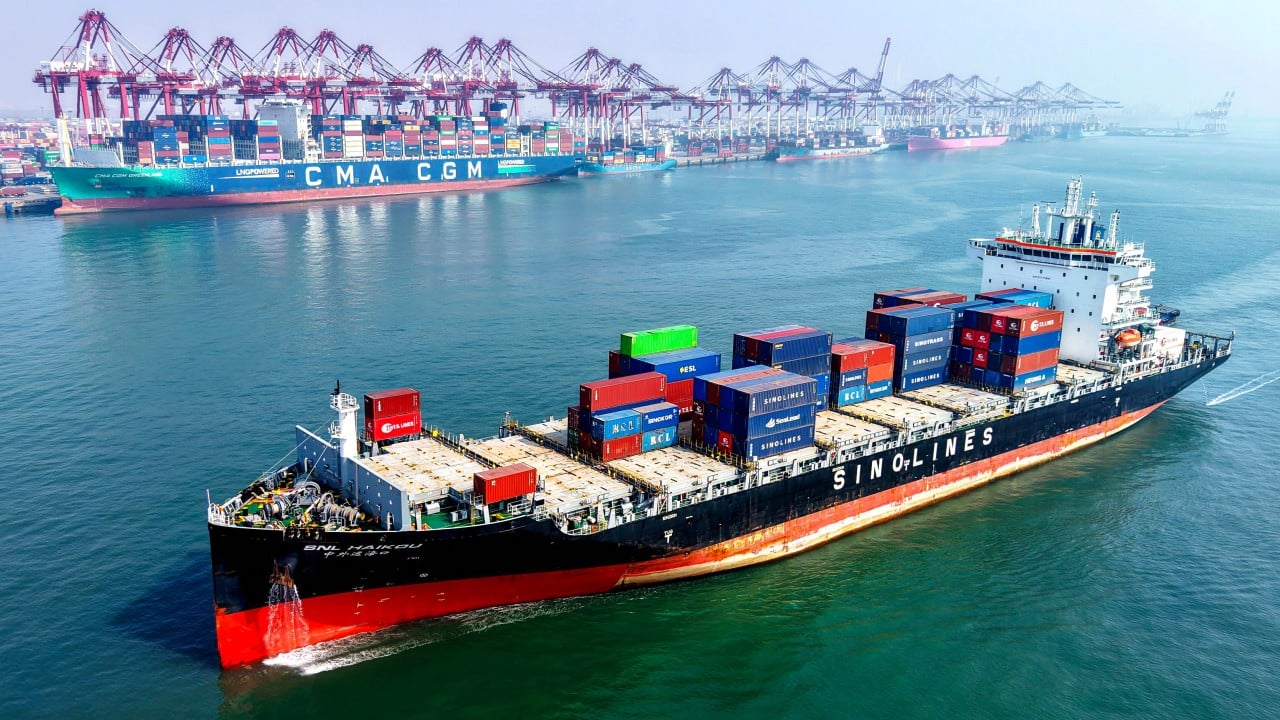
The steel hull of the Ever Zenith doesn't feel like a geopolitical chess piece when you’re standing on the bridge. It feels like a small, vibrating island smelling of salt and heavy fuel oil. But as the captain watches the horizon near the Strait of Hormuz, he isn't just navigating through deep water. He is carrying the lifeblood of a superpower that has suddenly found itself very, very thirsty.
In March, the spreadsheets in Beijing did something strange. While the rest of the world expected a steady pulse, China’s import numbers lunged forward like a runner catching a second wind. At the same time, the goods flowing out—the iPhones, the EVs, the plastic components of modern life—seemed to stumble.
To a data analyst, it’s a "trade imbalance." To the person actually living it, it’s the sound of a country holding its breath and filling its basement.
The Invisible Wall at the Mouth of the Gulf
Most of us think of the global economy as a series of digital clicks. You buy a shirt; a factory ships it. But reality is made of narrow strips of water. The Strait of Hormuz is one of those places where the entire world’s heartbeat can be throttled by a few well-placed ships or a heightened insurance premium.
When a blockade or a "soft" tightening of transit happens in the Middle East, the ripples don't just stay in the sand. They travel at the speed of light to the energy desks in Shanghai.
Consider a factory owner in Zhejiang. Let’s call him Mr. Lin. For twenty years, Lin has turned raw granules of plastic into medical devices. He depends on a predictable flow of oil to keep his overhead stable. When the news hits that the Strait is thickening with tension, Lin doesn't read the headlines as "news." He reads them as a tax. A heavy, unavoidable tax on every single thing he produces.
March became the month of the Great Stockpile. Fearing that the door to the world’s gas station might swing shut, China began buying. Not just a little. A surge.
Buying Against the Dark
The surge in imports wasn't driven by a sudden, exuberant burst of consumer spending. It was driven by a cold, calculated survival instinct. If you think the neighborhood is about to lose power, you don't buy a new TV; you buy every battery on the shelf.
China’s customs data showed a massive intake of crude oil, iron ore, and copper. These are the building blocks of a nation that is preparing for a winter, whether literal or metaphorical.
But there is a price for filling the pantry so quickly.
When a nation spends its capital to hoard raw materials, that money isn't going into the hands of the people who buy the finished goods. The internal engine begins to knock. We saw it in the export cooling. For the first time in a long stretch, the "Factory of the World" looked tired. The demand from the West was softening, yes, but the internal friction of managing a potential energy crisis was the real weight on the scale.
The Weight of the Cargo
The math is simple but the reality is heavy.
- Import Growth: Up significantly, driven by energy and raw commodities.
- Export Cooling: A dip that reflects both global fatigue and shifting internal priorities.
- The Hormuz Factor: A 21-mile-wide choke point that dictates the cost of a liter of gas in a Beijing taxi.
Statistics are often used to hide the truth rather than reveal it. A "3.5% shift" sounds like a rounding error. It isn't. It represents millions of tons of steel and oil being diverted, stored, and protected. It represents a shift in the psyche of the world's second-largest economy from expansion to insulation.
Imagine the docks at Qingdao. The cranes move with a rhythmic, mechanical indifference. But the sheer volume of incoming bulk carriers in March tells a story of anxiety. They are bringing in the iron ore that will eventually become the infrastructure of a more self-reliant nation. They are bringing in the copper for the grids that won't rely on foreign coal.
They are buying time.
Why the Export Dip Matters More Than You Think
For years, the world relied on a specific rhythm: China makes, the world takes.
But in March, that rhythm skipped a beat. The cooling of exports isn't just about a "soft market." It’s about the rising cost of making things when your energy routes are threatened. When it becomes more expensive to get the oil in, the price of the plastic toy going out must rise. Eventually, the buyer in London or New York looks at the price tag and pauses.
That pause is what we see in the March data.
It’s a feedback loop. The blockade in the Middle East makes the energy expensive. The expensive energy makes the manufacturing costly. The costly manufacturing reduces the exports. The reduced exports mean less foreign currency coming in.
So, you buy even more raw materials now, while you still can, before the price goes higher or the door closes completely.
The Human Toll of the Spreadsheet
Behind every "softening export" figure is a shipping coordinator who has to tell a client that their order is delayed because the logistics chain is kinked. There is a laborer in a port city who sees fewer outgoing containers and wonders if his shift will be cut next week.
The global economy is often described as a "robust" machine. It isn't. It’s a delicate web of trust and geography. When a narrow passage of water in the Middle East becomes a flashpoint, a worker in a Chinese tech hub feels it in the price of his lunch and the uncertainty of his bonus.
We often talk about "trade wars" as if they are fought with pens and tariffs. They are actually fought with tankers and storage tanks.
March was the month China decided that having the goods in the warehouse was more important than having the cash in the bank. It was a pivot toward a fortress mentality. The imports surged because the future looked expensive. The exports softened because the present is becoming difficult to navigate.
The Ever Zenith continues its slow trek. The crew doesn't talk much about the March trade data. They talk about the weather and the heat. But the oil in the belly of their ship is more than just cargo. It is the weight of a nation trying to outrun a crisis that is narrowing the world's most important waterways.
The dragon is drinking deep while the water is still flowing. It knows that tomorrow, the tap might only offer a trickle.
The sky over the South China Sea is a bruised purple as the sun sets, reflecting off the thousands of containers stacked like LEGO bricks on the shore. They are full. They are waiting. And for the first time in a long time, the world is waiting to see if they will ever actually leave the dock.