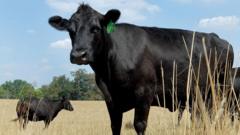
The Weight of a Single Cut
Step into any quiet pasture in the American heartland right now, and you will hear something missing. The hum of a thriving industry feels quieter, constrained by invisible boundaries. Drive past the livestock auctions where generations of families traded cattle with a handshake and a nod, and you will notice fewer trucks backed up to the pens.
The numbers staring back at us from supermarket meat aisles do not lie, but they fail to capture the human ache behind them. Record high US beef prices are not merely a line item on an inflation report. They are a seismic shockwave rippling from dusty ranch gates to crowded urban apartments. A simple Sunday night ribeye has transformed from a casual weekly ritual into a calculated luxury budget item. For a more detailed analysis into similar topics, we recommend: this related article.
To understand how we arrived here, we have to look past the cold spreadsheets of the commodities market. We have to walk the fence lines.
A Perfect Storm of Grass, Grain, and Time
Cattle cannot be manufactured on an assembly line. They require land, water, time, and above all, immense patience. When a consumer buys a package of ground beef, they are purchasing the culmination of a multi-year biological cycle. And that cycle has recently been battered by a historic convergence of forces. For additional details on this issue, comprehensive reporting is available on Forbes.
Consider a hypothetical cattle rancher named Tom. Tom manages a modest herd in the drought-scorched expanses of the Great Plains. For years, Tom and thousands like him faced a brutal choice. Water became scarce. Pastures turned to dust. The cost of supplemental feed—corn and hay—surged to levels that defied economic sanity.
When keeping a cow alive costs more than the animal will ever fetch at market, ranchers do what they must do to survive. They liquidate. They send their breeding stock, known as cows, to the processing plants early.
Short-term, this flood of cattle temporarily held prices down. Long-term, it hollowed out the future.
Fewer mother cows mean fewer calves born the following spring. It is a biological law that no government subsidy or corporate strategy can bypass. The United States cattle inventory shrank to its lowest level in decades. Supply plummeted. Meanwhile, consumer demand for beef stubbornly refused to drop. When an irresistible force meets an immovable object, prices explode upward.
The Corporate Bottleneck
Supply and weather tell only half the story. Walk into any major meatpacking plant in the Midwest, and you encounter an entirely different kind of pressure.
The American meat processing sector operates with a staggering degree of concentration. A handful of massive conglomerates control the vast majority of processing capacity. When these plants experience disruptions—whether from labor shortages, mechanical failures, or unforeseen global events—the entire national pipeline chokes.
Ranchers often find themselves caught in a painful squeeze. They watch retail beef prices hit all-time highs at grocery stores, yet the price they receive for their live cattle at the auction barn often fails to cover their escalating operational expenses.
This disconnect breeds profound frustration across rural America. It feels like a system built for margins rather than people. The consumer pays more. The rancher earns less. The invisible machinery in between captures the difference.
What Comes Next
Prices will not magically reset overnight. Biological lag dictates our immediate future. Even if every drought ended tomorrow and feed prices plummeted, rebuilding the national cattle herd takes years. A heifer born today will not yield market-ready beef until well down the road.
We are living through a structural realignment of what it costs to put protein on our plates. It forces us to confront uncomfortable truths about modern agriculture, climate vulnerability, and the fragility of our food supply chains.
The next time you stand before the refrigerated display case, hesitating over the price tag of a roast, remember the invisible narrative woven into that plastic wrap. It is a story written in parched soil, high interest rates, biological realities, and the quiet resilience of people who refuse to quit working the land, no matter how heavy the burden becomes.