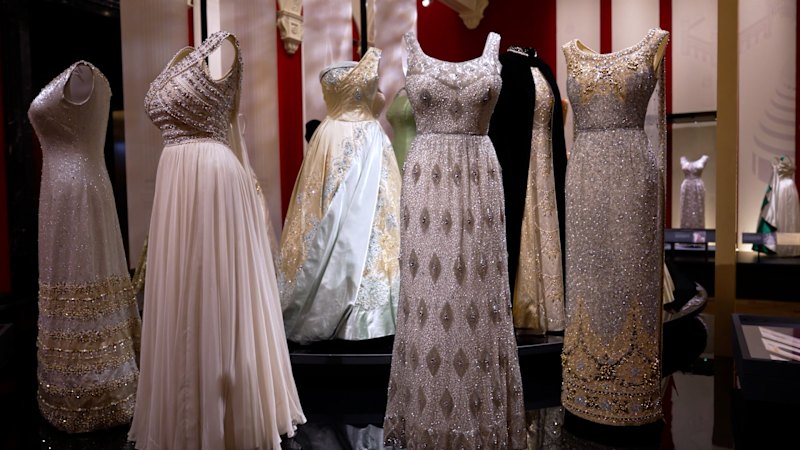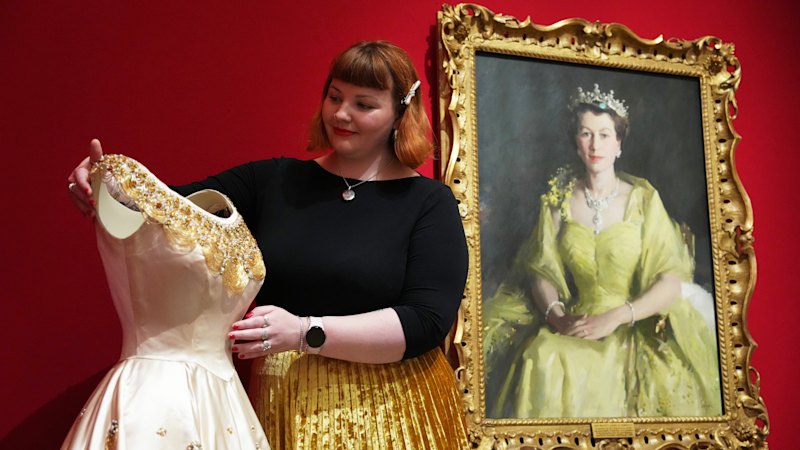
Queen Elizabeth II did not just wear clothes; she deployed them as a sophisticated instrument of soft power and geopolitical signaling. While casual observers might view her early wardrobe as a mere collection of high-fashion artifacts, a closer look reveals a calculated strategy designed to stabilize a fractured British Empire and project an image of unwavering continuity. From the moment she ascended the throne in 1952, every stitch, hemline, and weighted fabric served a specific diplomatic function. She understood that for a monarch, visibility is the primary currency of influence.
The Architecture of Sovereignty
The 1953 Coronation gown was not just a dress. It was a map. Designed by Norman Hartnell, the garment featured hand-embroidered symbols of the Commonwealth: the Tudor rose for England, the thistle for Scotland, the leek for Wales, and the shamrock for Ireland. However, the Queen insisted on including symbols for the various dominions beyond the British Isles. This was a deliberate move to acknowledge the changing dynamics of a post-war world where the Empire was rapidly evolving into a voluntary association of independent nations.
Hartnell’s team worked in total secrecy, producing a piece of wearable propaganda that signaled both tradition and a forward-looking inclusivity. The weight of the silk and the density of the pearls and crystals created a physical presence that anchored the young Queen in the center of the Abbey. She was small in stature, but the dress made her monumental. It was the first time a global audience saw the monarchy through the lens of television, and the visual message was clear: the crown was stable, prepared, and deeply invested in its global ties.
Diplomacy Through the Hemline
When the Queen embarked on her massive Commonwealth tours in the 1950s, her wardrobe functioned as a mobile embassy. She didn't just dress for the weather; she dressed for the local sentiment. This wasn't about following trends. It was about respect. In Australia, she wore yellow wattle—the national flower. In Canada, she wore the maple leaf. These choices were never accidental and were vetted by the Foreign Office to ensure no cultural sensitivities were overlooked.
The "diplomatic dress" became a standard operating procedure. By incorporating national colors or regional motifs into her outfits, she managed to bypass language barriers. She communicated a message of unity and shared identity without saying a single word. This strategy was particularly effective in nations where the British presence was being questioned. It is much harder to protest against a figure who is literally wearing your national identity on her sleeve.
The Technical Rigor of Royal Style
Maintaining this image required an almost military level of precision. The fabrics had to be non-crushable because a wrinkled Queen looked like a defeated Queen. Weights were sewn into the hemlines to prevent the wind from causing any undignified "Marilyn Monroe" moments on tarmac strips or ship decks. The colors were chosen for maximum visibility; she wore bright, saturated hues so that someone standing at the back of a crowd of ten thousand could still say they "saw the Queen."
The Psychology of the Uniform
As the decades progressed, Elizabeth developed what became her definitive "uniform": a coat-and-hat ensemble that served as a visual shorthand for the monarchy itself. This consistency was a choice. By opting out of the fleeting cycles of high fashion, she positioned herself as a figure who existed outside of time. Fashion is about change; the monarchy is about endurance.
This refusal to chase the "new" allowed her to avoid the pitfalls that trapped other public figures. She was never "out of style" because she was never trying to be "in style." She created a singular aesthetic that functioned as a brand identity, one that was instantly recognizable from London to Lagos. The hat, the pearls, the Launer handbag—these were the tools of a professional who understood that her body was a public site.
The Hidden Language of the Brooch
While the dresses provided the canvas, the jewelry provided the nuance. The Queen’s collection of brooches was used to send specific, often subtle, messages to her hosts or guests. A brooch gifted by a foreign head of state would be worn during their visit as a gesture of goodwill. Conversely, the absence of a specific piece could be noted by those trained in the arcana of royal protocol.
During the visit of a controversial world leader, the Queen might choose a piece with a history linked to a more favorable era or a different set of values. These were the "Easter eggs" of the diplomatic world. They allowed her to maintain a facade of political neutrality while signaling her true allegiances to those who knew where to look. It was a masterclass in subtlety that no modern politician has quite managed to replicate.
The End of the Spectacle
The Queen’s wardrobe was a shield. It protected the woman while elevating the institution. In the early years, the glamour of Hartnell and Hardy Amies provided a much-needed distraction from the austerity of post-war Britain. As the country transitioned into the swinging sixties and the turbulent seventies, the Queen’s refusal to radically alter her appearance provided a sense of continuity that many found comforting.
She proved that clothing is not merely an aesthetic choice but a structural one. It is a way to occupy space, to command respect, and to define the parameters of a conversation. The young Elizabeth who spoke to the world through her wardrobe understood a fundamental truth: in the theater of power, the costume is the character.
Stop looking for the fashion trends in the royal archives and start looking for the policy decisions. The stitches tell the real story.