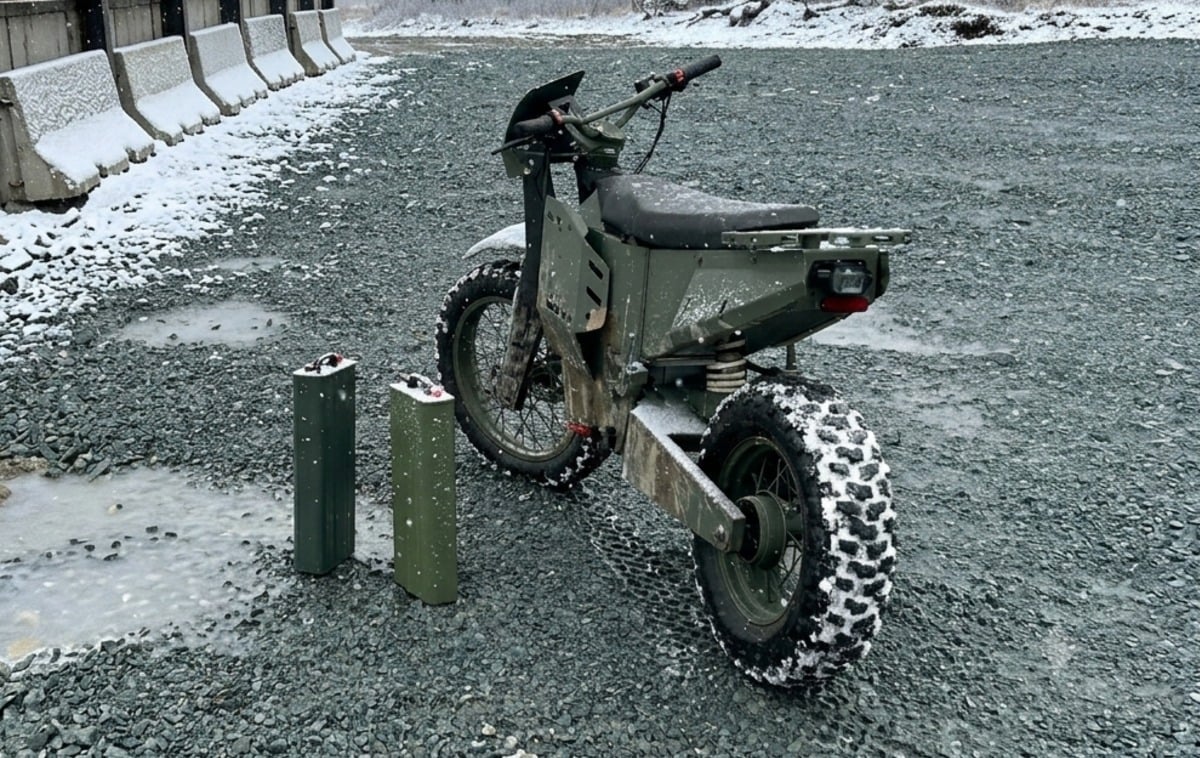
The military tech press is currently swooning over a Canadian startup that built a "silent" electric motorcycle for tactical insertion. The narrative is predictably intoxicating. Elite operators glide through enemy lines under the cover of total acoustic stealth, bypassing thermal imaging because there is no exhaust pipe, and executing flawless reconnaissance missions.
It is a beautiful marketing presentation. It is also an operational fantasy.
As someone who has spent years evaluating tactical hardware procurement and watching defense startups burn through venture capital on idealized use cases, I find this hyperventilating over electric reconnaissance bikes exhausting. The tech sector loves to build elegant solutions for problems that do not exist on actual battlefields.
The "lazy consensus" in defense tech assumes that if you make a vehicle quiet, you make it survivable. That is a fundamental misunderstanding of modern electronic warfare, logistics, and the brutal reality of the tactical environment.
The Acoustic Illusion
Let's dismantle the primary selling point: silence.
Yes, an electric motor lacks the internal combustion roar of a 250cc two-stroke engine. At a standstill or at crawling speeds of less than 15 kilometers per hour, an electric bike is remarkably quiet. But military scouts do not operate in a vacuum, nor do they travel at a pedestrian jog when exposed in contested territory.
When a 300-pound motorcycle carrying a 200-pound operator in full kit moves across dirt, gravel, or mud at 50 kilometers per hour, the motor is the least of your acoustic worries.
- Tyre-ground interface: The mechanical tearing of knobby tires gripping loose soil or crushing dry underbrush generates a distinct, high-frequency acoustic signature audible from hundreds of meters away in a quiet environment.
- Chain slap and suspension cycle: Under high stress, the mechanical components of the drivetrain and the heavy cycling of off-road suspension components create metallic chatter.
- Aerodynamic rush: At speed, the displacement of air and the rustle of tactical gear create an acoustic profile that easily trips modern unattended ground sensors (UGS).
More importantly, targeting doctrine has evolved past the human ear.
Thermal Camouflage is a Half-Truth
Advocates argue that omitting an internal combustion engine eliminates the thermal signature. They point to the absence of a glowing exhaust manifold and hot tailpipe. This is an amateur understanding of thermodynamics.
While an electric dirt bike does not have an exhaust system, it possesses three massive thermal liabilities: the battery pack, the inverter, and the electric motor itself. Under heavy tactical load—such as climbing steep terrain, navigating deep mud, or operating in deep sand—lithium-ion batteries generate massive amounts of internal heat.
Lithium batteries operate via chemical reactions. Push those reactions hard, and the pack warms up. To prevent thermal runaway, these vehicles require heat sinks or liquid cooling loops. This means the entire chassis becomes a radiant heat panel.
Modern forward-looking infrared (FLIR) systems and thermal optics mounted on commercial-off-the-shelf (COTS) loitering munitions do not need a 600-degree exhaust pipe to find a target. They only need a 3-degree Celsius delta between the vehicle frame and the ambient background temperature. A hot battery pack glowing against a cool midnight desert floor looks like a beacon on a thermal scope.
The Logistics Nightmare: Powering the Frontline
The most egregious flaw in the electric military bike thesis is not tactical; it is logistical.
Mil-spec operations run on standardization. For decades, NATO has pushed for the "single fuel concept," aiming to run everything from a main battle tank to a portable generator on JP-8 or standard diesel. This simplifies the supply chain. If a unit runs out of fuel, they siphon it from a wrecked transport truck or a dropped fuel bladder.
An electric motorcycle introduces a completely incompatible infrastructure requirement into the dirty, chaotic forward edge of the battle area.
The Mathematical Reality of Tactical Charging
Consider the energy density dilemma. A gallon of military-grade diesel contains roughly 38 kilowatt-hours (kWh) of energy. A standard tactical electric motorcycle carries a battery pack hovering around 4 to 7 kWh to keep the weight manageable for off-road riding.
When that battery runs dry after 40 miles of aggressive, deep-terrain riding, how does the operator replenish it in the field?
| Propulsion Type | Replenishment Method | Time Required | Infrastructure Needed |
|---|---|---|---|
| Internal Combustion | Jerry can pour | 45 seconds | A plastic jug of standard fuel |
| Electric Startup Bike | Tactical Recharging | 2 to 4 hours | Heavy diesel generator or dedicated microgrid |
To charge a fleet of stealth e-bikes at a forward operating base (FOB), you must run a massive, noisy, diesel-powered generator. The irony is absolute: you burn diesel and create a massive acoustic and thermal footprint at your base just so a scout can ride "silently" for a few miles.
If the scout is cut off behind enemy lines, a dead battery transforms a $30,000 piece of high-tech hardware into a 300-pound anchor. You cannot scavenge electricity from a ditch. You cannot pour electricity out of a jug.
Weight, Durability, and the Physics of Dropping Things
Anyone who has ridden a dirt bike in rugged terrain knows that you do not ride it so much as you survive it. You crash. You drop the bike on rocks. You slide down ravines. You submerge it in river crossings.
When you drop a traditional gas-powered lightweight bike, you might bend a handlebar, snap a clutch lever, or crack a plastic fairing. You bend it back into shape with a pair of pliers and keep riding.
If you drop an electric motorcycle onto a jagged rock formation and puncture the aluminum casing protecting the lithium-ion battery pack, you do not fix it with a multi-tool. You trigger an exothermic reaction. A punctured lithium battery does not just stop working; it undergoes thermal runaway, burning at over 1,000 degrees Celsius with a chemical fire that cannot be extinguished with water.
Furthermore, weight distribution on these vehicles is notoriously unforgiving. To get the required range, startups pack heavy battery cells into the center frame. This creates a dense, rigid mass that lacks the flickable agility of a traditional 220-pound dirt bike. When high-speed maneuvering is the difference between evading an ambush or taking a round, a bloated, heavy frame is a liability, not an asset.
The Wrong Tool for the Modern Reconnaissance Doctrine
The underlying premise of the silent military bike is fundamentally outdated. It assumes a mid-20th-century model of reconnaissance: human eyes on the ground, physically moving through terrain to scout enemy positions.
The conflict environments of the 2020s have proven that this model is largely obsolete for initial scouting. Small, cheap, expendable unmanned aerial vehicles (UAVs) have completely overtaken ground-based dirt bikes for rapid reconnaissance.
Why risk a highly trained human operator on a 300-pound ground vehicle that can be stopped by a simple tripwire, an anti-personnel mine, or a hidden ditch, when a $500 drone can scout the same grid square from 500 feet in the air without exposing a single drop of blood?
Ground mobility is still vital, but its purpose has shifted to rapid extraction, casualty evacuation, and high-speed payload delivery—tasks where raw speed, range, and instant replenishment are paramount, and where electric vehicles fail catastrophically compared to their internal combustion counterparts.
What Actually Works on the Ground
If the goal is lightweight, low-signature tactical mobility, the answer isn't a fragile, expensive electric motorcycle that requires its own power grid. The answer lies in optimizing existing, hyper-reliable mechanical platforms.
- Multi-fuel lightweight engines: Developing small, highly efficient engines capable of running on JP-8, diesel, or commercial gasoline without catastrophic degradation.
- Acoustic suppression systems: Advanced, lightweight muffling systems that reduce the decibel output of traditional internal combustion engines to manageable levels without destroying power output.
- Human-electric hybrids: If electric power must be used, it should be restricted to a tiny, secondary hub motor on a traditional gas-powered bike, used exclusively for the final 800 meters of an approach, allowing the primary engine to handle the grueling logistics of transit and self-charging.
Defense startups need to stop designing hardware for tech expos and start designing for the mud, rain, and chaotic supply chains of real-world conflicts. Until a startup creates a battery that can be recharged by pouring liquid fuel into it, the silent electric motorcycle will remain an expensive toy for public relations campaigns and garrison display floors. Stop buying the hype. The internal combustion engine isn't dead on the battlefield; it's the only thing keeping the scout alive.