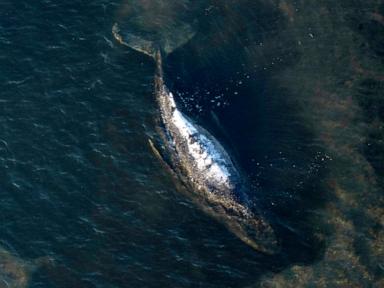
A dead, 30-foot humpback whale towed into a Danish harbor is more than a tragic wildlife spectacle. It is a warning siren for an ecosystem under profound stress. The juvenile whale, discovered floating in the shallow waters of the Kattegat strait before being brought ashore at Grenaa for a full necropsy, highlights a stark reality. While recovering global populations are pushing these massive marine mammals back into historical feeding grounds, human industrial activity in European shipping lanes is turning those same waters into ecological death traps.
The immediate focus of local authorities and veterinary scientists remains fixed on the upcoming autopsy. They want to determine whether the whale died of natural illness, starvation, or acute trauma. Yet focusing solely on the physical cause of death misses the systemic crisis unfolding across the North Sea and the Baltic entrances. Large cetaceans are entering these narrow, hyper-congested waterways at a time when industrial shipping traffic, offshore wind development, and warming water temperatures are fundamentally altering marine habitats. This isn't just an isolated case of a lost whale. It is a collision of biology and heavy industry.
The Fatal Bottleneck of the Danish Straits
Humpback whales are highly migratory, relying on deep-ocean corridors to travel between polar feeding grounds and tropical breeding lagoons. The waters surrounding Denmark, particularly the Kattegat and the Skagerrak, do not fit this description. They are shallow, labyrinthine, and packed with commercial vessels.
When a humpback enters these straits, it steps into a gauntlet. The shipping lanes connecting the North Sea to the Baltic Sea are among the busiest on earth, handling tens of thousands of container ships, tankers, and ferries annually. For a creature that relies on acoustic communication and echolocation to navigate, the underwater environment here is deafening.
[North Sea] ---> (Skagerrak) ---> [Kattegat Strait] ---> (Danish Straits) ---> [Baltic Sea]
                                        |
                                 (Grenaa Harbor)
The acoustic footprint of commercial shipping creates a wall of low-frequency noise that can disorient deep-sea cetaceans. When disoriented, these animals are far more likely to wander into shallow coastal waters, where they face two primary anthropogenic threats: ship strikes and entanglement in commercial fishing gear.
Marine biologists note that a significant percentage of whale strandings in northwestern Europe show signs of blunt-force trauma consistent with large vessel impacts. Often, these injuries are internal, leaving the outer skin intact while shattering bones and causing massive internal hemorrhaging. If the Danish necropsy reveals broken ribs or deep tissue bruising beneath the blubber, it will confirm what many field analysts already suspect. The whale was likely run down by a commercial vessel that may not have even noticed the collision.
The Illusion of Ecological Recovery
To understand why a humpback whale ended up in Grenaa, one must look at the complicated success story of global conservation. Decades after the commercial whaling moratorium took effect, humpback populations have staged a remarkable comeback in the North Atlantic.
This population boom sounds like an unmitigated victory. The reality is far more complex. As numbers grow, competition for resources intensifies, forcing younger, less experienced juveniles to forage outside traditional feeding zones.
Shifts in Prey Distribution
Climate change is rapidly shifting the distribution of sand eels, herring, and capelin—the foundational prey species for humpbacks in the North Atlantic. Rising sea temperatures are driving these fish schools further east and into shallower coastal shelves.
The whales follow the food. This brings them directly into conflict with human infrastructure. The presence of a humpback in the Kattegat is not necessarily a sign of a thriving habitat. It is frequently an act of desperation by an animal searching for a meal in a changing ocean.
The Problem with Shallow Water
Humpbacks are built for the open ocean. When they enter shallow coastal seas like the Kattegat, which averages only about 75 feet in depth, their foraging efficiency plummets.
"A 10-ton mammal maneuvering in shallow, restricted waters is akin to flying a commercial airliner through a mountain canyon. There is simply no margin for error."
In these tight spaces, the risk of entanglement rises exponentially. Gillnets, crab pot lines, and abandoned "ghost" fishing gear litter the seabed of the Danish straits. Even if an entanglement is not immediately fatal, it restricts the whale's ability to surface for air, hunt effectively, or swim efficiently, leading to a slow death from exhaustion and starvation.
What the Necropsy Can and Cannot Tell Us
The team of veterinary pathologists tasked with dissecting the carcass at Grenaa harbor faces a race against time. Decomposition alters tissue samples rapidly, obscuring vital clues about the animal's state of health prior to death.
Scientists will systematically evaluate several key biological indicators:
- Blubber Thickness: This provides a direct metric of the whale's nutritional status. Thin blubber indicates chronic starvation, suggesting the animal was unable to find sufficient food or was too sick to hunt.
- Stomach Contents: Analyzing what the whale ate before dying reveals whether it was actively foraging in Danish waters or if it had been fasting for weeks. It also highlights the ingestion of marine plastics or debris.
- Acoustic Trauma: Pathologists will examine the delicate structures of the inner ear for signs of barotrauma or hemorrhaging caused by intense underwater noise, such as sonar or seismic mapping.
| Diagnostic Focus | Potential Discovery | Ecological Implication |
|---|---|---|
| Lungs and Airways | Fluid accumulation or parasites | Underlying disease or drowning due to entanglement |
| Skeletal Frame | Fractures or bone remodeling | History of vessel strikes or chronic entanglement stress |
| Tissue Toxicology | Heavy metals, PCBs, microplastics | Severe chemical bioaccumulation in the local food web |
While the autopsy can pinpoint the structural cause of death, it cannot quantify the psychological and physiological stress the animal endured while navigating one of the world's most industrialized marine environments. The final report will likely list a physical trigger—heart failure, trauma, or asphyxiation—but the broader environment remains the true catalyst.
The Hidden Threat of Offshore Industrialization
While shipping and fishing are long-standing hazards, a new variable has entered the equation in the North and Baltic Seas. The aggressive expansion of offshore wind farms.
Europe's transition to renewable energy requires constructing thousands of wind turbines across maritime territories. The long-term environmental benefits of this transition are clear, but the short-term construction phase introduces massive disruptions to the marine environment.
Pile-driving—the process of hammering massive steel foundations into the seabed—generates underwater acoustic pressure waves that can be lethal to marine life at close range and deeply disruptive across tens of miles. For a migrating humpback, these construction zones represent areas of intense acoustic pollution that can drive animals off their safe migratory paths and directly into busy shipping lanes.
Furthermore, the physical presence of massive turbine arrays alters local current patterns and sediment distribution, which can displace the schools of small fish that whales depend on. The green energy transition is necessary, but it is creating an increasingly fragmented and hazardous marine landscape for migratory giants.
Rethinking Maritime Governance in European Waters
If European nations want to prevent their coastlines from becoming regular graveyards for recovering cetacean populations, the current approach to maritime management must change. Relying on reactive measures like towing carcasses to shore and conducting post-mortem analyses does nothing to mitigate the underlying systemic risks.
Seasonal Shipping Lanes
The most direct mechanism to reduce whale mortality is the implementation of mandatory dynamic shipping lanes. When satellite tracking or aerial surveys detect large whales in a specific sector of the Kattegat or North Sea, vessel speeds must be legally restricted to under 10 knots. Slowing down large container ships dramatically reduces the probability of a strike being fatal.
Acoustic Monitoring Networks
Deploying permanent, real-time underwater acoustic monitoring hydrophones throughout the Danish straits would allow authorities to detect the low-frequency vocalizations of approaching whales days before they enter high-risk zones. This data could be integrated directly into automated maritime navigation systems, alerting ship captains to the presence of wildlife well in advance.
The Danish humpback whale stranding is a symptom of an ocean where human industrial ambitions have outpaced ecological safeguards. The upcoming autopsy will provide a localized diagnosis, but the broader cure requires a fundamental restructuring of how we police and manage our industrializing seas.