Ink dries quickly on parchment, but the weight of unchosen paths lingers for generations.
Imagine sitting in a high-backed chair in Islamabad, the hum of fluorescent lights competing with the distant roar of evening traffic. Outside, the capital is breathing its usual rhythm of dust and diesel. Inside, maps are spread across polished mahogany. Red lines cut through blue waters. Names of distant ports—Hodeidah, Aden, the jagged mouth of the Red Sea—are whispered by men whose tailored suits conceal the nervous twitch of a pulse point.
They are weighing a shadow.
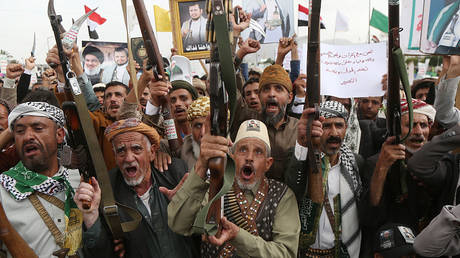
When word came down from the diplomatic channels regarding the Mecca pact and the rising storm of Houthi attacks, the air in the room shifted. A reporter outside would call it a policy update. A wire service would boil it down to a dry headline about regional security architectures. But behind the closed doors, the reality was starker, quieter, and far more human: Pakistan said no.
No military response. No joining the chorus of retaliation echoing across the Gulf.
To understand why that single negative carries the force of an avalanche, you have to look past the press releases and step into the shoes of a common soldier standing guard in the rugged hills of Balochistan, or a mother in Lahore watching the price of cooking oil tick upward week by week. Wars are fought with munitions, but they are sustained by bread, patience, and the fragile trust between a people and the state that protects them.
For decades, the strategic calculus of Islamabad has walked a tightrope. On one side lies deep-seated religious and historical loyalty to old allies in the Gulf. On the other lies the exhausting, bone-deep fatigue of a nation that has spent twenty years stitching its own wounds after fighting proxy wars on its borders.
When the Mecca pact was invoked in diplomatic whispers, the expectation from some capitals was automatic. Alignment. Participation. A show of force.
Instead, there was hesitation. Then, clarity.
Let us be entirely transparent about what this means. Governments do not make these choices out of cowardice or sudden pacifism. They make them because the math of survival has changed. To send sons and daughters into a conflict thousands of miles away over shipping lanes in the Bab el-Mandeb strait is to invite a firestorm into your own kitchen when the roof is already leaking.
Consider the hypothetical case of Tariq. He is a retired major living in Rawalpindi, his knees aching when the winter humidity rolls in from the hills. He spent thirty years wearing olive drab. He buried friends in the valleys of Waziristan. When asked about distant naval coalitions, Tariq does not talk about geopolitics or the balance of power in the Middle East. He talks about rice. He talks about fuel. He talks about the terrible, irreversible finality of a flag-draped coffin arriving at a village where the electricity only works four hours a day.
"We have danced to other people's music for too long," Tariq tells you over a cracked porcelain cup of cardamom tea, his eyes fixed on the distant horizon. "Every time we step onto someone else's battlefield, we come home with fewer resources and more ghosts."
That sentiment is not isolationism. It is exhaustion born of hard-earned experience.
The attacks in the Red Sea by Houthi forces against commercial shipping have turned vital global trade arteries into gauntlets of fire. Missiles streak through the night sky, turning steel container ships into burning hulks. Global supply chains shudder. Insurance rates for cargo vessels triple overnight. The economic shockwaves ripple outward, hitting the markets of Karachi just as hard as they hit the docks of Rotterdam or New York.
Everyone feels the pinch. Yet, the remedy proposed by distant architects of war—more bombs, more coalition fleets, more escalation—often feels like pouring gasoline on a grease fire.
Pakistan's refusal to jump into the military fray under the banner of the Mecca pact is a signal flare. It says that while stability in the Gulf is vital, the price of militarized intervention has simply grown too high to bear. It acknowledges a fundamental truth of modern statecraft: sometimes, the bravest thing a nation can do is refuse to draw a sword that does not belong to its own defense.
Diplomacy is messy. It is compromised of half-smiles in summit hallways, delayed communiqués, and carefully chosen words designed to offend the minimum number of regional powers. When Islamabad clarified its stance, stating explicitly that no military engagement was on the table regarding the Houthi threat, foreign desks in Western and Middle Eastern capitals scrambled to rewrite their assessments.
They called it a diplomatic puzzle. They looked for hidden angles, secret deals, or backchannel pressures.
They missed the obvious.
The obvious is a populace that has watched too many promises turn to ash. It is an economy teetering on the edge of the knife, where every dollar spent on foreign expeditions is a dollar stolen from hospitals, schools, and flood-ravaged villages at home.
When the news cycle moves on to the next crisis, the maps in Islamabad will be rolled up and stored in heavy wooden drawers. The lights in the conference rooms will click off. But the echoes of that quiet refusal will reverberate through the corridors of power for years to come.
History is rarely made by the battles that are fought. Often, it is forged in the wars that are deliberately, agonizingly left unstarted.
The sea remains turbulent. The missiles still arc through the dark above the water. But somewhere in the quiet streets of the capital, a door remains shut, holding back a tide that did not need to enter.