The plastic is cool against your palm, a sleek slab of glass and silicon that promises the world. You bought it for the connection. You bought it so your mother could see her grandson’s first steps over a video call, or so that crucial email about the mortgage would land in your inbox while you sat on the train. But lately, the glass feels like a weight. The bars at the top of the screen—those tiny vertical monuments to human progress—keep vanishing.
Sarah is a hypothetical person, but her frustration is documented in thousands of official logs. She sits in a kitchen in a London suburb, watching a digital circle spin on her screen. She is trying to pay a bill. She is trying to work. She is trying to exist in a society that has digitised every facet of survival, from banking to healthcare. But her provider, O2, has become a ghost. When she finally gives up and tries to call for help, she enters a new kind of purgatory.
This isn't just a bad day for Sarah. It is a trend.
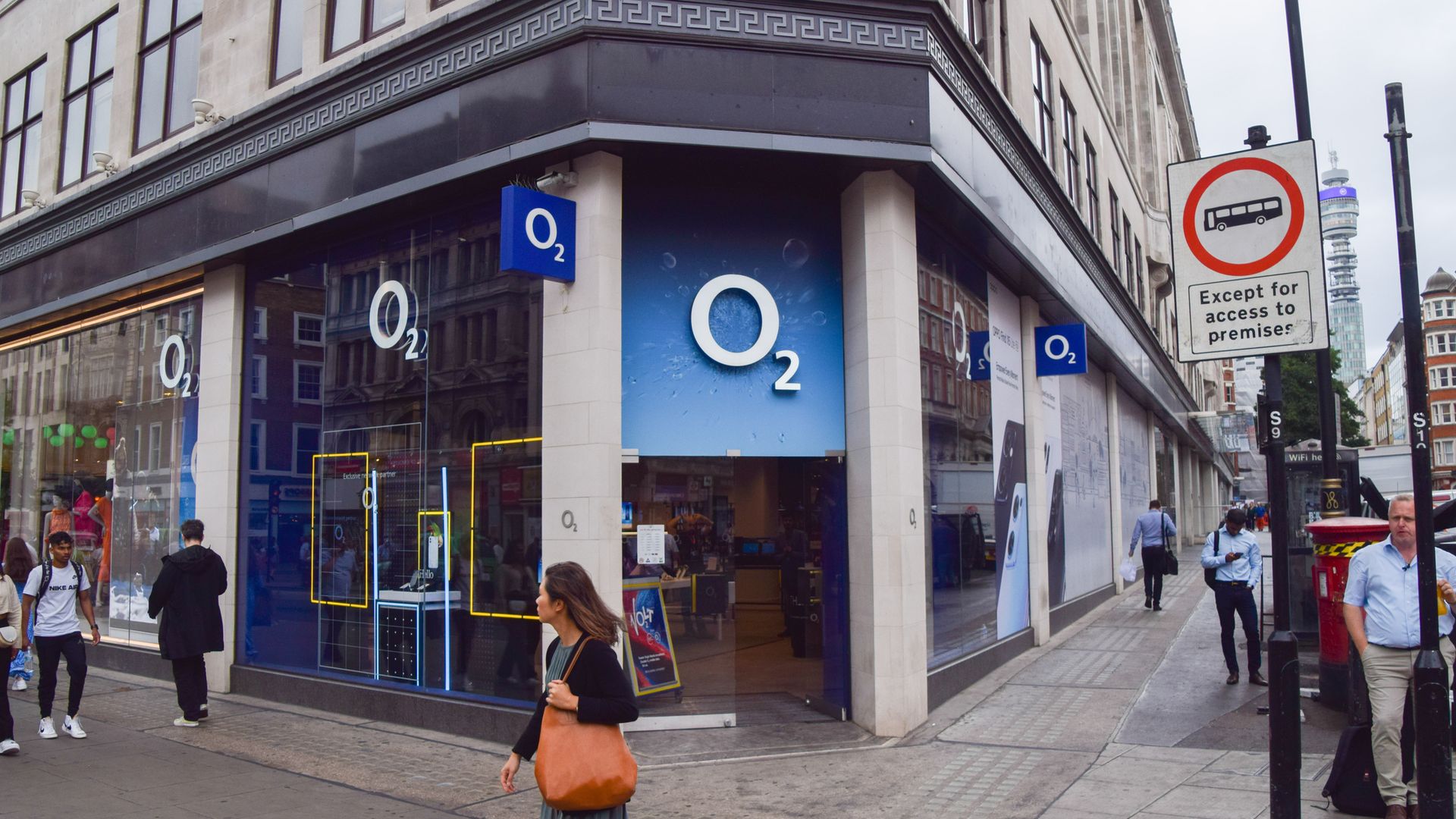
According to the latest data from Ofcom, the UK’s communications regulator, O2 has surged to the top of the "complaints league table." For a company that once banked on its image as the reliable, friendly giant of the mobile world, the fall is steep. They aren't just losing customers; they are losing the one thing a utility provider cannot survive without: trust.
The Anatomy of a Modern Breakdown
The numbers tell a story of systemic friction. Between October and December, complaints against O2 soared to 20 per 100,000 customers. To put that in perspective, the industry average is almost half that. Sky and Tesco Mobile—who, ironically, use O2’s own network infrastructure—sit comfortably at the bottom with far fewer disgruntled voices.
Why the disparity? It comes down to a single, jagged word.
Billing.
When you look at the complaints, the vast majority don't stem from a dropped call in a rural tunnel. They come from the paperwork. Customers are reporting issues with how their accounts are managed, how they are charged, and how those charges are explained. In a cost-of-living crisis, a mistake on a phone bill isn't a minor clerical error. It’s the difference between a full fridge and a week of anxiety.
Think about the psychological toll of a disputed bill. You see an extra £40 on your statement. You know it’s wrong. You call the helpline, prepared to explain. Then, you wait. The hold music—a tinny, synthesized loop of something that was once meant to be upbeat—becomes a soundtrack to your rising blood pressure. When you finally reach a human, or a bot masquerading as one, you are told the system says otherwise.
The machine is never wrong, even when it is.
The Infrastructure of Discontent
The irony of O2’s current predicament is that they are technically a powerhouse. Following their merger with Virgin Media, they became a titan of the UK’s digital landscape. But mergers are like organ transplants; if the body rejects the new hardware, the whole system suffers.
While the marketing departments were busy painting murals of a 5G future, the back-end systems—the unglamorous servers that handle your direct debits and plan upgrades—were straining. Many of the complaints directed at O2 involve "complaints handling" itself. This is a recursive nightmare. You are complaining because your original complaint was ignored, or handled so poorly that it spawned a secondary grievance.
It is a failure of empathy at scale.
Consider the "customer journey," a phrase beloved by boardroom executives. In O2’s case, that journey currently involves a lot of dead ends. When a company grows too fast or integrates too clumsily, the first thing to go is the nuance. The customer becomes a number in a ledger. If that number doesn't balance, the automated letters go out. The threats of service disconnection follow. For a person like Sarah, who relies on her phone to stay in touch with an elderly relative, that threat feels like a physical blow.
The Competition is Watching
While O2 struggles to steady the ship, their rivals are playing a different game. EE, Vodafone, and Three are all operating in the same regulatory environment, facing the same economic pressures. Yet, they haven't seen the same spike in vitriol.
Sky Mobile and Tesco Mobile are particularly interesting cases. They are "Mobile Virtual Network Operators" (MVNOs). They don’t own the masts; they rent space from O2. This creates a bizarre paradox: the signal is the same, but the experience is worlds apart. If you use Tesco Mobile, you are using O2’s signal, yet you are significantly less likely to complain to Ofcom.
This proves that the "major issue" isn't the technology. It’s the relationship.
Tesco and Sky have invested heavily in the front-end experience. Their billing systems are clearer, their customer service teams are more accessible, and their resolution times are faster. They have understood that in the 2020s, mobile data is a commodity, but peace of mind is a luxury.
O2 is currently failing to provide either.
The Ripple Effect
When a market leader falters, it changes the air for everyone. Ofcom’s report acts as a public shaming, a digital pillory designed to force a change in behaviour. But for the person holding the phone, a report doesn't fix a bank balance.
The human cost of these "billing issues" extends beyond the individual. It creates a culture of defensive consumerism. We stop expecting things to work. We spend our Sunday afternoons checking statements for hidden fees or mistakes, time that should be spent with family or in quiet reflection. We become auditors of our own lives because the corporations we pay can no longer be trusted to be accurate.
There is a specific kind of exhaustion that comes from fighting a giant. You feel small. You feel unheard. You feel like a glitch in someone else’s software.
The "complaints league table" is a dry name for a repository of human frustration. Each of those 20 complaints per 100,000 represents a person who reached their breaking point. Someone who took the time to find the Ofcom website, fill out the forms, and detail their struggle because they felt they had no other choice. It is a measure of desperation.
The Way Out of the Woods
For O2 to reclaim its status, it has to do more than patch its software. It has to look at the human on the other side of the glass.
Transparency is the only antidote to the current toxicity. If a billing migration is failing, say so. If wait times are high, explain why. But more importantly, fix the mechanics of the error. A company that can beam data to a moving train should be able to calculate a monthly tariff without causing a national spike in complaints.
The silence on the other end of the line isn't just a lack of signal. It’s the sound of a customer walking away.
We live in an age where we are more connected than ever, yet the systems that facilitate that connection feel increasingly cold and distant. When the "major issue" is billing and account management, it's a sign that the business has forgotten it is dealing with people's lives, not just their data.
Sarah still sits in her kitchen. The circle is still spinning. She looks at the O2 logo on her screen and wonders if it’s time to move to a provider that sees her as more than a data point. The plastic is still cool in her hand, but the warmth of the connection is long gone.
In the end, we don't leave companies because the 5G is slightly slower in the basement. We leave because we are tired of fighting to be treated with basic accuracy and respect. The league table has a winner, and for O2, the prize is a wake-up call that may have arrived too late.