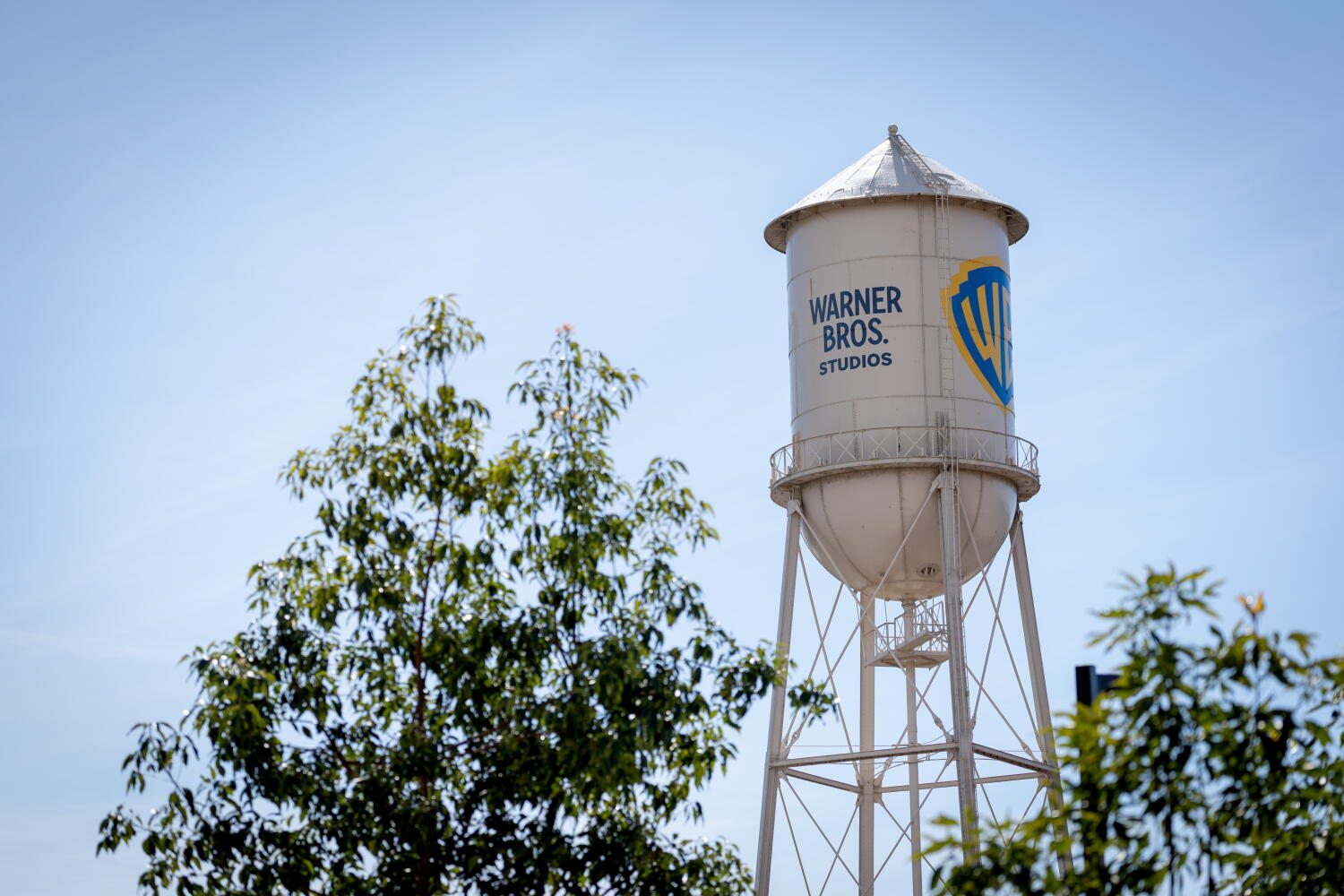
Ink dries slowly on court documents in lower Manhattan, but the echoes of a single signature will reverberate across soundstages from Burbank to New York for decades. A judge has officially signed off on Paramount's legal settlement with various states, clearing the final significant procedural hurdle for its massive Warner buyout. For months, the antitrust anxieties hung over the industry like a coastal fog, dampening green-lit scripts and freezing executive hiring. Now, the fog burns away, revealing a new architecture for the silver screen.
Consider what happens behind closed doors when two titans decide to merge their empires. To the casual moviegoer eating popcorn in the dark, a corporate consolidation sounds like dry background noise—an item on the financial news ticker that gets swallowed by the next commercial break. But walk onto a studio backlot today, and you can touch the tension. Carpenters building sets for speculative franchises do not know if their next paycheck depends on a studio that survived the acquisition or one that got absorbed into it. Writers staring at blank screens wonder if fewer buyers mean fewer bets on original, risky ideas.
The settlement itself was born from friction. State attorneys general looked at the proposed marriage between these media giants and saw a dangerous bottleneck. They worried about distribution channels narrowing, about independent theaters getting squeezed out of marquee weekend releases, and about the sheer homogenization of culture when fewer corporate parents control the projector. It is a legitimate fear. History shows us that when giants merge, the middle class of creators often gets squeezed out, leaving only mega-blockbusters on one side and micro-budget passion projects on the other, with nothing in between.
To appease those anxieties, the legal choreography required concessions. It demanded guardrails designed to protect labor markets and preserve a degree of competitive friction. Yet, legal agreements rarely capture the psychological weight of a shifting landscape. The ink on the settlement papers does not just authorize a business transaction; it validates a philosophy that scale is the only armor against the streaming era's relentless attrition.
Think about how we consume our stories now. Ten years ago, television and cinema felt like distinct ecosystems. You went to the theater for spectacle; you stayed home for serialized comfort. Today, those boundaries have dissolved into a single, unending stream of content competing for the finite currency of human attention. In that environment, the old studio system—built on independent fiefdoms and fierce, decentralized rivalry—began to feel like a relic of the horse-and-buggy era.
When a studio grows this large, its operational gravity changes. Decisions are no longer made by a passionate producer who fell in a love with a script at a dinner party. They are made by algorithmic forecasting models trying to minimize downside risk across a sprawling global portfolio. That is the hidden cost of the merger we rarely talk about in financial filings. We gain operational efficiency, global distribution power, and streamlined tech stacks, but we risk losing the erratic, eccentric genius that gave us the golden ages of cinema and television in the first place.
Yet, to paint this moment purely as a tragedy of corporate greed is to misunderstand the brutal economics of modern entertainment. Producing a tentpole feature film today costs hundreds of millions of dollars before a single poster is printed. The financial exposure is staggering. If a mid-sized studio tries to weather the storm alone, a single box-office miss can threaten its entire existence. Consolidation, from the boardroom perspective, is not an act of aggression; it is an act of self-preservation. They are building a fortress because the economic weather outside has grown too violent for wooden ships.
The judge's approval means this defensive fortress is now fully under construction. The legal battles are finished. The rhetoric has cooled. What remains is the hard, day-to-day reality of integration—combining streaming apparatuses, merging distribution networks, and rationalizing workforces that have spent decades competing against one another.
For the writers, directors, grips, costumers, and animators whose livelihoods depend on this ecosystem, the path forward is a mix of relief and trepidation. The paralysis is over. Greenlights can be given again. Budgets can be unlocked. But the playground is smaller, and the gatekeepers carry more weight than ever before.
As the projectors hum to life across the country tonight, the audience will care about none of this. They will care only about whether the screen goes dark, whether the opening chords of the score send a shiver down their spine, and whether the story can make them forget their own lives for two hours. That is the magic of the medium, entirely indifferent to antitrust law or corporate balance sheets. But the people who build those dreams will wake up tomorrow in a different world—one shaped forever by a pen stroke in a courtroom, proving once again that the most dramatic stories in Hollywood often happen off the screen.