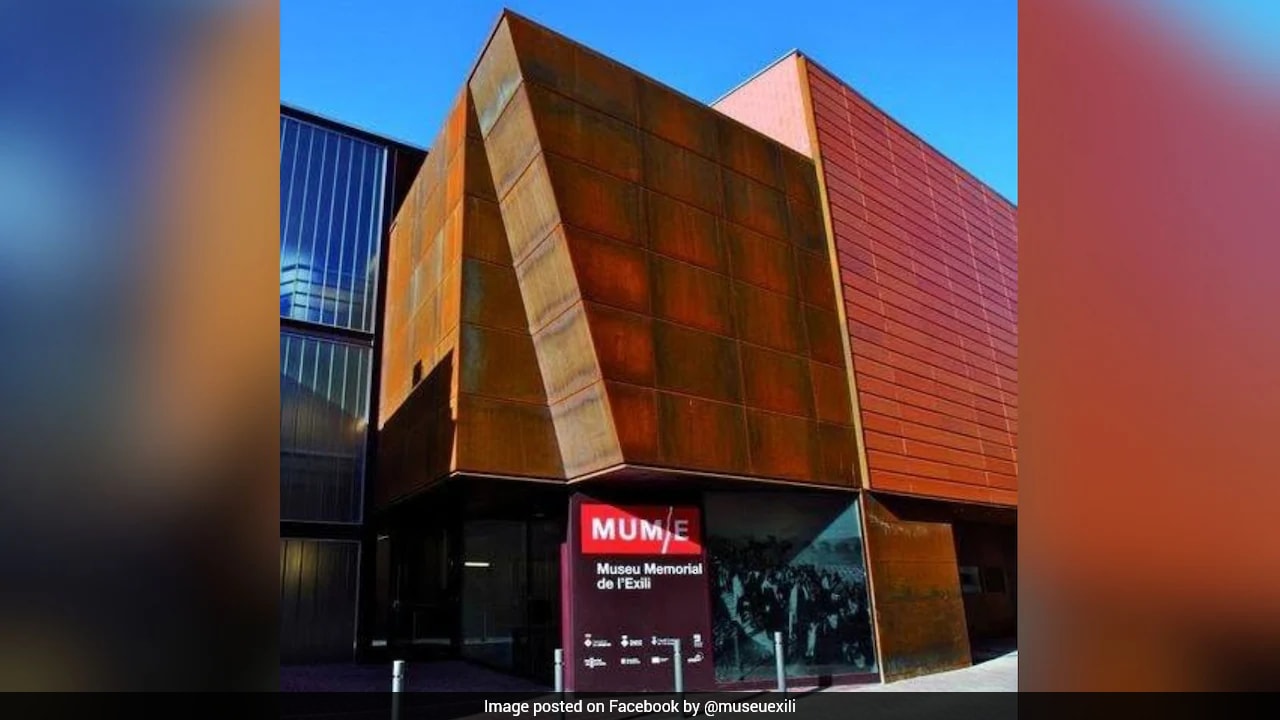
On the night of August 15, while thousands of revelers gathered in the piazza of Messina for the Ferragosto holiday celebrations, an operation of chilling precision unfolded inside the Museo Regionale di Messina (MuMe). Thieves bypassed advanced security perimeters and alarms, vanishing into the Sicilian summer night with four irreplaceable panels by the 15th-century Renaissance master Antonello da Messina. Among the stolen artifacts were three surviving components of the 1473 San Gregorio Polyptych and an armored-case-protected, double-sided panel depicting the Virgin Mary and the dead Christ.
This high-stakes theft is far more than a localized tragedy. It exposes systemic vulnerabilities across Italy’s regional heritage infrastructure, highlighting how holiday distractions, rising international market valuations, and sophisticated criminal syndicates converge to strip public galleries of cultural wealth.
The Anatomy of a Calculated Strike
Timing is never accidental in professional art theft. Choosing Ferragosto—Italy's sprawling summer national holiday—guaranteed maximum disruption to normal municipal oversight, reduced law enforcement staffing levels, and ensured that public attention remained fixed outward on street processions like the local La Vara.
The thieves did not engage in a messy smash-and-grab. They exercised surgical control. Moving through the MuMe galleries just before ten o'clock on Saturday evening, the perpetrators isolated specific targets. They extracted three panels from the historic San Gregorio Polyptych frame, leaving two panels abandoned behind a wall in their hasty exit route. They also breached a secure display case to pull out the double-sided devotional panel acquired by the Sicilian Region from Christie's in 2003.
Such execution requires inside knowledge or meticulous pre-operational surveillance. Regional institutions often operate under tight municipal budgets, creating an asymmetrical security environment where state-of-the-art alarms exist alongside undermanned watch rotations and predictable holiday vulnerabilities.
The Market Catalyst Behind the Heist
Art crime analysts immediately pointed to a dangerous economic catalyst. Earlier in the year, the Italian Culture Ministry acquired a rare devotional painting titled Ecce Homo by Antonello da Messina from Sotheby's in New York for nearly fifteen million dollars.
That multimillion-dollar transaction instantly injected new gravity into the artist's commercial footprint. It signaled to underground syndicates that works by the Sicilian master possessed extraordinary hidden liquidity.
Local officials, including Messina culture councillor Enzo Caruso, admitted that the state's aggressive acquisition campaign likely placed the regional museum firmly on the radar of international illicit brokers. When a regional artist's market value spikes through high-profile state acquisitions, regional museums holding localized inventory inadvertently transform from quiet cultural vaults into primary targets.
The Myth of Liquidating Masterpieces
Amateur perception dictates that stealing a world-renowned Renaissance masterpiece guarantees a quick fortune on the black market. Reality is far more brutal for the perpetrators.
Works by Antonello da Messina are institutional anchors. They are cataloged, photographed, monitored by international databases like Interpol, and instantly recognizable to every legitimate auction house, dealer, and scholar on earth. Selling them through conventional channels is an impossibility.
Instead, professional art-crime networks operate on an entirely different economic logic. Pieces of this caliber frequently function as high-value collateral within organized crime. They pass quietly from one faction to another, serving as security guarantees for narcotics trafficking, weapons acquisition, or financial restructuring. They are held in damp basements or rural hideouts, traded invisibly among criminals who care nothing for glaze, perspective, or religious iconography.
The recovery rate for high-end stolen art remains stubbornly low precisely because these objects are treated as criminal currency rather than aesthetic treasures.
The Regional Heritage Crisis
The Messina disaster underscores a broader, uncomfortable truth regarding public guardianship of ancient art. Italy's vast cultural patrimony is distributed across hundreds of regional facilities like MuMe. Many of these institutions struggle to balance open public access with military-grade conservation standards.
When security measures fail, the public loses its historical foundation. As museum director Marisa Mercurio noted during emergency press briefings, the stolen polyptych panels were not merely expensive assets; they formed the bedrock of local civic identity, representing the only body of work by the master that remained rooted in his native soil.
Investigators from the Carabinieri art squad now face a race against time, sifting through forensic traces left behind the museum walls while international networks scramble to conceal cargo that has suddenly become too hot to hold.