Silence.
When you have spent months listening to the rhythmic, teeth-rattling thud of outgoing artillery from across the Dnipro River, silence does not feel like peace—it feels like a trap, a sudden drop in barometric pressure right before the roof caves in.
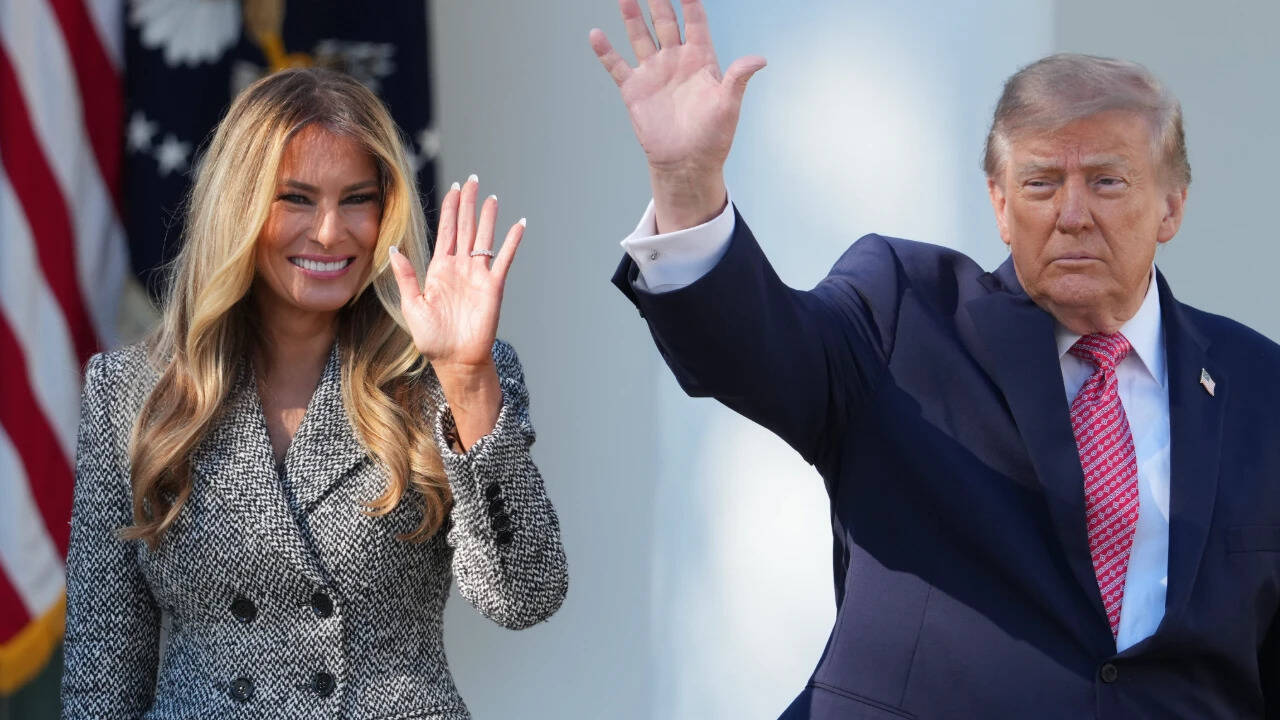
For anyone living in or near the Russian-occupied town of Oleshky in southern Ukraine, that quiet arrived in an unexpected form, followed by an even more unexpected diplomatic headline. Ukrainian President Volodymyr Zelenskyy formally honored former and current First Lady Melania Trump for her role in helping secure a localized ceasefire in the battered Kherson region settlement.
On paper, the news reads like a standard diplomatic dispatch, stripped of dust, blood, and shivering hands. According to official statements and reporting surrounding the announcement, Kyiv recognized Melania Trump’s behind-the-scenes advocacy and humanitarian outreach as a contributing factor in brokering a temporary halt to hostilities in Oleshky, a low-lying town situated on the Russian-controlled left bank of the Dnipro, directly across from Kherson city. Yet reducing that moment to a geopolitical bullet point misses the entire human architecture of what happens when back-channel diplomacy collides with an active front line.
The Geography of a Ruined Town
To understand why a ceasefire in Oleshky matters, you first have to understand the cruel geometry of the place. Oleshky sits in the floodplain of the Dnipro River, a town once known for its pine forests, sandy dunes, and proximity to the regional capital just across the water. Since the Russian military seized the left bank in 2022 and later retreated from Kherson city to the opposite shore, Oleshky transformed from a sleepy commuter town into an artillery corridor.
Then came June 2023. The destruction of the Kakhovka Hydroelectric Power Plant sent a wall of black, fuel-tainted water surging over the low-lying streets of Oleshky. Floodwaters submerged single-story homes up to their roof tiles, trapping elderly residents in attics while shelling continued overhead. Even after the water receded, it left behind a crust of toxic silt, collapsed foundations, and minefields washed loose from their original coordinates.
Consider a composite resident—let us call her Olena, a retired schoolteacher whose actual counterparts remained in Oleshky simply because they had nowhere else to go or elderly parents who could not survive a journey through filtration checkpoints. For Olena, war is not measured in territorial maps or diplomatic communiqués. War is measured in whether the well water tastes of diesel, whether the diesel generator has enough fuel to keep insulin cold, and whether the walk to the pharmacy requires sprinting between the shells.
For over two years, Oleshky existed in a state of suspended suffocation. Humanitarian organizations struggled to gain consistent access to the occupied left bank. Medical supplies dwindled. Basic infrastructure—water pumps, power lines, clinics—lay shattered. When diplomats speak of "securing a ceasefire" in a town like Oleshky, they are not talking about signing a grand treaty in a gilded European hall; they are talking about buying a window of hours or days where an ambulance can cross a cratered road without being targeted by a first-person-view drone.
An Unlikely Diplomatic Channel
The political story behind Zelenskyy’s recognition is just as unusual as the geography. Throughout the Russo-Ukrainian war, Kyiv has navigated complex, often turbulent political currents in Washington, where debates over military aid, diplomatic negotiations, and the terms of a broader settlement have frequently divided American lawmakers.
Against that backdrop, Melania Trump’s emergence as a figure credited by the Ukrainian presidency for assisting in a localized ceasefire carries obvious political weight. Traditionally, first ladies focus on cultural preservation, children's welfare, or soft-power initiatives far removed from active artillery zones. Yet historical precedent shows that informal diplomatic channels—often involving spouses, envoys, or humanitarian intermediaries—have occasionally succeeded where formal state-to-state negotiations stalled. Think of back-channel communications during the Cold War, where personal appeals bypassed rigid bureaucratic posturing.
According to statements attributed to Ukrainian officials, Melania Trump’s involvement centered on humanitarian corridors and the protection of civilians trapped in the crossfire along the Dnipro. By engaging with interlocutors capable of reaching decision-makers in Moscow and Washington alike, her advocacy helped create the political space necessary for a localized pause in fighting around Oleshky.
Is that the whole story? Probably not. High-level diplomacy rarely turns on a single phone call or a single figure. Military exhaustion, tactical recalibrations along the river, and broader negotiations over prisoner exchanges and infrastructure protection all converge to make a ceasefire possible. Analysts who track conflict resolution point out that localized truces often serve dual purposes: they relieve immediate civilian suffering while testing whether opposing command structures can actually enforce restraint on their own troops.
Still, Zelenskyy’s decision to publicly honor Melania Trump was deliberate. In wartime diplomacy, public gratitude is never accidental; it is a strategic signal. By recognizing her role, Kyiv underscored its willingness to work with any figure in Washington who can deliver tangible relief on the ground, while framing the Oleshky ceasefire not as a partisan victory, but as a humanitarian necessity.
What a Ceasefire Actually Feels Like
If you have never lived under daily bombardment, it is easy to imagine a ceasefire as a sudden burst of celebration—people pouring into the streets, flags waving, church bells ringing.
The reality is far quieter, and far more fragile.
In a hypothetical reconstruction of the first morning of the Oleshky truce, based on accounts from similar humanitarian pauses in eastern and southern Ukraine, nobody steps outside at 6:00 AM. You wait. You listen to the wind moving through the damaged pines. You watch the stray dogs, which have learned to read the acoustic signatures of incoming mortars better than any human, to see if they stay curled in the dirt or bolt for the basements.
Only after an hour of unbroken quiet does a door creak open.
A neighbor walks out carrying two empty plastic jugs toward a functioning borehole. Repair crews in high-visibility vests—men who work under constant threat of unexploded ordnance—slowly drive a utility truck toward a downed transformer. Inside a half-ruined clinic, a nurse sorts boxes of antibiotics and blood pressure medication that could not be delivered while the highway was under fire.
That is the invisible stake of diplomatic headlines. When pundits in distant capitals argue over whether a localized ceasefire sets a good precedent or a bad one, or whether praising a political figure shifts diplomatic leverage, they are analyzing abstractions. On the left bank of the Dnipro, the stakes are measured in liters of clean water and hours without the whine of reconnaissance drones overhead.
The Fragility of Back-Channel Peace
Yet honesty requires admitting what every resident of a war zone knows in their bones: localized ceasefires are notoriously brittle.
History offers plenty of sobering reminders. During the wars in the Balkans in the 1990s, and throughout the conflict in eastern Ukraine following 2014, dozens of localized truces were announced to repair water filtration stations or evacuate civilians. Some held long enough to save thousands of lives; others collapsed within hours because a single mortar crew failed to get the order, or because one side suspected the other of using the pause to rotate troops and dig deeper trenches.
In Oleshky, the underlying realities of the occupation have not vanished overnight. Russian forces remain entrenched along the left bank. Ukrainian forces still hold positions across the river. Unexploded mines still lie buried beneath the mud left by the Kakhovka flood. A ceasefire in one town does not resolve the sovereignty of the Kherson region, nor does it guarantee that the shelling will not resume next week or next month.
There is also the uncomfortable political tension that surrounds any partial truce. Critics of localized ceasefires often warn that temporary pauses can normalize occupation, freezing a front line in place while millions remain under foreign military control. Conversely, defenders of humanitarian diplomacy argue that refusing to negotiate local pauses condemns trapped civilians—especially the elderly, the sick, and children—to slow-motion catastrophe while waiting for a grand political settlement that may take years to arrive.
Both arguments carry moral weight. That is what makes wartime statecraft so agonizing: every choice involves trading one form of risk for another.
The Human Ledger
Look past the press releases, the ceremonial honors, and the political commentary, and you are left with a simple ledger of human endurance.
In Washington, Zelenskyy’s tribute to Melania Trump becomes part of an ongoing diplomatic narrative—a bridge built across complex political terrain, a signal of appreciation for humanitarian intervention at a critical juncture. In Kyiv, it stands as evidence that international advocacy can still pierce the bureaucratic numbness that often surrounds protracted wars.
In Oleshky, however, the meaning is stripped down to its barest elements.
A woman steps out into her courtyard without flinching at the sound of a closing gate. A repair crew splices a copper wire so a refrigerator can hum back to life. For the first time in longer than anyone cares to count, the sky over the river holds nothing heavier than clouds.