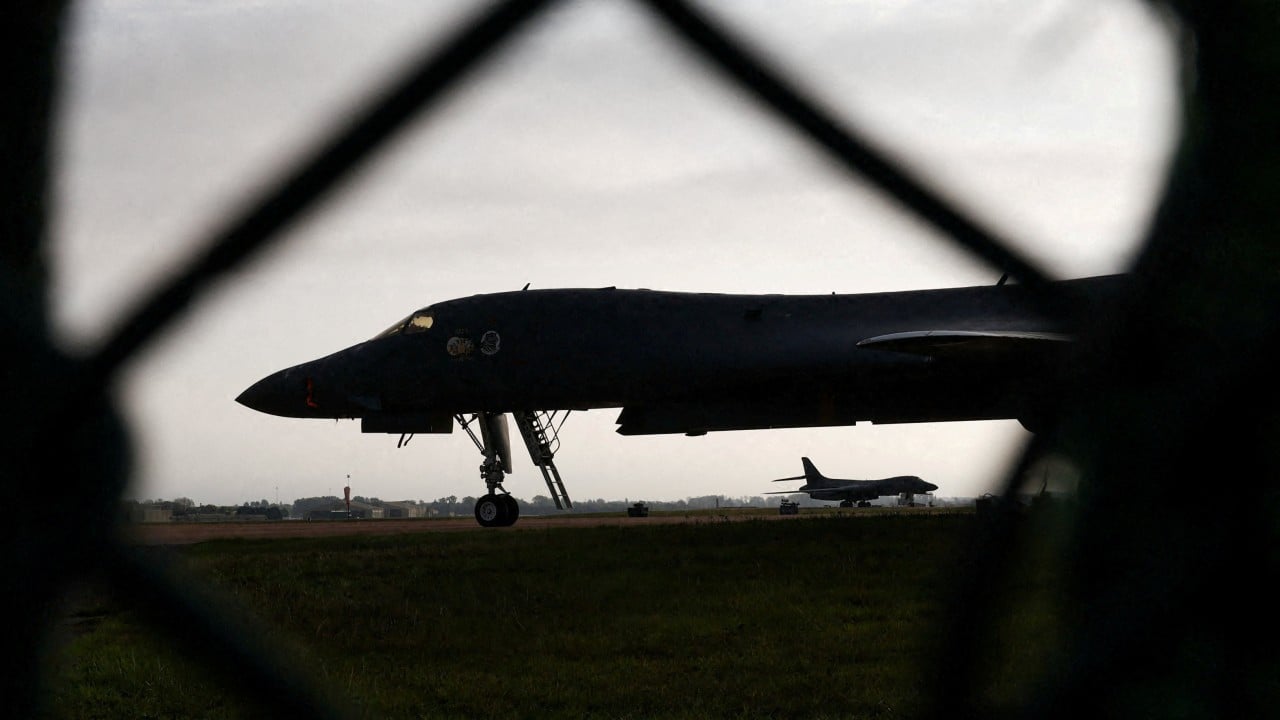
The security perimeter of a sovereign military installation is supposed to be an absolute line. On a late September day, that line was tested in rural Gloucestershire, turning an ordinary perimeter check at RAF Fairford into an international security flashpoint. Two men, including a dual British-Iranian national, found themselves at the center of a counter-terrorism dragnet after a suspicious vehicular incident near the western England base. Weeks later, following periods on police bail, the pair were rearrested under the UK National Security Act.
British authorities have pointed the finger directly at Tehran, calling the incident an operation directed by the Islamic Revolutionary Guard Corps. While diplomatic channels exchange denials and expulsions, the episode exposes a stark vulnerability. Modern state-backed espionage and sabotage no longer rely exclusively on professional intelligence officers with diplomatic cover. Instead, they increasingly exploit local proxies, transient contractors, and domestic sympathizers who can blend seamlessly into the humdrum landscape of open societies.
The Anatomy of an Airbase Breach
RAF Fairford is not just any airfield. As a critical hub historically utilized by United States heavy bombers, including the B-1 Lancers deployed for long-range missions during recent hostilities, the base functions as a primary projection of Western air power. When three suspicious vehicles hovered near the facility, triggering a major incident that saw bomb-disposal experts descend on the rural British countryside and residents evacuated from their homes, the threat matrix shifted from abstract cyber intrusion back to old-fashioned physical probing.
Counter-terrorism policing units do not invoke the National Security Act lightly. The rearrest of the suspects under these specific legislative powers indicates that investigators believe the duo were not merely lost motorists or curious plane spotters. The statutory threshold requires evidence pointing toward acts prejudicial to the safety or interests of the state, often involving communication with foreign intelligence agencies. By utilizing local operatives to conduct reconnaissance or logistical staging near a high-value American target on British soil, foreign actors test response times, security camera blind spots, and local police reaction loops.
Proxy Warfare Moves to Western Streets
For decades, Western intelligence agencies viewed Iranian state-sponsored operations primarily through the lens of regional proxy conflicts in the Middle East or localized cyber attacks against infrastructure. Yet recent threat assessments from British security chiefs paint a different picture. Over fifty arrests linked to Iranian state operations in a single year demonstrate a sharp escalation in hostile activity on European soil.
This is asymmetric warfare on a shoestring budget. Direct military confrontation carries prohibitive costs and triggers immediate kinetic retaliation. Conversely, recruiting or tasking individuals with dual nationalities or resident status to conduct surveillance offers plausible deniability. If the operatives are caught, the state sponsor issues a routine denial, decries a false flag operation, and relies on diplomatic friction to stall accountability. If the operation succeeds, valuable targeting data flows back to command structures without a single uniformed soldier crossing an international border.
The Surveillance Blind Spot
Securing a sprawling military reservation against outside intrusion presents an immense logistical challenge. Perimeter fences stretch for miles across agricultural land, bordered by public roads and civilian infrastructure. Intelligence operatives understand that military police cannot watch every meter of wire simultaneously.
By employing local assets who speak the language, understand regional nuances, and possess domestic driving licenses, hostile handlers bypass the immediate red flags that would flag a foreign diplomat or a known intelligence officer. These operatives can sit in rented cars, log shift changes of bomber crews, record security patrol frequencies, and map out vulnerable access points. It is low-tech, persistent observation that defies sophisticated electronic countermeasures.
The legal aftermath in British courts will determine the exact nature of the instructions these men received. Yet regardless of the ultimate judicial verdict, the Fairford incident serves as a brutal wake-up call. The frontline of modern geopolitical conflict is no longer confined to contested borders or overseas theaters. It runs directly through quiet country lanes, past suburban cul-de-sacs, and right up to the perimeter fences of strategic installations. As state adversaries refine their methods of deniable disruption, Western security apparatuses face the exhausting task of securing open societies against enemies who operate entirely within the open.


