The television was never just a piece of furniture in the living rooms of the 1970s; it was an altar of authority. And sitting at the center of that altar, week after week, was Robert Stack.
He did not raise his voice. He did not gesture wildly. With a face carved from granite and a voice that sounded like gravel shifting under heavy iron boots, he stood before the cameras of Unsolved Mysteries and The Untouchables, projecting an absolute, unshakeable command over chaos. He was the embodiment of order in a decade that felt increasingly unhinged. Viewers trusted him with the darkest secrets of the underworld because he looked like a man who had stared down demons and walked away without a speck of dust on his lapel. For a deeper dive into similar topics, we suggest: this related article.
Yet, when the studio lights finally clicked off and the cameras stopped rolling, Stack did not retreat to a penthouse or a gilded Hollywood club. He drove south.
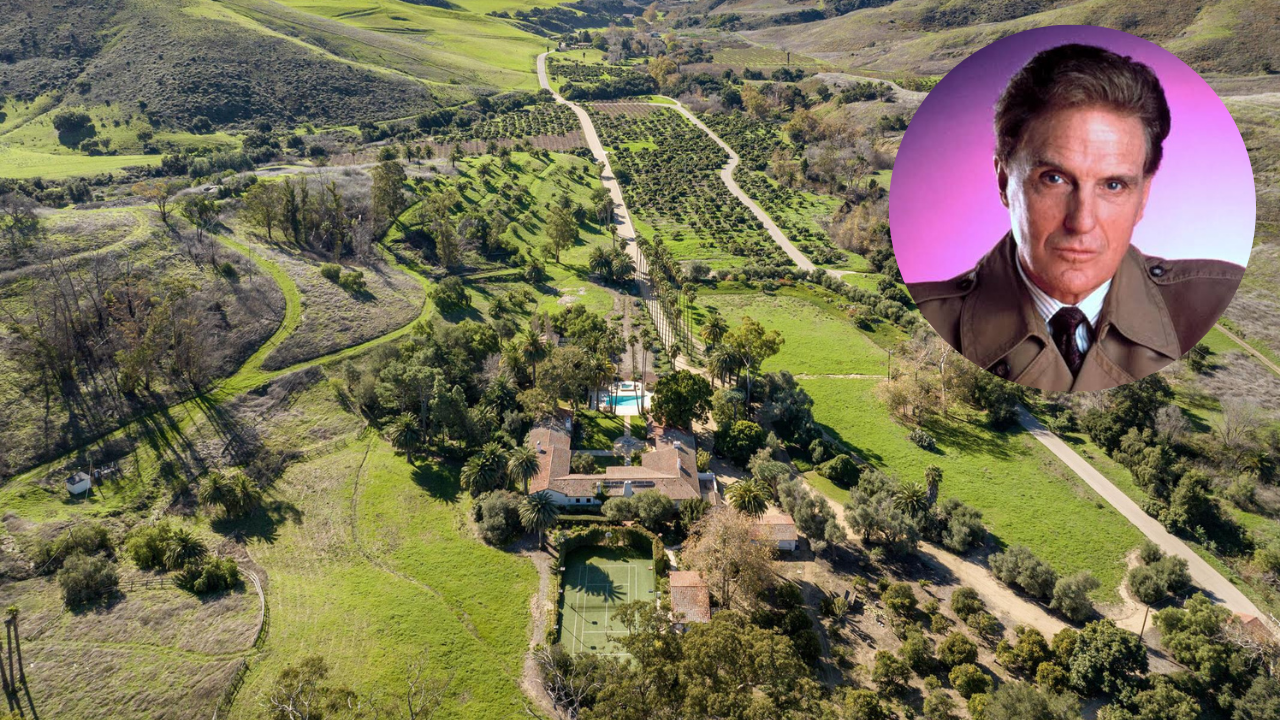
He drove away from the neon pulse of Los Angeles, past the widening sprawl of suburbia, out toward the jagged, sun-bleached creases of the California backcountry. He was chasing something entirely different from the synthetic glamour of the screen. He was looking for a place where the noise of the twentieth century could not reach him. He found it in an expanse of untamed California acreage that he turned into a private game preserve. For additional context on this topic, extensive coverage is available on The New York Times.
To understand Robert Stack in the 1970s, you have to look beyond the trench coat and the Federal Bureau of Investigation badge. You have to look at the dirt.
The Weight of the Persona
Hollywood has a habit of consuming the people who inhabit it. The machinery demands a specific kind of surface perfection, a relentless maintenance of public illusion. For Stack, who had been groomed for stardom almost from childhood—a descendant of wealthy Pennsylvania industrialists on one side and a lineage of diplomats on the other—performing was second nature. He was an elite skeet shooter, a man of refined tastes, an urbane figure who moved effortlessly through high society.
But there is a profound fatigue that comes with being the ultimate symbol of law and order.
By the 1970s, the cultural landscape had shifted beneath Hollywood’s feet. The clean moral binaries of the post-war era were dissolving into the gritty cynicism of the Vietnam era and the Watergate fallout. Stack's trademark stiffness, once a sign of heroic resolve, risked becoming a relic.
Perhaps that is why the acreage became an obsession.
Imagine walking the perimeter of that land as the afternoon heat begins to press down on the chaparral. The air smells of baked sage, dry dust, and eucalyptus oil. There are no studio directors shouting cues, no audio engineers complaining about ambient noise. There is only the dry crunch of gravel underfoot and the sudden, startling beat of wings as a covey of quail breaks cover from the brush.
Here, Stack was not a television icon playing a lawman. He was a landowner interacting with a delicate, breathing ecosystem.
Carving a Sanctuary from the Wilderness
Private game preserves in mid-century California were distinct anomalies. They were not merely vast backyards for the wealthy; they were managed environments where the tension between human encroachment and wild preservation played out in real time.
Stack’s property was a masterclass in this quiet friction. The California chaparral is a harsh mistress. It is an ecosystem built for fire, drought, and sudden, violent downpours. It does not invite you in with lush green meadows; it keeps you at arm's length with thorns, brittle scrub, and unforgiving rock.
To maintain a game preserve in such a terrain required rigorous, invisible labor. Water had to be coaxed into dry gullies. Feed plots had to be carefully cultivated to sustain native populations of deer, quail, and wild turkey against the encroaching pressures of development. Stack poured his off-screen intensity into this endeavor. The man who spent his professional life investigating crimes against order now dedicated his personal hours to establishing an order of a different kind—a biological one.
He understood hunting not merely as a sport, but as a visceral connection to antiquity. To hunt ethically on your own land is to participate in an ancient contract. It demands a hyper-awareness of seasons, population carrying capacities, and the fragile balance of predator and prey.
While his contemporaries spent their weekends hiding behind smoked glass in Beverly Hills restaurants, Stack was out in the brush, studying the tracks left by coyotes in the dry creek beds, watching the hawks circle lazily over the canyons, and measuring the health of his sanctuary by the sheer variety of life it managed to hold onto.
The Sanctuary Paradox
There is an inherent irony in a Hollywood actor carving out a private wilderness. In fencing off a piece of nature to keep the modern world at bay, you inevitably participate in the very enclosure of the landscape you claim to love.
Stack's acreage was private. The gates were closed. The signs were posted. The public, whose fascination paid for the very land he stood on, was kept outside.
Yet, within those boundaries, a strange kind of preservation took place. While bulldozers were busy chewing up the valleys of Southern California—paving over orange groves and oak savannas to build endless tracts of identical ranch houses—Stack’s preserve remained a pocket of arrested time. It was a localized fortress against the relentless tide of asphalt.
We often misread the retreats of the famous. We view them as exercises in mere luxury or aristocratic isolation. But for a man like Stack, whose entire public identity was constructed out of rigidity and control, the wild acreage served a psychological necessity. Nature does not care about your Emmy nominations. A mountain lion does not care about your box office receipts. A dry summer will wither a private preserve just as quickly as a public one.
In that wilderness, Stack was forced to confront forces he could not investigate, interrogate, or arrest. He had to submit to the rhythm of the seasons.
The Long Shadow
Decades have passed since Robert Stack walked those California hills. The television shows that made his name are now watched in the amber glow of late-night nostalgia. The culture has accelerated into a hyper-connected, digital franticness that would likely have baffled the old-school actor.
The acreage itself has changed, swallowed up, subdivided, or gentrified by the relentless march of the suburban frontier that Stack spent a few quiet years trying to keep at bay.
But the image remains a potent one: the stern face of mid-century justice standing at the edge of a dry California ridge, looking down over a patch of earth he tried to master, protect, and understand.
It reminds us that behind every public monument we construct—every persona we buy tickets to watch—there is a private individual scrambling for ground that cannot be bought, scripted, or edited. They are looking for a place where the noise stops. They are looking for a hill of their own, where the only voice left is the wind moving through the sagebrush.