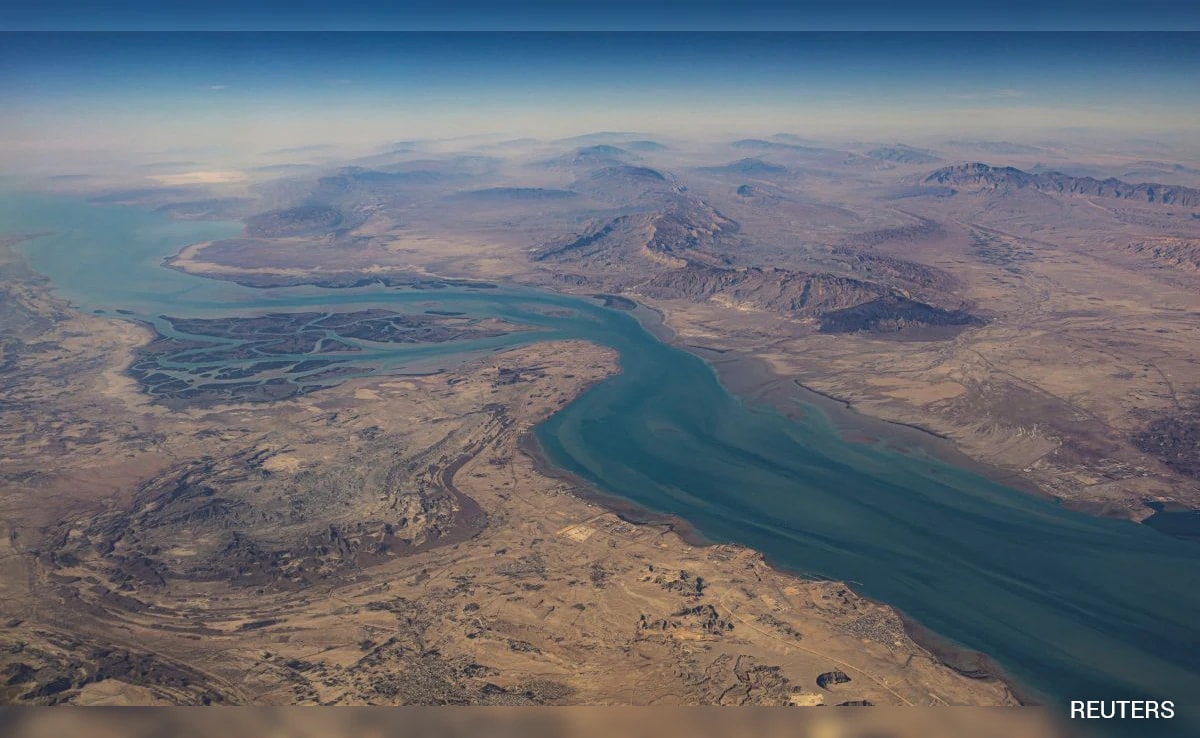
The United States government is currently moving to block a backdoor revenue stream that threatens to upend the economics of global shipping. At the heart of the friction is a demand for "transit fees" or "tolls" imposed by Iranian authorities on commercial vessels navigating the Strait of Hormuz. Washington has issued a blunt warning to the maritime industry: paying these fees does more than just hurt the bottom line. It places shipping companies, insurers, and financial institutions in the direct crosshairs of federal sanctions. This is not a simple bureaucratic dispute over maritime right-of-way. It is a high-stakes standoff over the sovereignty of international waters and the funding of paramilitary activities in the Middle East.
For decades, the Strait of Hormuz has functioned as the world’s most sensitive carotid artery. Approximately one-fifth of the world’s total oil consumption passes through this narrow stretch of water daily. Under the United Nations Convention on the Law of the Sea (UNCLOS), ships enjoy the right of transit passage through international straits. Iran, however, has long argued for a more restrictive interpretation. By attempting to monetize the passage of Western-linked vessels, Tehran is looking to create a "toll booth" for a gate they do not legally own. Expanding on this theme, you can also read: The Suitcase and the Glass Ceiling.
The Sanctions Trap for Global Shippers
The Treasury Department and the State Department are not just worried about the principle of free navigation. They are focused on the money trail. When a shipping company pays a "toll" to an entity controlled by the Islamic Revolutionary Guard Corps (IRGC), they are effectively financing an organization designated by the U.S. as a Foreign Terrorist Organization.
This creates a massive legal liability. Under current U.S. law, "material support" to designated groups triggers immediate and severe penalties. Observers at Harvard Business Review have provided expertise on this matter.
- Asset Seizure: Any assets held in U.S. jurisdictions by the offending shipping company can be frozen.
- Banking Blacklists: Financial institutions will sever ties with any firm caught paying these tolls to avoid losing their own access to the U.S. dollar clearing system.
- Insurance Invalidation: Maritime insurance—mostly dominated by Western protection and indemnity (P&I) clubs—cannot cover vessels engaged in sanctioned activity.
The dilemma for a ship captain or a corporate board is grueling. On one hand, refusing to pay might lead to the detention of the vessel, the harassment of the crew, or physical kinetic strikes. On the other hand, paying the fee ensures that the company will never again do business in the American market. It is a choice between immediate physical risk and long-term corporate extinction.
How the Toll System Operates Under the Radar
These payments are rarely labeled as "Revolutionary Guard Tolls" on a ledger. Instead, they are often disguised through a web of "agency fees," "environmental protection dues," or "security escort charges."
Investigating these transactions reveals a pattern of shadow banking. A shipping agent in a third-party jurisdiction—often a country with lax financial oversight—will receive the funds from the ship owner. That agent then transfers the money through several layers of shell companies before it reaches an IRGC-affiliated bank account. The U.S. Office of Foreign Assets Control (OFAC) has become increasingly adept at mapping these networks. They are sending a clear signal that "willful blindness" is no longer a valid legal defense. If the ultimate beneficiary is a sanctioned entity, the intermediary steps do not provide a shield.
The Myth of Voluntary Compliance
There is a prevailing sense among some international shipping circles that these warnings are merely political theater. That is a dangerous miscalculation. The U.S. maritime industry is built on the stability of the dollar and the security provided by the U.S. Navy’s 5th Fleet. By paying these tolls, shippers are effectively subsidizing the very forces that necessitate a heavy naval presence in the region.
Critics of the U.S. position argue that Washington is putting private companies in an impossible spot. If the U.S. wants to stop the tolls, the argument goes, it should provide direct escorts for every commercial tanker. But the sheer volume of traffic makes constant, individual escorts a logistical nightmare. The U.S. strategy instead relies on financial deterrence. They are making the cost of compliance with Iranian demands higher than the cost of resistance.
The Insurance Sector as an Unintentional Enforcer
The most effective tool in the U.S. arsenal isn't a destroyer; it’s a compliance officer in London or New York.
The maritime insurance market is the hidden regulator of the seas. No major commercial vessel sails without comprehensive coverage. If a P&I club discovers that a member has paid a sanctioned toll, the policy is usually voided instantly. This leaves the ship owner "naked" in the event of an oil spill, a collision, or a mechanical failure. The financial risk of sailing uninsured is so catastrophic that most legitimate shipping lines will choose to reroute or delay transit rather than risk the wrath of their insurers.
However, this has given rise to the "Dark Fleet"—a collection of aging tankers with opaque ownership and questionable insurance that continue to service sanctioned trade. This shadow fleet is more likely to pay the tolls, as they are already operating outside the bounds of the traditional financial system. This creates a two-tiered maritime economy: one that follows international law and one that operates in a lawless gray zone.
Understanding the Legal Distinction between Fees and Extortion
Under international maritime law, certain fees are permissible. Port dues, pilotage fees, and lighthouse dues are standard.
| Fee Type | Status | Recipient |
|---|---|---|
| Pilotage | Legal | Local Port Authority |
| Suez/Panama Canal Tolls | Legal | Sovereign Canal Authority |
| Hormuz Transit Tolls | Illegal/Sanctioned | IRGC-affiliated Entities |
| Environmental Dues | Mixed | Verified State Agencies |
The "Hormuz Toll" falls into a unique category. Because it is applied in an international strait where transit passage is guaranteed, it is viewed by the U.S. and its allies as a form of state-sponsored extortion.
The Operational Reality for Crews on the Water
While lawyers argue over sanctions in D.C., the reality on the bridge of a VLCC (Very Large Crude Carrier) is far more tense. Iranian fast boats often shadow tankers, using radio calls to demand identification and "compliance with local regulations."
These interactions are designed to intimidate. The goal is to make the master of the ship feel that their safety is contingent on a quick financial settlement. The U.S. Maritime Administration (MARAD) has advised ships to maintain a defensive posture, document all interactions, and report any demands for payment immediately to the United Kingdom Maritime Trade Operations (UKMTO) or the U.S. Naval Forces Central Command.
The pressure is mounting. As Iran feels the squeeze of broader economic sanctions, its hunt for hard currency becomes more desperate. The Strait of Hormuz is the easiest place for them to apply pressure. By targeting the shipping industry, they are targeting the most vital link in the global supply chain.
Why Technical Neutrality is Fading
In the past, many shipping companies tried to remain "geopolitically neutral." They viewed themselves as simple transporters of goods, unaffected by the squabbles of nations. That era is over.
The convergence of digital tracking and transparent financial records means there is no place to hide. Satellite imagery can track a ship's every move, and blockchain-based trade finance is making it harder to mask the destination of funds. If a tanker slows down in a specific quadrant of the Strait and a corresponding payment leaves a corporate account, the connection will be made.
Ship owners must now act as intelligence analysts. They have to vet not just their direct partners, but the entire ecosystem of agents and sub-agents they use in the Middle East. One bad actor in the chain can bring down a multi-billion dollar enterprise.
The Long-Term Consequences of Yielding
Yielding to these toll demands sets a catastrophic precedent. If Iran successfully monetizes the Strait of Hormuz, other nations bordering strategic chokepoints may be tempted to follow suit. We could see similar "security fees" appearing in the Malacca Strait or the Bab el-Mandeb.
This would lead to the balkanization of the oceans. The fundamental principle that the seas are a common resource for all of humanity would be replaced by a patchwork of localized shakedowns. The cost of everything—from gasoline to grain—would rise as shipping companies pass these "protection costs" onto the consumer.
The U.S. warning is a preemptive strike against this future. By threatening sanctions now, Washington is trying to ensure that the "Hormuz Toll" never becomes an accepted cost of doing business. They are betting that the threat of losing the American market is more frightening than the threat of an Iranian boarding party.
Practical Steps for Maritime Compliance
For companies operating in these waters, the margin for error is non-existent. A "hope for the best" strategy is a recipe for a federal indictment.
- Strict Due Diligence: Every local agent used in the Persian Gulf must be subjected to an enhanced vetting process that goes beyond a simple Google search.
- Explicit Refusal Policy: Corporate charters should include specific language stating that no unauthorized transit fees will be paid and that any such demand will be treated as an act of coercion.
- Real-time Communication: Bridge crews must have direct, encrypted lines of communication to both corporate security and international naval task forces.
- Audit Trails: Every dollar spent on "ancillary fees" in the region must be backed by ironclad documentation showing the legitimate service provided.
The geopolitical temperature in the Strait of Hormuz is not going to drop anytime soon. As long as the U.S. and Iran remain at an impasse, commercial shipping will be the primary theater of conflict. The companies that survive will be those that realize a tanker is no longer just a vessel; it is a piece on a global chessboard, and every move has a legal consequence.
The warning from Washington is clear: you cannot buy your way out of trouble in the Strait without buying your way into a fight with the U.S. Treasury. Choose your side before the next transit.