In the quiet, climate-controlled cleanrooms where silicon wafers are etched with microscopic precision, a single mistake in alignment can ruin a multibillion-dollar batch of microchips. Outside those sterile halls, in the murky intersection of global geopolitics and corporate titanism, the margin for error is even smaller.
Jensen Huang built an empire not on software, but on the physical bedrock of the future: graphics processing units that power everything from generative artificial intelligence to advanced military simulations. For years, the leather-jacket-clad CEO operated at the absolute center of global commerce, praised as the visionary who made the AI revolution possible. But when political hyper-turbulence collides with the world’s most critical technology, visionaries quickly find themselves standing in the crosshairs. Don't miss our previous coverage on this related article.
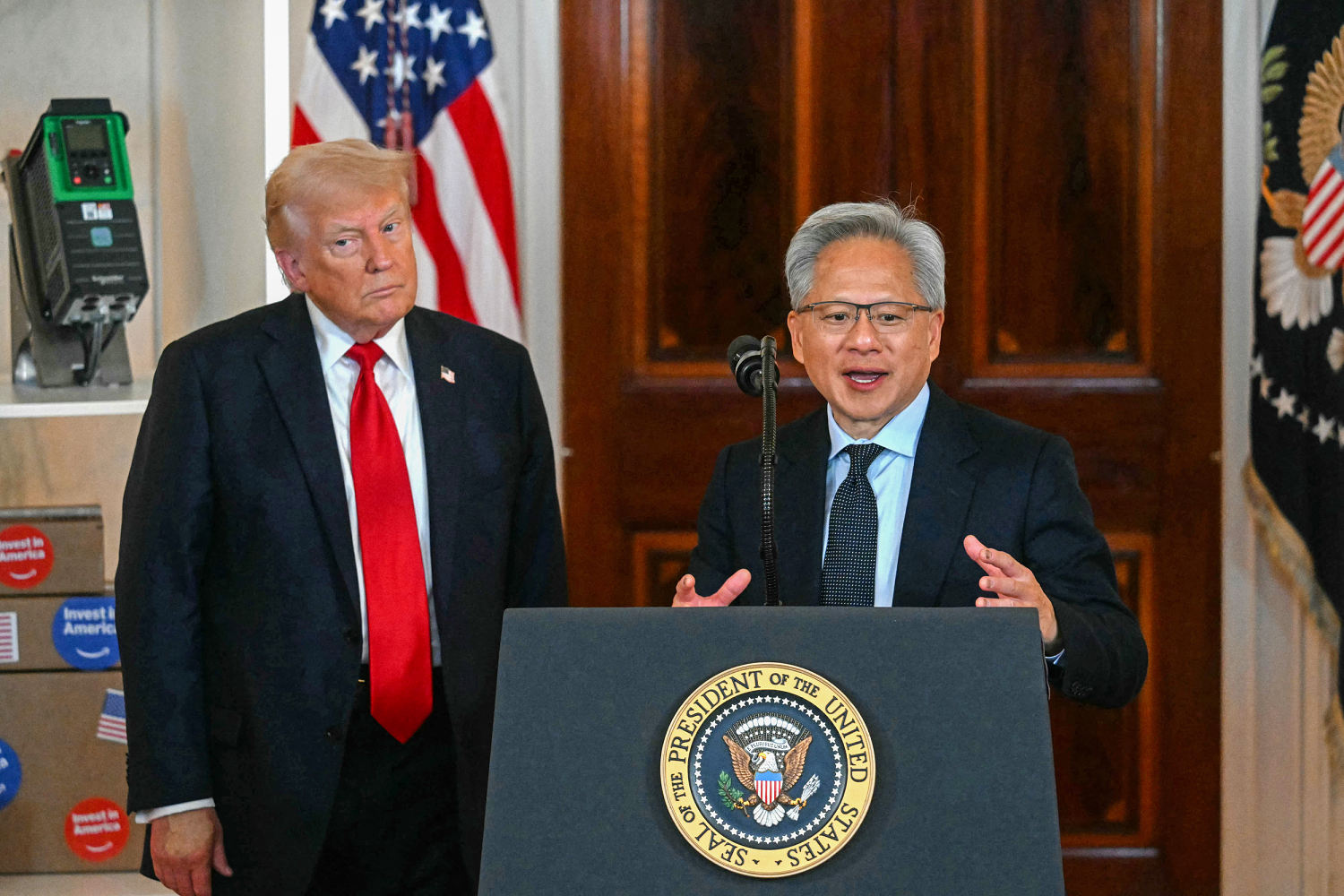
Donald Trump dropped a bombshell that sent shockwaves through boardroom tables from Santa Clara to Taipei: federal investigators are examining the relationship between Nvidia's leader and an alleged Chinese espionage operative.
In an instant, the narrative surrounding the world's most valuable chipmaker shifted from quarterly earnings and algorithmic breakthroughs to the shadowy realm of national security, foreign influence, and high-stakes surveillance. If you want more about the context here, Reuters Business provides an in-depth summary.
The Architect of the Digital Renaissance
To understand the sheer magnitude of this investigation, one must look closely at the man at its center. Jensen Huang did not merely catch a wave; he constructed the surfboard. Decades ago, when graphics chips were seen strictly as toys for PC gamers, Huang gambled everything on parallel computing. He believed that processing thousands of tiny tasks simultaneously would one day unlock capabilities that traditional computer processors could never touch.
He was right.
When the artificial intelligence boom erupted, Nvidia owned the only high-grade shovels in a digital gold rush. Every tech giant, startup, and foreign power scrambled to secure tens of thousands of Nvidia’s flagship processors.
This meteoric rise transformed Huang into a global ambassador for American technological dominance. He shook hands with prime ministers, keynoted packed arenas, and dictated the flow of high-tech supply chains across continents. Yet this exact dominance made Nvidia the epicenter of an escalating technological cold war between Washington and Beijing.
When a company controls the critical infrastructure of the modern intelligence age, its leadership ceases to be merely corporate. They become strategic assets. And strategic assets are watched with intense scrutiny.
A Meeting of Shadow and Light
The allegations currently swirling around federal corridors do not concern technological flaws or insider trading. They probe something far more volatile: personal networks, political influence, and hidden access.
According to statements made by former President Trump, federal law enforcement agencies are actively scrutinizing interactions between Huang and a figure suspected of operating on behalf of Chinese intelligence services. The nature of these interactions remains tightly guarded, but the implications are immediate and severe.
espionage in the twenty-first century rarely looks like cinematic break-ins or stolen microfilms in dark alleyways. It looks like dinner meetings at international trade expos. It looks like venture capital consultations, academic exchange programs, and informal advisory roles designed to subtly steer policy, siphon intellectual property, or gauge national vulnerabilities.
Consider the reality of running a global hardware monolith:
- Production depends heavily on delicate Asian supply chains.
- Major revenue streams traditionally relied on selling hardware into vast Asian markets.
- Advanced AI architecture remains the top strategic priority for foreign intelligence agencies seeking parity with the West.
Navigating these waters requires an impossible balance. A CEO must court global markets while simultaneously acting as a defensive wall against state-sponsored corporate espionage. If federal authorities are looking into these connections, it suggests a profound anxiety in Washington: that the line between international commerce and strategic vulnerability has become perilously blurred.
The Invisible Stakes of the AI Cold War
Behind the political rhetoric lies a fundamental truth that keeps defense strategists awake at night. Artificial intelligence is not just software for writing copy or generating digital art. It is the core engine for autonomous drone swarms, predictive logistics, cyber warfare defense, and advanced cryptanalysis.
Whoever controls the hardware controls the future of power.
For months, the United States government has tightened export controls, attempting to sever China’s access to top-tier Nvidia chips. Washington built a digital fence around American innovation. Yet, hardware is physical, portable, and extraordinarily valuable. Black markets flourish. Proxy corporations emerge overnight in neutral countries just to purchase server racks and ship them across restricted borders.
In this high-pressure environment, an investigation into a CEO is never just about one individual. It represents a systemic breakdown of trust between federal regulators and the technology giants operating in Silicon Valley.
Federal agents are not just asking what was said in private meetings. They are asking whether the guardrails designed to protect national security can withstand the immense financial pressures of international commerce.
When Wall Street Meets National Security
The immediate aftermath of such revelations is felt first in the financial markets, where panic moves faster than facts. Investors despise uncertainty, and there is no uncertainty quite like a federal espionage inquiry involving the leader of a market-defining titan.
Every corporate entity builds its reputation on stability. Nvidia’s valuation was built on an assumption of unassailable technological market share and clear regulatory sailing. Now, executives face a harrowing reality check.
- Regulatory Sanctions: Increased scrutiny could lead to even harsher export restrictions, choking off legitimate international revenue streams.
- Corporate Leadership Crises: When a founder-CEO becomes a lightning rod for national security concerns, boardrooms are forced to contemplate unthinkable contingency plans.
- Supply Chain Disruption: Trust between government defense contractors and commercial tech suppliers can evaporate overnight, threatening long-term federal contracts.
The human cost within the company is equally profound. Engineers who spent decades refining silicon architecture now find their work viewed through the suspicious lens of geopolitics. The culture of global collaboration that built Silicon Valley is steadily replaced by paranoia, non-disclosure agreements, and security clearances.
The Fragile Illusion of Absolute Control
We like to believe that our digital world is clean, objective, and governed by logic. We talk about algorithms as if they exist in a vacuum, detached from human flaws, political ambitions, and global conflict.
This investigation shatters that comfort.
It exposes the fragile underbelly of our technological age: no matter how advanced the microchip, it is still manufactured by human hands, traded by human interests, and caught in the ancient human struggle for geopolitical dominance. Jensen Huang spent his career solving complex engineering equations that others deemed impossible. Yet the equation he faces today has no mathematical solution.
It is a reminder that in the modern era, no one—not even the architects of the digital future—is immune to the geopolitical currents pulling the world apart. The chips will continue to calculate, the data centers will continue to hum, but the trust that held the global tech industry together has suffered a deep, permanent fracture.