Democracy is a quiet thing. Most days, it sounds like the rustle of a heavy paper envelope sliding into a locked box. It sounds like fluorescent lights humming above a high school gymnasium floor, and the scratch of a ballpoint pen on a registration card. We treat it as permanent. We assume the machinery of elections is as fixed and unyielding as the concrete foundations of the buildings where we cast our votes.
Consider what happens next: the machinery starts to shudder. For a different perspective, check out: this related article.
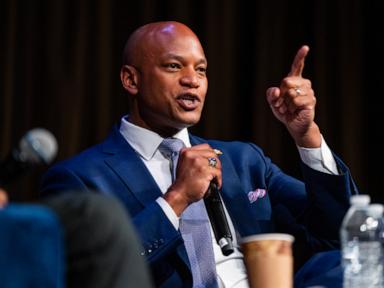
Months away from the midterm elections, the air in political corridors carries a different kind of weight. Governors, election workers, and local clerks feel it. The Maryland governor recently voiced a deep, persistent worry that echoes far beyond the borders of a single state. He is deeply concerned about federal interference, about the heavy hand of the executive branch reaching into local voting booths, tilting scales that are supposed to be balanced by the people alone.
Fear is contagious. Related analysis on this trend has been shared by BBC News.
To understand why this anxiety is gripping state leaders, we have to look past the cable news shouting matches and down to the ground level. Elections are not run by some monolithic, untouchable federal agency. They are run by your neighbors. They are managed by retired teachers who sit at folding tables for fourteen hours straight, handing out "I Voted" stickers. They are coordinated by county election directors who lose sleep over cybersecurity patches, delivery truck routes, and paper ballot shortages.
When a national figure hints at overriding state oversight, or when federal directives clash with local laws, it creates a fracture.
Imagine a hypothetical precinct worker named Sarah. Sarah is sixty-two. She has volunteered at her local polling station in Annapolis for twelve election cycles. She knows the regulars by name. She knows which voting machine acts up if you press the screen too hard, and she knows how to calm an anxious first-time voter whose name isn't immediately appearing on the roster.
Now, give Sarah a new kind of stress.
Suppose Sarah hears on the evening news that federal authorities might step in to audit, alter, or second-guess the local count. Suddenly, her role shifts from a civic duty to a frontline defense. The simple act of checking IDs and handing out ballots feels charged. Every voter who walks through the gymnasium doors isn't just a neighbor anymore; they are a potential flashpoint in a larger, invisible war for control.
This is the human cost of political interference. It is not just a constitutional crisis fought in courtrooms by lawyers in expensive suits. It is an erosion of trust felt by the people who make the system work.
Power wants to centralize. That is its natural gravitational pull. Washington is a magnet, drawing authority upward, away from towns and counties, away from the statehouses where local leaders know the distinct needs of their communities. When federal power reaches down into the architecture of an election, it disrupts a delicate federalist balance that has held for centuries.
The Constitution gave states the primary responsibility for running elections for a reason. The framers understood a fundamental truth: power that is close to the people is easier to hold accountable. A county commissioner can be voted out at the grocery store. A federal bureaucrat miles away cannot.
When governors sound the alarm, they are not just playing partisan politics. They are guarding the perimeter.
Look at history. Whenever executive power has sought to influence legislative or local electoral outcomes, the result has rarely been clarity. It has been chaos. In the past, interference took the form of intimidation, of suppressed voices, of thumb-scales tipping quietly in back rooms. Today, it takes the form of institutional friction. Lawsuits filed at midnight. Conflicting executive orders. Public statements designed to delegitimize the outcome before a single vote is cast.
The strategy is rarely to stuff ballot boxes anymore. The modern strategy is to make people stop believing the box matters at all.
Doubt is a corrosive agent. If you can convince a voter that the game is rigged, they stop playing. If they stop playing, the margins shrink, and control shifts to the extremes. That is the quiet danger underlying the Maryland governor's warning. It is not just about a specific candidate or a single policy dispute. It is about the integrity of the baseline.
If we lose faith in the count, we lose faith in the government. And once that trust is gone, rebuilding it takes generations.
We forget how fragile this experiment is. We walk into the voting booth, cast our ballot, and expect the lights to stay on. We expect the numbers to add up. We expect the loser to shake hands and the winner to take office without the national guard standing at the door.
That expectation is a luxury. It is bought and paid for by generations of people who fought to keep the machinery honest.
The warning from state leaders is a reminder that the perimeter must be watched. It requires vigilance not just from politicians, but from the citizens who populate those precincts. It requires local leaders to stand their ground, to insist on their constitutional prerogatives, and to protect the clerks and volunteers who form the thin blue line of American democracy.
The next few months will test that resilience. Headlines will scream. Pundits will spin. New legal battles will erupt over jurisdiction, certification, and oversight.
Through it all, the ballot boxes will still be there. The folding tables will be set up in gymnasiums and community centers. The fluorescent lights will hum.
And somewhere in the quiet hum of the room, Sarah will hand a ballot to a stranger, trusting that the ink still holds more weight than the shadow cast from above.