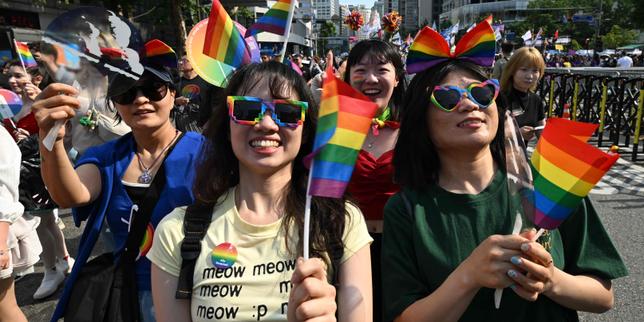
Thousands of people just packed the streets of central Seoul for the annual Seoul Queer Culture Festival. It was loud. It was colorful. It was a massive statement of defiance in a country where LGBTQ+ rights often feel stuck in place.
If you only read the quick news snippets, you might think this is just another standard pride parade. It isn't. The struggle to even hold the event tells you everything you need to know about the current climate in South Korea.
For years, organizers have faced a wall of bureaucratic resistance and fierce opposition from conservative groups. This year was no different. Yet, the turnout proved that the momentum of the local queer community cannot be easily blocked by administrative hurdles.
The Battle for Public Space in Seoul
Holding a pride event in Seoul is a logistical nightmare. That is not because of a lack of interest. It is because of politics.
The Seoul Queer Culture Festival has historically struggled to secure the iconic Seoul Plaza outside City Hall. The Seoul Metropolitan Government has repeatedly denied permits to the festival organizers, often granting the space to conservative Christian groups or other events instead.
- The regular venue block: This year, organizers again had to adapt, moving major parts of the event to alternative locations like Euljiro due to the city's scheduling decisions.
- The protest factor: Loud counter-protests are a guarantee. Christian activists routinely set up stages just across the street, using massive sound systems to drown out the celebration.
This creates a tense, high-energy environment. You walk through a gauntlet of anti-LGBTQ+ slogans just to enter a space filled with rainbow flags, drag performances, and booths run by local activist groups and foreign embassies. The contrast is jarring.
Where South Korea Stands on Equality
To understand why thousands of people marching in Seoul is a big deal, you have to look at the legal framework. South Korea is a modern global powerhouse. Its pop culture rules the world. Its legal stance on LGBTQ+ rights, however, tells a different story.
The country still lacks a comprehensive anti-discrimination law. Activists have pushed for one for over a decade. Every single time a bill gets introduced to the National Assembly, it stalls. Conservative politicians back down under pressure from powerful religious voting blocs.
Same-sex marriage is not legally recognized. While the Seoul High Court made a landmark ruling in 2023 allowing a same-sex partner to receive coverage under the National Health Insurance Service, systemic equality is a long way off. That court victory was huge, but it remains a rare exception rather than the rule.
Why the Corporate and Diplomatic Presence Matters
Walk through the festival booths and you will notice something interesting. Local corporations are mostly missing. You won't see the big Korean conglomerates sponsoring stages or plastering rainbows on their logos. The corporate pride culture seen in Western countries doesn't exist here. It is too risky for their brand image at home.
Instead, the international community fills the gap. Embassies from Western countries routinely set up booths to show solidarity.
This diplomatic backing gives the event a layer of political protection. It makes it harder for city officials to completely shut down the gathering without causing an international PR mess. For local queer youth, seeing these global institutions openly support them is a massive validation.
The Generational Divide is Widening
There is a massive shift happening under the surface. Young Koreans view LGBTQ+ rights completely differently than the older generation. Surveys consistently show that people in their twenties and thirties are overwhelmingly supportive of anti-discrimination laws and same-sex partnerships.
The festival is proof of this demographic shift. The crowd is young, energized, and completely unfazed by the protesters across the barricades. They are building their own community through grass-roots organizing, independent art, and digital spaces.
The political establishment is running out of time. They are catering to an aging conservative base, but the crowd that showed up in central Seoul represents the actual future of the country.
Support Local Advocacy Directly
If you want to support the movement beyond just reading the news, you need to look at the groups doing the heavy lifting on the ground. The Seoul Queer Culture Festival organizing committee relies heavily on individual donations to keep going every year.
You can also follow the work of Chingusai (Korean Gay Men's Human Rights Group) and the Solidarity for LGBT Human Rights in Korea. These organizations provide legal support, mental health resources, and continue the daily political lobbying required to push for the anti-discrimination bill. Change won't come from the top down in South Korea, it will come from supporting these exact organizations.