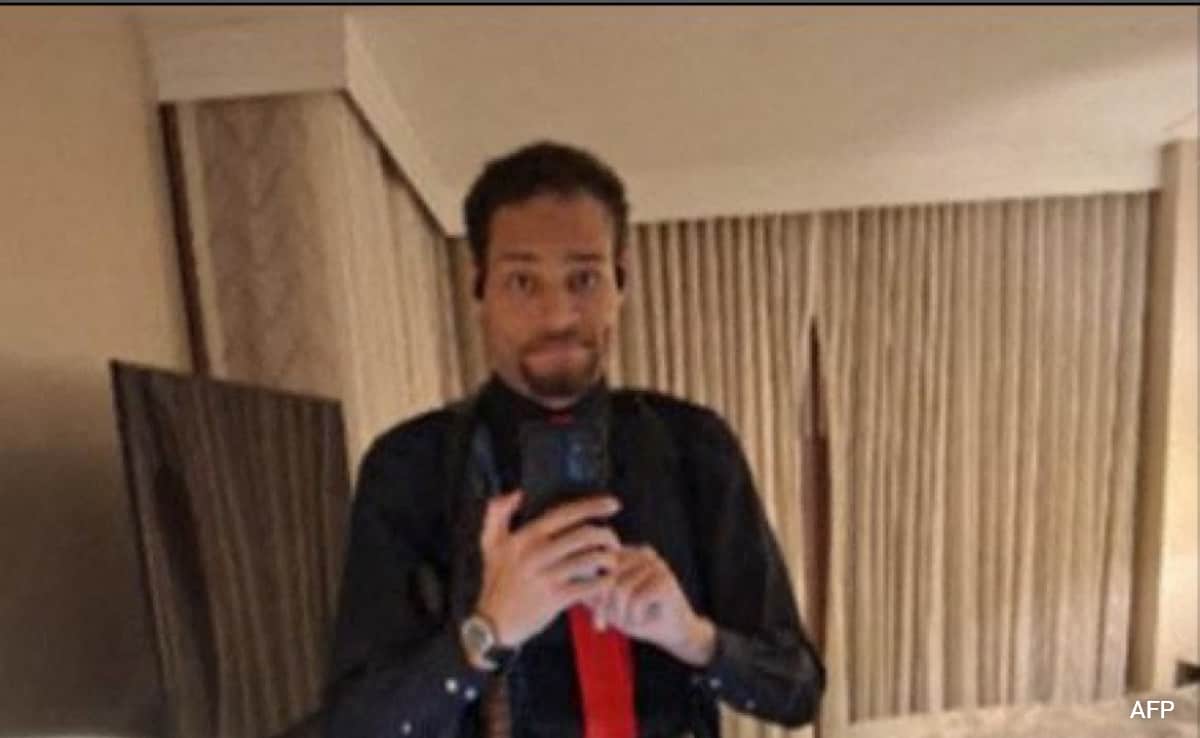
Media outlets are salivating over a photo. They want you to stare at a grainy selfie taken moments before a catastrophic security breach as if it contains the secret code to human evil. Prosecutors are leaning into this narrative because it’s easy. It’s cinematic. It fits the "lone wolf digital narcissist" trope we’ve been fed for a decade.
But focusing on the selfie is a massive, tactical error. It's the "lazy consensus" of modern crime reporting. By obsessing over the killer’s digital footprint in those final seconds, we are ignoring the structural decay of the institutions that let him get there in the first place. A selfie isn’t a motive. It’s a symptom of a society that has traded operational security for narrative-driven headlines.
The Myth of the "Warning Sign"
Every time a tragedy like the attempted assassination of a political figure occurs, the post-game analysis follows a tired script. We look for the digital breadcrumbs. We find a social media post, a search history for "how to build a pressure plate," or a pre-attack photo. Then, the talking heads nod and say, "The signs were there."
This is hindsight bias masquerading as expertise.
In reality, the selfie provides zero tactical value to investigators. It doesn’t explain the why; it only confirms the where. If we spent half as much time analyzing the radio frequency failures or the "dead zones" in perimeter communication as we do analyzing the lighting in a shooter's final photo, we might actually prevent the next one.
The selfie is a distraction. It allows agencies to humanize a failure that was actually mechanical and systemic. If the story is about a "disturbed individual taking a picture," the public focuses on the individual. If the story is about "a 400-foot line of sight left completely unmonitored," the public focuses on the incompetence of the badge. Guess which story the authorities want you to read?
Data Doesn't Care About Your Narrative
Let’s talk about the math of modern threat assessment. Prosecutors love "intent" because it wins cases in court. However, in the world of high-stakes protection, intent is secondary to capability.
I’ve watched security teams spend millions on "sentiment analysis" software designed to flag angry tweets. Meanwhile, they forget to check if the lock on the back gate actually engages. We are over-indexing on the psychological profile and under-indexing on the physical reality.
The "selfie" narrative is built on the flawed premise that these actors are seeking fame above all else. While "performance crime" is a real phenomenon, treating it as the primary driver ignores the radicalization pipelines that function perfectly well without a front-facing camera. By centering the selfie, we are validating the actor's desire for a legacy while simultaneously ignoring the logistical gaps that made the act possible.
The Problem With "Lone Wolf" Labels
The term "lone wolf" is a gift to failing bureaucracies. It implies an unpredictable, erratic force of nature that no one could have seen coming.
- Fact: Most "lone" actors have had contact with law enforcement or social services.
- Fact: Radicalization happens in clusters, even if the final act is solitary.
- Fact: Perimeter security is supposed to work regardless of whether the intruder is a "lone wolf" or a professional cell.
When we highlight the selfie, we reinforce the idea that this was a singular, freak event driven by a unique psychology. It wasn't. It was a failure of basic geometry and line-of-sight management.
Stop Psychoanalyzing the Lens
We need to kill the idea that looking into the eyes of a killer in a digital photo tells us anything useful. It’s "true crime" voyeurism disguised as news.
The status quo says: "Look at his expression. See the coldness?"
The insider says: "Look at the background. Why was he able to stand there for five minutes without being challenged?"
If you want to understand why these events keep happening, stop looking at what the suspect was doing with his phone. Start looking at what the people with the earpieces were doing with theirs. We have become a culture of observers rather than operators. We would rather document the disaster in high definition than do the boring, gritty work of preventing it.
The Cost of Performance Security
"Performance Security" is the art of looking busy without being effective. It’s the TSA making you take your shoes off while missing 70% of smuggled items in undercover tests. It’s the local police department putting up more yellow tape after the fact instead of patrolling the high ground before the event.
The focus on the selfie is the media version of Performance Security. It feels like "information." It feels like "insight." In reality, it’s just filler. It fills the 24-hour news cycle so we don't have to talk about the $200 million budgets that failed to cover a single rooftop.
The Actionable Truth
If you are a citizen concerned about the safety of our public figures—regardless of your politics—you must demand better than "digital forensics" as a solution. Forensics is what you do when you’ve already lost.
We need to pivot toward:
- Redundancy over Technology: Stop trusting "smart" sensors that fail in the heat. Go back to basics: human eyes on every elevated position.
- Accountability over Narrative: Every time a selfie is leaked to the press, ask who leaked it and why. It’s almost always a play to shift the conversation away from operational negligence.
- Aggressive Interdiction: The moment a "suspicious person" is identified, the protocol should be immediate neutralization of the threat—not "monitoring" them until they take a photo.
The selfie isn't a smoking gun. It’s a mirror reflecting our own obsession with the trivial while the foundations of our security infrastructure crumble. We are staring at the screen while the real world burns around the edges of the frame.
Stop looking at the photo. Look at the map. That’s where the real failure is hidden.