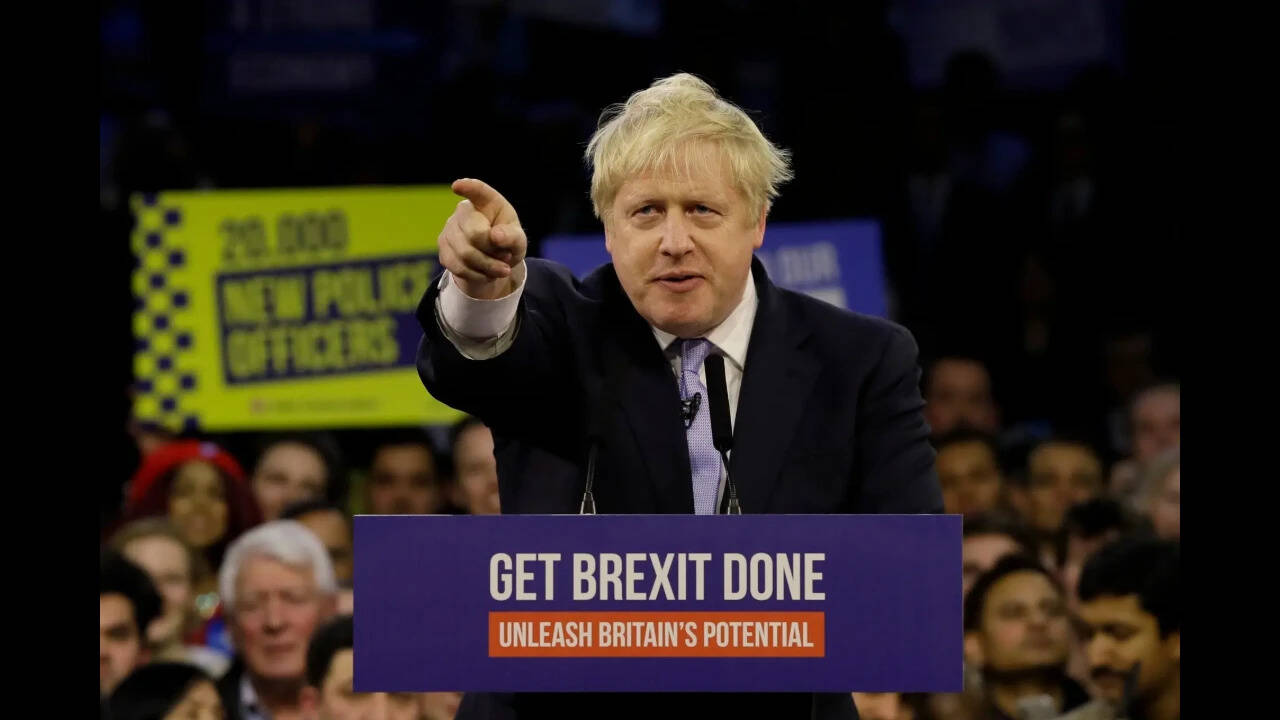
The rain in London during the early autumn of 2016 did not just fall; it seemed to settle into the brickwork, heavy and permanent. Walk into any pub off Whitehall back then, and the air was thick with a specific kind of exhaustion. People sat over lukewarm pints, staring at scribbled notes, trying to calculate the impossible. The nation had just voted to leave the European Union, and the collective hangover was setting in.
We were suddenly tasked with untangling forty years of legal, economic, and cultural integration. The spreadsheets were endless. The trade-offs were brutal. Access to the single market meant accepting the free movement of people. Rejecting the border controls meant sacrificing economic friction. Every door opened seemed to lock another one shut. It was a bleak, zero-sum game of geopolitical arithmetic.
Then came the cake.
It sounds ridiculous now, looking back at how a simple bakery metaphor managed to capture the collective psyche of a superpower. But when Boris Johnson uttered his infamous maxim—declaring his policy on cake was firmly "pro having it and pro eating it"—he did not just coin a phrase. He defined an era. He gave a name to a profound human desire that lives within every voter, every consumer, and every conflicted soul: the wish that choices did not have to carry costs.
The Chemistry of the Sweet Tooth
To understand why this phrase stuck like superglue to the British political consciousness, you have to look past the political theater and look at the human brain. We are hardwired to despise trade-offs.
Consider a simple, everyday dilemma. You want to save money for a down payment on a house, but you also want to spend the summer traveling through Italy. A rational mind knows that every euro spent on pasta in Rome is a brick missing from the future living room. It hurts. Psychologists call this cognitive dissonance, the mental discomfort of holding two conflicting desires simultaneously.
Political campaigns usually run on trying to convince you that their specific sacrifice is worth it. They ask you to swallow the bitter medicine of higher taxes for better hospitals, or lower spending for a smaller deficit.
Johnson understood something much more primal about the British public in 2016. They were tired of bitter medicine. Years of austerity had left the public palate desperate for something sweet. When he stepped forward with his boyish, disheveled charm and suggested that Britain did not actually have to choose between the benefits of the European club and the freedom of the open seas, it felt less like a policy position and more like a rescue mission.
He made optimism feel like a strategy.
For a brief window, the atmosphere changed. The dry, terrifying warnings of economists—what the Leave campaign successfully branded as "Project Fear"—were neutralized by a smile and a pastry. If you questioned the mechanics of how Britain could maintain frictionless trade without agreeing to the EU's rules, you were simply labeled a cynic. You lacked faith. You were standing in the way of the bakery.
The Memo on the Modern Street
The true turning point for this phrase, the moment it mutated from a cheeky quip into an official political doctrine, happened on a mundane Monday morning in late November 2016.
A high-ranking official was walking out of the Department for Exiting the European Union on Downing Street. Tucked under her arm was a handwritten notepad, facing outward toward a long-lens photographer standing across the cobblestones. The camera clicked. The image was enlarged, sharpened, and blasted across the global news feeds within an hour.
Among the scribbled bullet points of top-secret strategy, one line stood out in stark, undeniable ink: "What's the model? Have cake and eat it."
The curtain had been pulled back. It was no longer just a colorful line used to charm journalists at a book launch. It was the actual, literal negotiation strategy of Her Majesty’s Government.
Seeing those words captured on a cheap notepad exposed the collective vulnerability of the entire enterprise. It was the political equivalent of catching your financial advisor writing "win the lottery" in the column marked investment strategy.
But the real problem lies elsewhere, far beneath the surface of Westminster gossip. The tragedy of "cakeism" is that it worked so well because it mirrored the way we live our daily lives. We live in an era of digital immediacy where we are constantly told we can have it all. We buy clothes with one click and return them for free. We stream thousands of movies without ever owning a single piece of plastic. We have become accustomed to a world without friction.
When the messy, ancient, stubborn realities of international law collided with this frictionless expectation, the crunch was deafening.
The Cost of the Confection
Step away from the politicians and look at an independent shopkeeper in Yorkshire trying to export specialized machinery components to Germany. Let us call him Michael, a composite of the dozens of frustrated business owners who watched the promises crumble in real-time.
For years, Michael packed his components into wooden crates, slapped a label on them, and sent them across the English Channel. They arrived in Frankfurt forty-eight hours later. No checks. No tariffs. No delays.
When the post-Brexit reality finally arrived, Michael found himself drowning in a sea of customs declarations, rules-of-origin certificates, and veterinary inspections. His cake had vanished. He was left with the crumbs of a supply chain that could no longer keep up with continental competitors.
Michael’s experience reveals the hidden emotional tax of the phrase. When you tell people they can have everything, they do not prepare for the alternative. They do not build the warehouses, hire the customs agents, or diversify their markets. The optimism that feels so intoxicating in a speech becomes a paralyzing trap when reality demands practical preparation.
The European negotiators across the table in Brussels watched this British debate with a mixture of bafflement and growing irritation. Michel Barnier, the chief EU negotiator, regularly invoked the cake metaphor in his press conferences, turning it back on London like a mirror. He repeatedly warned that the single market was not a menu where you could pick the dessert and skip the vegetables.
By using the phrase as a weapon of critique, the European side solidified its status. It became the definitive shorthand for British exceptionalism, a linguistic monument to the belief that the rules of gravity did not apply to the United Kingdom.
The Empty Plate
Rhythm dictates that every illusion eventually meets its ending. For Britain, the realization came not with a dramatic bang, but with the slow, grinding friction of everyday life. It arrived in the form of truck queues in Kent, empty supermarket shelves during supply chain hiccups, and the complex, lingering puzzle of the Northern Ireland border.
The phrase "cake and eat it" eventually curdled. It transformed from a boast into an accusation. When a politician promised a pristine result with zero downsides, opponents did not need a long policy paper to debunk it. They just needed one word: cakeism.
We see this pattern repeat far beyond the borders of the United Kingdom. It shows up in climate change debates, where we are promised we can lower global emissions without changing our consumption habits. It shows up in personal finance, where we are told we can borrow indefinitely without ever paying the interest.
The human heart always wants the benefits without the burdens.
Boris Johnson’s great insight was knowing that the public would love him for promising the impossible, at least for a little while. His great failure was forgetting that eventually, the bill arrives.
The rain still falls on Whitehall, but the mood has shifted. The era of the grand, sugary promise has given way to a quieter, more sober realization. We are learning, the hard way, that the true maturity of a society is measured by its willingness to look at a menu, understand the prices, and make a definitive, difficult choice. Anything else is just daydreaming in front of an empty bakery window.