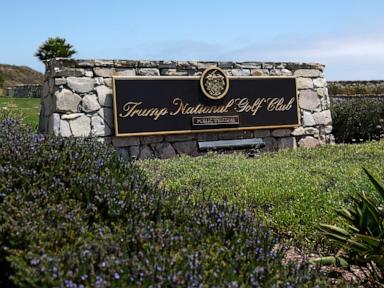
Executive protection operations rely on continuous behavioral anomaly detection to intercept threats before tactical execution phases begin. The detention of Jeanine John Taele at Trump National Golf Club in Rancho Palos Verdes highlights the operational friction points between static asset vulnerabilities and advanced threat mitigation protocols. When structural monitoring intersects with perimeter surveillance failures, the risk profile of high-value political targets escalates exponentially.
The Three Vectors of Perimeter Ingress
The incident demonstrates how hostile actors exploit the transition zones surrounding private properties. Protection details must account for three distinct structural vectors when securing venues prior to a principal's arrival:
- Reconnaissance Mapping: The suspect engaged in systematic photography and videography of security-planning activities two days prior to the scheduled presidential visit. This phase involves documenting response timelines, camera blind spots, and law enforcement positioning.
- The Proximity Buffer Breach: Accessing open-access public areas or semi-private perimeter lines of a golf course allows physical pre-positioning of assets. The presence of ammunition in the suspect's pocket and a loaded firearm in a parked vehicle indicates a failure of early-stage vehicle screening protocols at the outer perimeter.
- Escalation Potential and Material Staging: Subsequent residential searches revealed an asymmetric arsenal consisting of a modified AR-style rifle, body armor, communication gear, and written statements. This material disparity points to a deliberate staging phase rather than an opportunistic infraction.
The Cost Function of Advance Planning Deficits
Security structures operate on a strict cost-benefit balance where the allocation of personnel must match the threat density. In this case, the detection relied heavily on plainclothes federal agents operating on-site rather than automated perimeter telemetry.
When intelligence collection depends on reactive observation instead of proactive electronic tripwires, the margin for error narrows. The cost function shifts from preventative deterrence to emergency containment.
- Detection Latency: The time delta between the suspect entering the property and the intervention of plainclothes personnel determines the survivability index of the protective detail.
- Resource Friction: Multi-agency responses involving the Los Angeles County Sheriff's Department, the Federal Bureau of Investigation, and the Secret Service introduce communication overhead and coordination delays.
- Information Asymmetry: Public updates indicating no "credible threat to communities" contrasted sharply with the severity of the seized arsenal, exposing a disconnect between tactical risk containment and public relations messaging.
Systemic Vulnerabilities in Open-Air Venues
Golf courses present unique geometry management challenges for executive protection teams. Unlike hardened government facilities with restricted airspaces and single-point checkpoints, properties like Trump National Golf Club feature extensive acreage, varied topography, and multiple public access points.
Adversaries leverage these architectural realities to conduct surveillance without immediate challenge. The absence of strict vehicular screening at secondary parking tiers creates a vulnerability loop where a perpetrator can store primary armaments off-person while maintaining plausible deniability during initial foot patrols.
Strategic Readjustment of Protective Parameters
To neutralize similar threat models, protective command structures must transition from event-driven deployment models to permanent, multi-layered telemetry grids.
Deploy immediate-response electronic surveillance arrays that automatically flag loitering behavior and recording equipment near known secure zones. Restrict public access to perimeter viewing corridors 72 hours prior to a principal's arrival rather than the standard 24-hour window, closing the intelligence-gathering window for potential bad actors. Mandate strict vehicular checkpoints at all property perimeters, eliminating the storage of firearms within walking distance of high-profile event sites.