Sports media loves a comforting lie. Whenever an NFL franchise drops a winnable game, beat writers reach for the exact same dust-covered playbook. They stick a microphone in a locker room, wait for a sweaty veteran to mutter a cliché about accountability, and slap a headline onto the internet claiming the team has found a "sense of urgency."
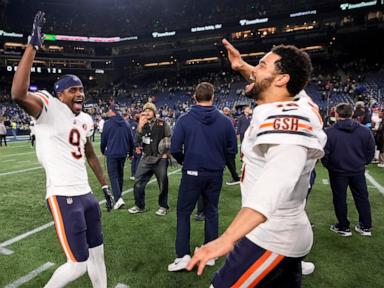
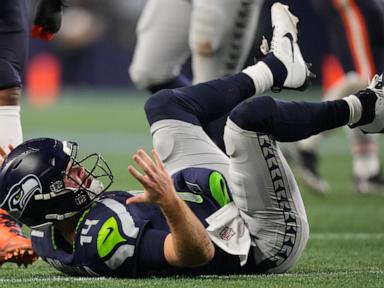
It happened again right after Seattle fell to Chicago. The local echo chamber immediately went to work selling fans on the idea that this loss was a wake-up call. They want you to believe that Mike Macdonald’s squad suddenly remembered how to care, that the practice tempo is going to spike, and that sheer willpower will fix their broken third-down defense and stagnant run game.
Stop buying it. "Sense of urgency" is the laziest trope in football journalism. It is a placebo fed to angry fanbases when reporters do not want to explain schematic failure, personnel mismatches, or poor clock management.
If an NFL team needs a humiliating loss in the middle of the season to suddenly feel urgent about their jobs, you do not have a motivational issue. You have a coaching and roster construction crisis.
The Myth of the Locker Room Wake-Up Call
Let us look at what actually happens inside an NFL building between Sunday evening and Wednesday morning. I have spent years analyzing film rooms and front-office dynamics, and the reality looks nothing like a Hollywood sports movie. Nobody is flipping over tables. Nobody is giving a speech that magically adds two-tenths of a second to a linebacker's forty-yard dash time.
Professional football players are already operating at the razor's edge of physical exertion. Every single starter in that Seattle locker room is playing for multi-million-dollar incentives, roster survival, and generational wealth. Suggesting they lost to the Bears because they lacked urgency is an insult to their intelligence and a complete misunderstanding of how modern football is won.
When a team says they have a "newfound urgency," what they are actually admitting is that their preparation process was flawed. You do not win in the NFL by trying harder on Tuesday. You win by diagnosing leverage, disguising coverage shells, and winning one-on-one blocks in the trenches.
- Effort cannot fix blown assignments. When a safety bites on play-action and leaves a seam wide open, running faster after the catch does not erase six points.
- Emotion burns out by the second quarter. You can manufacture hype for the opening kickoff, maybe even the first defensive series. Once the scripted plays end and the chess match begins, adrenaline disappears and execution takes over.
- Public accountability is theater. Players know exactly what the media wants to hear. Saying "we need to play with more urgency" ends the interview faster so they can get to the cold tub.
What Actually Happened Against Chicago
If you strip away the emotional narratives surrounding the Bears game, the tape tells a cold, clinical story. Seattle did not lose because they were sleepy. They lost because Chicago exploited structural vulnerabilities that have been visible on film for weeks.
First, look at the trenches. Modern defensive schemes—especially the disguise-heavy, split-safety systems that Macdonald popularized during his time in Baltimore—rely entirely on a four-man rush getting home without blitzing. When your front four cannot generate pressure against a middling offensive line, those complex post-snap rotations turn into soft zones with massive voids underneath.
Chicago’s offensive staff recognized this immediately. They attacked the intermediate middle of the field, forcing Seattle’s linebackers to cover space laterally while keeping the pass rush honest with quick-game concepts and timely screens. No amount of "urgency" alters the geometry of a Cover-6 shell when the quarterback has three and a half seconds to throw.
Second, examine the offensive stagnation. When an offense struggles to establish early-down efficiency, every third down becomes an obvious passing situation. Edge rushers pin their ears back. Defensive coordinators dial up simulated pressures. The quarterback takes hits, the pocket collapses, and drives die at midfield.
Calling that a lack of urgency is like blaming a car crash on the driver's attitude when the brake lines were cut before leaving the driveway.
The Real Reason Beat Writers Love This Narrative
Why do so many outlets publish the exact same "sense of urgency" angle after a tough loss? Access and convenience.
Breaking down why an offensive guard failed to pass off a stunt takes hours of All-22 film study. Explaining why a defensive coordinator’s check-with-me audible system got caught in the wrong personnel grouping requires deep schematic knowledge—and risks alienating the coaching staff you need quotes from on Thursday.
Writing that the team is "locked in" and "feeling the urgency" takes twenty minutes, upsets nobody in the building, and gives frustrated fans a hit of hopium. It frames a systemic problem as a temporary mood swing. If the issue is just a mood, it can be fixed by Sunday. If the issue is personnel and scheme, the season might be in serious trouble.
Dismantling the Fans' Biggest Questions
When fans search for answers after a frustrating loss to Chicago, they usually end up asking the wrong questions because the media frames the debate poorly. Let us address the core assumptions head-on.
Does a mid-season loss actually spark a turnaround?
Rarely. Data across decades of NFL seasons shows that mid-season losing streaks are almost always regression to the mean rather than anomalies cured by a players-only meeting. When a team rallies late in the year, it is usually because injured starters returned to the lineup, the schedule softened, or a coordinator finally simplified a bloated playbook. It is almost never because they suddenly cared more.
Is Mike Macdonald losing the locker room?
No, and suggesting otherwise is pure panic. First-year head coaches installing complex defensive architectures always hit turbulence. When Vic Fangio or Brandon Staley introduced similar split-safety frameworks to new rosters, growing pains were guaranteed. Players have to think before they react, which makes them look slow. Once the communication becomes muscle memory, the speed returns. Confusing cognitive overload with a lack of effort is a classic amateur mistake.
Can Seattle fix their run defense before the division gauntlet?
Only if they change their front mechanics. Right now, Seattle’s defensive tackles are getting washed out on double teams because they are playing too high off the snap. You fix that with pad-level drills, gap-exchange adjustments, and potentially rotating in heavier bodies on early downs—not by giving speeches about pride.
The Uncomfortable Truth About Championship Contenders
Bill Belichick built a two-decade dynasty in New England on a philosophy that explicitly rejected emotional swings. He hated the idea of "getting up" for a game. His core thesis was simple: if your baseline standard of preparation requires a loss to trigger urgency, your standard is garbage.
Think about the teams that consistently contend in January. Andy Reid’s squads in Kansas City do not rely on panic-induced urgency. Kyle Shanahan’s teams in San Francisco do not suddenly invent effort in Week 11. They rely on repeatability. They trust their leverage, their spacing, and their weekly install process regardless of whether they won by twenty or lost by three the week prior.
Imagine a scenario where a surgeon botches a routine procedure, walks out to the waiting room, and tells the family, "Don't worry, this really gave me a sense of urgency for my next operation." You would run out of the hospital. Yet in sports, we applaud this exact mindset as leadership.
The Downside of Cold Hard Realism
Now, let us be completely honest about the flaw in my own argument. Football is not played by robots on a spreadsheet. Human psychology matters, especially over a grueling seventeen-game schedule where every player is nursing some level of soft-tissue damage or joint pain by November.
There is a legitimate difference between playing tight and playing loose. When a team loses a close game to an opponent like the Bears, doubt creeps into the margins. A wide receiver takes an extra half-step on a break. A quarterback holds the ball a beat too long because he does not trust his protection. In that specific sense, a sharp emotional reset can clear the mental clutter and restore confidence.
If "urgency" is simply code for sharpening focus on the mundane details of film study and hydration, then fine—there is marginal value there. A loss stings, and pain is a decent teacher for young rosters learning how hard it is to close out games in the fourth quarter.
But do not confuse a mental reset with a schematic cure. Confidence does not block a three-technique defensive tackle. Focus does not magically manufacture an elite edge rusher out of thin air.
What Seattle Actually Needs to Do Next
If the Seahawks want to salvage their trajectory and prove that the Chicago loss was a blip rather than a trend, they need to abandon the motivational theater and make cold-blooded football adjustments.
- Simplify the defensive call sheet on early downs. Stop trying to outsmart offenses with three-layer disguises when your front four is losing individual matchups. Line up, win your gap, and let your athletes play fast without hesitation.
- Manufacture easy completions early. If the offensive line is struggling to hold up in drop-back protection, stop calling seven-step drops. Use motion, sprint-outs, and quick-rhythm throws to get the ball out in under 2.3 seconds.
- Cut snaps for underperforming veterans. Nothing creates real urgency in an NFL locker room faster than watching a backup take your reps on Wednesday. Coaches do not need to talk about accountability; they have a depth chart for that.
- Fix red-zone sequencing. Settling for field goals after long drives is a death sentence in modern football. Seattle needs aggressive, high-percentage play designs inside the twenty-yard line rather than conservative run calls into loaded boxes.
Stop listening to the post-game press conferences. Mute the radio hosts preaching about heart, grit, and sudden wake-up calls. Watch the tape on third-and-six, look at the pad level on the defensive line, and watch how quickly the quarterback gets pressured.
The scoreboard does not care how urgent you feel on Tuesday. It only cares who executes on Sunday.