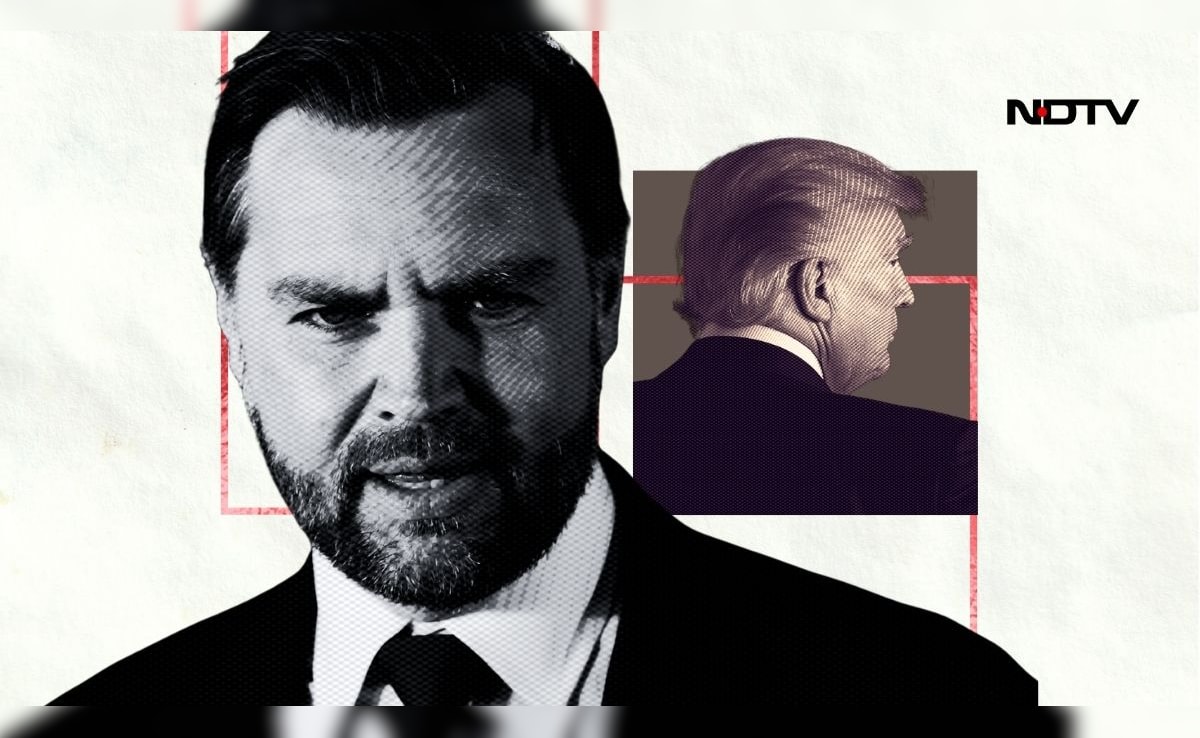
The media is obsessed with the idea of the "unwitting fall guy." They love the narrative of a bumbling politician or a mid-level bureaucrat being led to the slaughter while the puppet masters pull the strings from the safety of the Mar-a-Lago dining room. The latest iteration of this tired trope suggests that Trump has "found his Iran scapegoat" and that this poor soul is blissfully unaware of their impending doom.
This isn't just lazy journalism; it’s a fundamental misunderstanding of how high-stakes geopolitics actually functions.
In the world of shadow diplomacy and maximum pressure campaigns, there are no accidental martyrs. To believe that a key player in the administration’s Iran strategy is being "set up" without their knowledge is to ignore the reality of careerism, ego, and the brutal efficiency of political survival. Everyone at that level knows the price of the ticket. If you’re standing in the splash zone of a Middle East policy shift, you aren’t a victim. You’re a volunteer.
The Illusion of the Unknowing Participant
The premise suggests that the Trump administration operates like a 1940s noir film, where a patsy is handed a suitcase full of "intelligence" and told to walk into a buzzsaw.
Let’s dismantle that right now.
People who rise to the level of influencing Iran policy—whether they are Special Envoys, National Security Council staffers, or Department of Defense liaisons—are calculated risk-takers. They understand the lifecycle of a hawk. They know that when the winds of public opinion shift or when a diplomatic opening emerges, the most aggressive voices are the first to be pruned.
They aren't being "found." They are auditioning for the role. Being a "scapegoat" in a high-profile failure is often a more lucrative career move than being a mid-level success. It leads to book deals, speaking circuits, and "senior fellow" titles at think tanks funded by the very defense contractors who benefit from the tension. The "victim" narrative is a mask they wear to keep their next job.
The Intelligence Community Isn’t a Playground
The "scapegoat" theory relies on the idea that intelligence can be easily manipulated to frame a single individual for a massive policy failure. This ignores the structural friction within the CIA, the NSA, and the DIA.
The intelligence community (IC) doesn't just hand over a finished product that says, "Here is the one guy to blame if this goes south." Intelligence is a fragmented, bureaucratic mess of competing interests. When a policy fails—like, say, a botched attempt to contain Iranian proxies or a failed negotiation over JCPOA 2.0—the blame is diffused across a dozen agencies.
For one person to be the "scapegoat," there has to be a total collapse of the IC’s internal defense mechanisms. That doesn't happen. What actually happens is "strategic blame-shifting." This is a lateral move, not a vertical drop. If the administration wants to blame a specific actor, that actor usually has a folder of their own, full of emails and memos that show they were just following orders.
The idea that Trump—a man who treats loyalty as a one-way street—could successfully isolate one individual without that individual burning the whole house down is a fantasy. These people have "insurance files."
Why "Maximum Pressure" Requires a Sacrifice
The media treats the concept of a scapegoat as a sign of weakness or a looming disaster. In reality, the sacrifice is a feature, not a bug.
When you engage in a "Maximum Pressure" campaign, you are playing a game of chicken with a regime that has survived decades of sanctions. To keep the pressure credible, you need to show that you are willing to purge your own ranks to stay the course.
If a policy isn't working, you don't change the policy—that looks like a retreat. Instead, you change the person. You fire the "hardliner" to signal a fake opening for diplomacy, or you fire the "moderate" to signal an escalation. The person leaving the room isn't a scapegoat; they are a signal. They are a human rhetorical device.
The Data of Diplomatic Failure
Let’s look at the numbers that the "scapegoat" narrative ignores.
Since 1979, US-Iran relations have followed a predictable sine wave of escalation and "reset." During every "reset" period, the outgoing hawks are labeled as the obstacles to peace. During every escalation, the outgoing doves are labeled as the enablers of terrorism.
- 1980s: The Iran-Contra affair had its "scapegoats" (Oliver North). North didn't disappear into obscurity; he became a conservative icon.
- 2003: The "intelligence failure" of Iraq had its fall guys. Most ended up with lucrative consulting gigs.
- 2015: The JCPOA architects were vilified by the incoming administration. They didn't lose; they just moved to the private sector to wait for the next Democratic presidency.
The "scapegoat" isn't a person whose life is ruined. It’s a person whose current contract is expiring.
The Flawed Premise of "The Scapegoat Doesn't Know It Yet"
The competitor’s article hinges on the dramatic irony that the target is oblivious.
"The Scapegoat Doesn't Know It Yet."
This is the most egregious part of the argument. In Washington, D.C., you know you’re the target the moment your name appears in a positive light in a major newspaper. In the Trump orbit, public praise is often the preamble to a private execution. If you are the "point person" on Iran, you are tracking your own internal "stock price" every hour.
You see the leaks. You feel the cold shoulder in the hallway. You notice when you’re left off the CC list for the morning briefing. To suggest these people are "oblivious" is to insult their intelligence and their survival instincts. They know exactly what is happening. They are simply betting that they can leverage their exit better than the administration can leverage their firing.
The Real Scapegoat: The Taxpayer
If we want to talk about who is actually being duped, we shouldn't be looking at the guys in suits at the State Department. We should be looking at the people paying for the theater.
While the media focuses on the personality drama of "Who is Trump going to blame?", the actual mechanics of the Iran policy continue to drain resources with zero accountability. We spend billions on carrier strike group deployments and "deterrence" measures that have yet to stop a single Houthi drone or a single Hezbollah rocket.
The focus on a singular "scapegoat" allows the public to believe that the problem is a person, not a systemic failure of American foreign policy. If we fire the "wrong" guy, the policy will suddenly work, right? Wrong. The policy is the problem. The "scapegoat" is just the distraction that keeps us from questioning the underlying logic of permanent intervention.
Challenging the "Chaos" Narrative
The mainstream view is that Trump’s Iran policy is a chaotic mess driven by whim and the need for a fall guy.
I’ve seen this play out in corporate boardrooms and high-level political ops. It’s not chaos. It’s a "controlled burn."
By constantly rotating the people responsible for the "Iran file," the administration ensures that no single strategy ever becomes entrenched enough to be audited. If you keep the personnel in flux, you keep the accountability in flux. You can’t blame a strategy that is only three months old.
This isn't a bug in the Trump system; it's the core operating principle. It’s about maintaining "strategic ambiguity" not just for the Iranians, but for the American public and the Congress. If no one is truly in charge, no one is truly responsible for the lack of results.
The Myth of the "Unaware" Victim
Imagine a scenario where a high-level official is genuinely surprised by their dismissal.
In that scenario, they would have to be disconnected from every social and professional network they’ve built over twenty years. They would have to ignore the "anonymous sources" quoted in the very articles claiming they are a scapegoat.
The "unaware scapegoat" is a literary device used by journalists to create a sense of impending doom for the reader. It’s a way to make a dry policy story feel like a thriller. But in the actual corridors of power, "unaware" is a synonym for "unemployed for a very long time," and these people are rarely that.
Stop Looking for the Fall Guy
The obsession with finding the "scapegoat" is a symptom of our "Main Character Energy" approach to news. We want a protagonist and an antagonist. We want a betrayal.
But Iran policy isn't a movie. It’s a grinding, multi-generational stalemate that involves complex energy markets, sectarian divides, and the terrifying math of nuclear proliferation.
When you see an article telling you that Trump has found his "scapegoat," ignore the name of the individual. They’ll be fine. They’ll be on a cable news panel within six months, complaining about how they were "hamstrung" by the very administration they served.
Instead, ask yourself: What is this "scapegoat" drama hiding?
It’s hiding the fact that the "Maximum Pressure" campaign hasn't achieved its stated goals. It’s hiding the fact that the "deal of the century" is nowhere in sight. It’s hiding the reality that we are trapped in a cycle of escalation that benefits only the arms dealers and the professional pundits.
The scapegoat knows exactly what’s coming. They’ve already picked out the font for their book cover. The only person who doesn't know they're being played is the person reading the "Opinion" piece and believing that this time, the "firing" actually means something.
Stop falling for the theater. The cast changes, but the play remains the same. The "scapegoat" isn't a victim; they’re just the latest actor to take a bow before the curtain falls on another failed year of diplomacy.