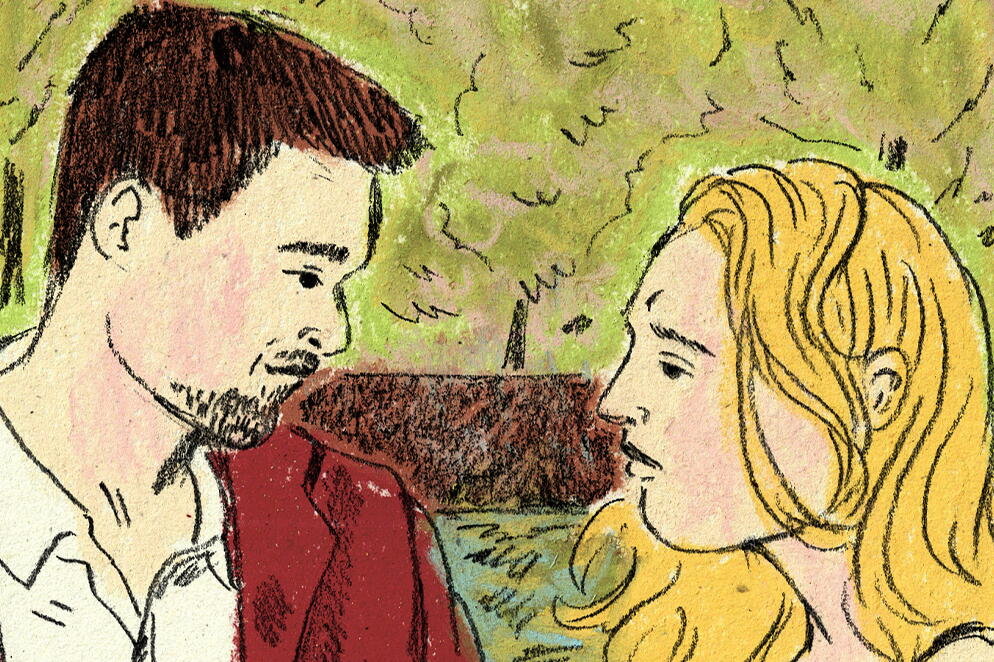
The dirt beneath Clara’s vintage leather boots was not just earth. It was a history of neglect.
For decades, this corner of the valley had been written off. Logged over, choked by invasive brush, and left to bake under an indifferent sun, the 120 acres looked less like a forest and more like a scar. The canopy was missing. The soil was powdery and dead, washing away in sheets whenever the autumn rains arrived. Nothing lived here that could afford to leave.
Then came the white dress.
Clara stood at the edge of what conservationists called Zone Four, watching a small army of wedding guests navigate a newly cut trail of woodchips. They weren't holding paper parasols or drinking imported champagne under sterile white tents. They were holding shovels. They were wearing mud on their wingtips.
Down the hill, beneath a skeletal framework of old-growth oaks that had somehow survived the logging era, a young couple was reading vows they had written themselves. There was no altar of imported plastic flowers. Their altar was a living, breathing promise—not just to each other, but to the dirt beneath their feet.
For every guest who sat on the cedar benches, a sapling had been reserved. For every toast offered during the reception beneath the open sky, a root system was being tucked into the dark, welcoming loam.
This is what happens when celebration stops taking from the earth and starts giving back.
The Economics of a Living Canopy
We have built an entire industry around the ephemeral. The average wedding is a logistical masterpiece of waste—thousands of dollars spent on cut flowers flown halfway across the world, single-use decor destined for a landfill before midnight, and carbon footprints that stretch across continents. It is an industry built on the fleeting moment, priced at a premium precisely because it doesn't last.
Consider what happens when you turn that model inside out.
Instead of renting a sterile hotel ballroom with recirculated air and carpet patterned to hide stains, couples are looking at degraded timberlands, abandoned farmlands, and overgrazed pastures. They are paying to heal them.
The mechanics are deceptively simple. When a venue operates as a working restoration project, the event fees do not vanish into the pockets of a corporate conglomerate. They buy seeds. They pay local ecologists. They fund the heavy, dirty labor of invasive species removal and watershed stabilization.
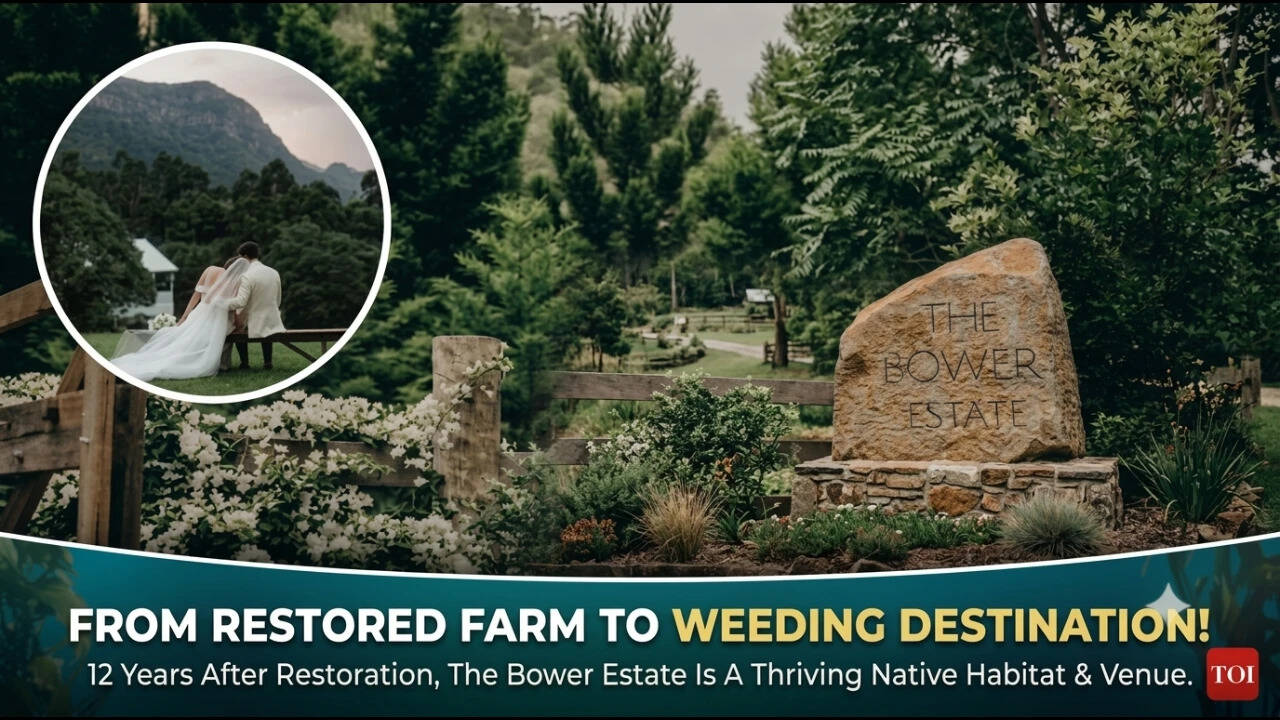
In this specific 120-acre parcel, the transformation began three years ago with a simple math equation. A weekend wedding package cost roughly the same as a mid-tier urban venue, but the overhead included a non-negotiable restoration tax. Every reception funded five hundred native saplings—ponderosa pine, Douglas fir, serviceberry, and bigleaf maple. Every catering contract sourced ingredients from regenerative farms within a fifty-mile radius, turning the dinner plate into an instrument of soil health.
It sounds romantic. It is also intensely pragmatic.
Why the Old Way is Dying
Walk through a traditional banquet hall the morning after a major event. The dumpsters are overflowing. Thousands of stems of hothouse roses, stripped of their thorns and pumped full of preservatives, are rotting in plastic bins. They were alive yesterday. Now they are garbage.
We accepted this because we were told it was the price of elegance. Luxury meant detachment from consequence. If you wanted romance, you had to disconnect from the natural world, sealing yourself inside a climate-controlled box where the environment could not interrupt your aesthetic.
That detachment is a luxury we can no longer afford.
The modern landscape is fractured. Habitats are split into islands by asphalt and concrete, leaving wildlife populations stranded and genetic diversity gasping for air. When we isolate our milestones—our weddings, our anniversaries, our celebrations of life and love—from the biological reality of the planet, we treat the earth as a backdrop rather than a participant.
When Clara booked this scarred acreage for her ceremony, her friends thought she was eccentric. Why get married in the dirt? Why risk the mud? Why let your grandmother sit on a cedar stump?
Because the stump is anchored to something real.
The Science of Return
Restoring a landscape is not a matter of scattering seeds and walking away. It is an act of biological carpentry.
When ecologists first surveyed these 120 acres, the soil microbiology was nearly nonexistent. Decades of monoculture and logging had stripped the mycorrhizal networks—the underground fungal webs that allow trees to communicate, share nutrients, and fight off disease. Without those networks, planting a tree is like throwing a child into the middle of an ocean and hoping they swim.
Restoration requires intervention. It requires breaking up compacted clay with sub-soilers. It requires introducing biochar to lock carbon into the earth and retain moisture through the scorching summer months.
This is where the weddings come in.
Traditional conservation grants are notoriously fickle, subject to the whims of political cycles and grant-writing committees. They run out. They get slashed. But a wedding venue grounded in ecological restoration creates a self-sustaining revenue stream. Love is recession-proof. People will always gather to mark the passage of time, to pledge their loyalty, to eat and drink and dance together.
By tying the economics of celebration directly to the biology of restoration, the venue creates a perpetual motion machine of healing.
Every time a bridesmaid walks down an aisle of clover and wild rye, she is treading on soil that was fertilized by the fees of the couple who came before her. Every time a groom cuts the cake, a crew of field botanists is paying for nursery stock that will go into the ground the following Tuesday.
It is poetry with a spreadsheet.
What the Birds Know
By year two of the project, the local wildlife noticed before the humans did.
Habitat fragmentation is a silent killer. Birds that require large, continuous tracts of forest edge cannot nest in isolated patches of trees; they get picked apart by predators or starved out by competition. When the first thirty acres of this site were cleared of invasive blackberry thickets and replanted with native understory, the western bluebirds came back.
Then came the pollinators. Then the amphibians, slipping into the newly restored seasonal creeks where water once rushed off the bare hillsides in destructive, muddy torrents.
During Clara’s ceremony, a red-tailed hawk circled lazily overhead, riding a thermal right above the ceremony site. Nobody stopped their vows to look, but everyone felt it. The presence of something wild, something completely indifferent to the pomp and circumstance of human ritual, anchored the moment.
You cannot manufacture that kind of atmosphere. You cannot buy it from a party supply catalog. It has to be earned through dirt, sweat, and time.
The Long View
We are obsessed with instant results. We want our spaces polished, our lawns manicured, our environments clean and sterile and immediately gratifying.
A restored forest teaches you to unlearn that impatience.
When you plant a two-foot pine sapling during your wedding weekend, you are signing a contract with a future you will not fully see. In ten years, that tree will be taller than you are. In fifty years, it will house generations of owls and squirrels you will never meet. In a century, its roots will be holding together a hillside that would have otherwise washed into the sea.
That is the true weight of a legacy.
Most people spend thousands of dollars on a wedding to create a single afternoon of perfection. They capture it in photographs, post it to glowing screens, and watch it fade into memory. But when you anchor your celebration to the rehabilitation of a landscape, the memory doesn't fade. It grows.
Every anniversary becomes a pilgrimage. You don't just look at old photo albums; you walk out into the timber and look for "your" tree. You check its bark. You measure its height against your children. You watch the canopy close overhead, year by year, turning a scar on the earth into a cathedral.
The guests at Clara’s wedding didn’t leave with monogrammed koozies or plastic trinkets that would end up in a drawer by Tuesday. They left with dirt under their fingernails and a small packet of native wildflower seeds in their pockets.
They had helped plant something that would outlive them.
The sun dipped below the jagged silhouette of the western ridge, painting the recovering valley in long, amber strokes. Down in the clearing, the string lights flickered on, threading their warm glow through the low-hanging branches of the young pines.
The music started—a slow, acoustic melody that drifted out over the grass and dissolved into the quiet rustle of leaves. The earth took a deep, steady breath, and for one evening, the world felt a little less broken than it had when the sun came up.