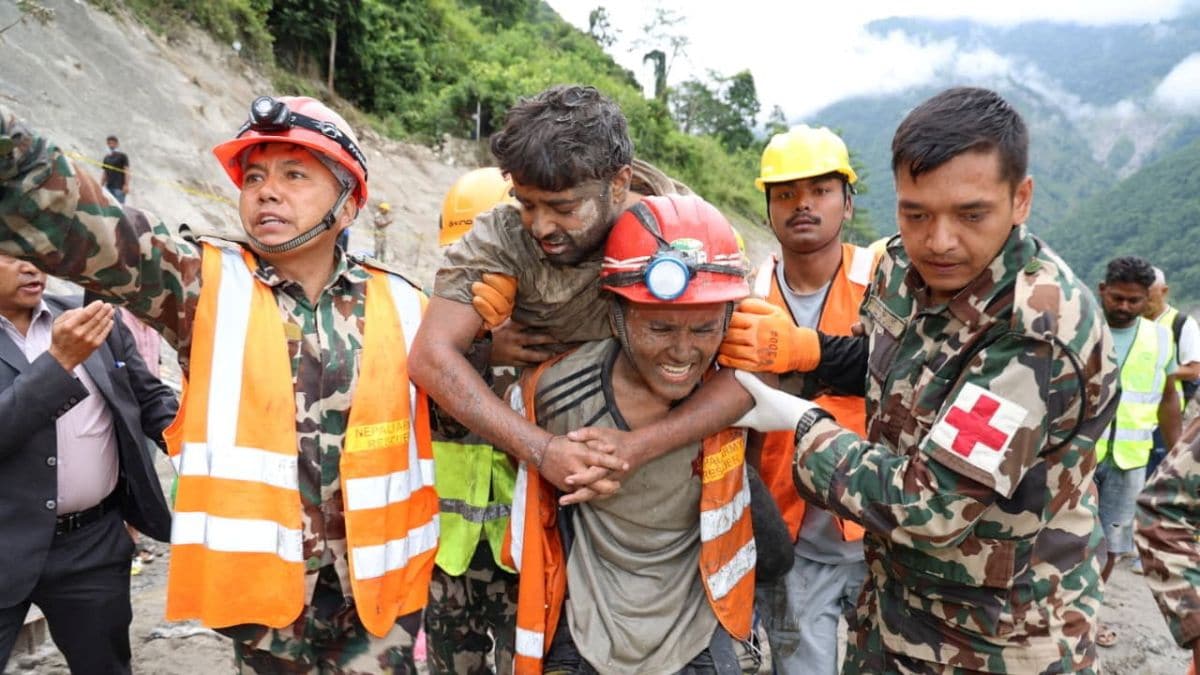
The media is currently celebrating a miracle. Two workers pulled alive from a flooded Nepal hydropower tunnel after days of darkness, dehydration, and sheer terror. Headlines are screaming about human resilience, triumphant rescue operations, and the indomitable spirit of survival against the odds.
Save the applause.
Every single person praising this extraction operation is missing the point. A successful rescue from a flooded hydropower tunnel is not a victory; it is a confession of systemic, catastrophic failure. If workers are trapped in a subterranean water conduit long enough for cameras to capture emotional reunions, the fundamental safety architecture of that facility already broke down in every imaginable way.
I have spent two decades walking through civil infrastructure projects across developing markets, and I am sick of watching the industry mask lethal design flaws as heroic survival stories. We romanticize the rescue because confronting the engineering negligence that caused the disaster requires too much uncomfortable truth.
The Comforting Lie of the Miracle
When a hydropower tunnel floods unexpectedly, the public narrative immediately pivots to emergency response times, specialized diving teams, and prayers. This shifts the burden of responsibility away from where it belongs: the drawing board.
A modern underground water conveyance structure is not a wild cave system. It is a controlled, engineered environment. It has blueprints, control gates, drainage protocols, and remote telemetry. When workers are cut off by rising water, it means at least three baseline safety barriers failed simultaneously.
- Isolation valve failure.
- Inadequate early-warning sensor arrays.
- The absence of pressurized, hardened safety pods or subterranean refuge chambers.
Yet, when everyone gets out alive after a week of agony, the operators throw a party. They hand out commendations to the rescue squad. They put the injured men on the evening news to shake hands with local politicians. Nobody asks why the intake gates didn't auto-seal at the first sign of pressure anomalies. Nobody asks why the evacuation path lacked breathable air reserves.
We prefer the cinematic drama of the extraction over the boring, expensive discipline of redundancy.
The Economics of Preventable Disaster
Let us look at the financial reality that nobody in the boardroom wants to admit. Building true fail-safe systems into a major tunnel project costs real money. Installing redundant, mechanical, gravity-fed emergency shutoffs that function independent of the power grid eats into profit margins. Excavating parallel safety escape adits for every primary water tube doubles the preliminary tunneling budget.
So, risk calculations are made. Actuaries and project developers sit in air-conditioned offices and weigh the cost of high-grade safety architecture against the statistical likelihood of a catastrophic breach. They look at local labor laws, regulatory oversight, and litigation costs. They optimize the project for maximum short-term yield, banking on the fact that if something goes wrong, the human element will bear the brunt of the consequence.
When an accident happens, the PR machine kicks into high gear. They spend a fraction of what those safety upgrades would have cost on crisis communications, framing the event as an unforeseeable act of nature or a testament to the unyielding grit of local laborers.
It is cynical, it is calculating, and it works every single time. Until it doesn't.
What Real Safety Looks Like
If we want to stop celebrating miracles, we have to change how we judge engineering competence. A well-designed hydropower facility should make a rescue operation obsolete because entrapment should be mathematically impossible.
Consider a standard subterranean installation. It features long stretches of damp, dark concrete or steel-lined tubes designed to move millions of liters of water per second. The force of that water is incomprehensible to anyone who hasn't stood next to a penstock running at full capacity.
If maintenance crews or technicians are inside that space, the margin for error is zero. Relying on a radio call from a control room miles away to warn workers of an impending valve release is medieval.
Real safety architecture requires absolute isolation.
- Independent Pneumatic Refuges: Every thousand meters of a major water tunnel should feature reinforced, self-sustaining survival pods stocked with oxygen, water, and communication relays that are anchored into the rock face, completely independent of external power.
- Mechanical Dead-Mans Interlocks: Water intake gates must feature mechanical, hydraulic lockouts that physically prevent closure or opening unless manual keys are held by the crew currently inside the sector. Software glitches shouldn't have kill power over human lives.
- Redundant Escape Routes: A single-bore tunnel used for both water conveyance and human access is a death trap waiting to spring. Secondary escape shafts must be mandatory, even in rugged terrain where it triples the capital expenditure.
The Cost of Our Collective Amnesia
Two men are safe today. Their families are weeping with relief. The cameras will pack up their gear, the politicians will leave the podiums, and the corporate executives will return to their spreadsheets. Within a month, construction and maintenance will resume under the exact same operational parameters that nearly killed those workers in the first place.
Nothing will change because the system was rewarded for its failure. They got their PR win. They proved that they could pull people out of the jaws of death, which somehow absolves them of the responsibility for pushing them in.
Stop calling these extractions miracles. Call them what they are: overdue corrections to avoidable design catastrophes. Until we start holding project engineers and financiers legally accountable for the lack of safety systems rather than celebrating the rescue squads who clean up their mess, workers will continue to gamble their lives so the lights can stay on.