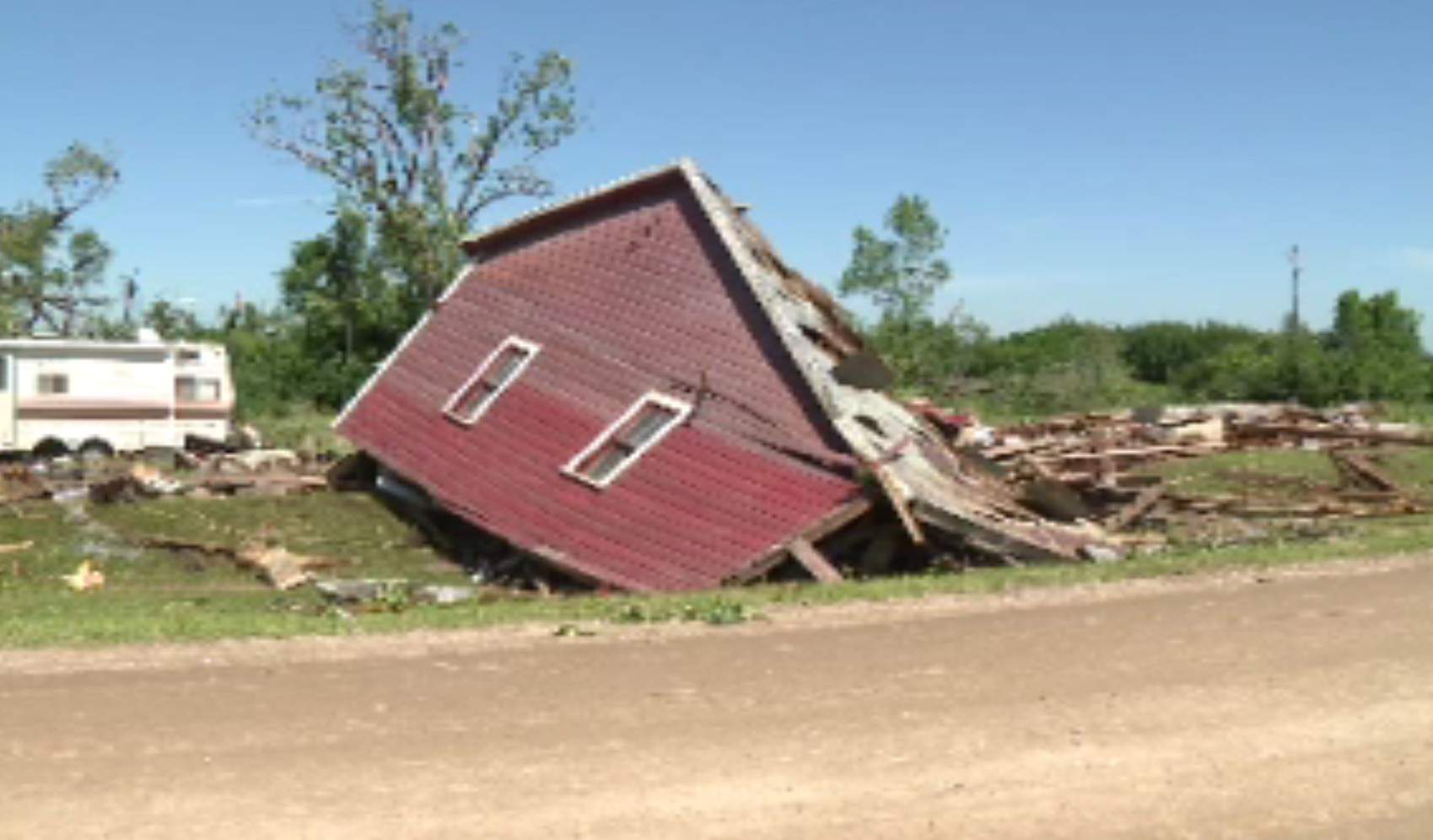
Saskatchewan is apparently on the verge of a meteorological apocalypse.
If you read the local headlines, you will see a frantic rush to declare this storm season a "record-breaker." The tornado count is climbing. The radar maps are glowing red. The anxiety is palpable.
But the narrative that Saskatchewan’s climate is suddenly spinning out of control is a lie.
It is a classic case of confusing better technology with a worse environment. We are not experiencing a sudden, terrifying spike in violent weather. We are experiencing an unprecedented boom in high-definition cameras, crowd-sourced storm chasing, and hypersensitive Doppler radar.
The "record-breaking" storm season is an illusion. Here is why the panic is manufactured, why the data is being misread, and what is actually happening on the Canadian Prairies.
The Observation Bias Trap
To understand why the current tornado panic is hollow, you have to understand how we count tornadoes.
For decades, if a tornado touched down in an empty field in rural Saskatchewan, shook some canola plants, and dissipated without hitting a barn, it did not exist. It was never recorded. There was no one there to see it, let alone log it into a government database.
Today, every single acre of the Prairies is under constant surveillance.
High-resolution satellite imagery tracks atmospheric rotation in real time. Every farmer has a supercomputer in their pocket capable of capturing 4K video. A massive subculture of amateur storm chasers grid-lines the province every time a dark cloud forms, broadcasting live streams to thousands of viewers.
We are not seeing more tornadoes. We are just failing to miss any.
Meteorologists call this "detection bias." When you look at the historical data, the apparent rise in weak tornadoes (EF0 and EF1 on the Enhanced Fujita scale) perfectly correlates with the deployment of advanced Doppler radar networks and the rise of smartphones.
If you look at the trend lines for violent tornadoes—the EF4s and EF5s that flatten entire towns—the numbers are flat, or even declining. Why? Because you cannot miss a violent tornado. They leave a scar on the earth that is impossible to ignore, whether it happens in 1950 or 2026. If the climate were truly turning Saskatchewan into a hyper-active tornado alley, we would see a corresponding spike in these massive, undeniable storms. We do not.
We are simply shining a brighter flashlight into the dark and panicking because we can finally see the bugs.
The False Equation: Active Seasons vs. Climate Chaos
The lazy consensus among mainstream commentators is to point at a high tornado count and immediately blame macro climate shifts. This is lazy science.
Tornado genesis requires a highly specific, volatile cocktail: moisture, instability, lift, and wind shear. Ironically, some climate models suggest that while a warming atmosphere increases instability (due to more heat and moisture), it can actually decrease wind shear in mid-latitudes because the temperature gradient between the equator and the poles is shrinking.
Without wind shear to tilt a storm and keep its updraft separated from its downdraft, you do not get tornadoes. You just get heavy rain and garden-variety thunderstorms.
By obsessing over raw tornado counts in a single year, we ignore the fundamental mechanics of prairie weather. The atmosphere is a chaotic system. High-pressure ridges block and redirect storm tracks. A single block can stall a pattern, creating a localized corridor of active weather for a few weeks.
Calling a single active summer a "climate warning" is like calling a three-game winning streak by the Saskatchewan Roughriders a guaranteed Grey Cup championship. It is statistical noise dressed up as a crisis.
Why the Current Warning System is Broken
The real danger in Saskatchewan is not the weather. It is the boy-who-cried-wolf syndrome engineered by our current warning systems.
Because environment agencies are terrified of missing a storm and facing public backlash, they have systematically lowered the threshold for issuing severe weather alerts. Now, every summer afternoon comes with a barrage of screaming smartphone notifications.
When everything is an emergency, nothing is.
I have spoken with rural residents who now routinely ignore tornado watches because they receive five of them a week, only to experience a light drizzle. By artificially inflating the sense of constant danger—aided by media outlets eager to turn every funnel cloud photo into a breaking news event—we are actively desensitizing the public.
We are trading actual preparedness for clicks and bureaucrat liability coverage.
The Cold Truth of Prairie Risk
If you want to worry about real, systemic threats to the Prairies, stop staring at tornado tallies.
Tornadoes are highly localized. Even in a "record" year, the actual mathematical probability of a tornado hitting your specific house in Saskatchewan is infinitesimally small.
The real economic and physical threats are straight-line winds (plow winds), macrobursts, and widespread hailstorms. These phenomena cover hundreds of square kilometers, ruin thousands of hectares of crops in minutes, and cause billions of dollars in infrastructure damage. But because a plow wind does not have a photogenic, swirling vortex to post on Instagram, it rarely makes the national news.
We are allocating disproportionate mental energy and emergency resources to a highly visible, low-probability threat while ignoring the dull, high-probability disasters staring us in the face.
Stop Counting Funnels and Start Building Resilience
The obsession with breaking storm records is a distraction.
If we want to protect prairie communities, we must stop treating weather as a moral play or an unprecedented anomaly. The Prairies have always been a place of extreme, violent weather. The Indigenous peoples of this land knew it, the early homesteaders learned it through brutal trial and error, and we are simply documenting it with better sensors.
Instead of hand-wringing over whether this year's tornado count beats the class of 1989, we should be focusing on tangible, boring, unsexy solutions:
- Stricter building codes: Ensure homes in high-risk zones are built with hurricane ties and impact-resistant roofing.
- Infrastructure hardening: Bury power lines to prevent widespread outages from plow winds and ice storms, rather than relying on an aging grid that collapses under a moderate gust.
- Smarter agricultural risk management: Develop crop varieties and water management systems designed to withstand intense, short-duration hail and deluge events, rather than praying for a static climate that has never existed.
The storm season is not breaking Saskatchewan. Our ability to handle reality is. Stop looking at the sky through your phone screen hoping for a disaster to validate your anxieties. The weather is doing what it has always done. It is time to grow up, look at the data calmly, and build for the climate we actually have, not the headlines we want to read.