Every western desk-jockey with a Bloomberg terminal is clutching their pearls over the latest cargo manifest moving from Saint Petersburg down to West Africa. The headlines scream about sanction-busting freighters, clandestine naval routes, and Moscow carving out a backdoor empire in the Sahel.
They are missing the entire plot.
Focusing on a single hull slipping past international oversight is like yelling at a single raindrop during a hurricane while ignoring that the roof has already caved in. Western policymakers want you to believe that maritime tracking, flag-hopping, and bureaucratic trade restrictions still command the global chessboard. They do not.
I have watched compliance departments burn millions of dollars chasing phantom bills of lading across the Mediterranean, only to realize the market had already adapted, moved on, and found cheaper liquidity three weeks prior. The entire apparatus of economic coercion is running on legacy software from a unipolar era that expired years ago.
Mali does not need your approval to secure its borders, and Russia does not care about your statutory warnings. Here is why the conventional narrative is entirely backwards.
The Myth of the Leak-Proof Embargo
The foundational error of modern sanctions policy is the belief that supply chains are delicate porcelain. If you squeeze hard enough anywhere, the logic goes, the system shatters.
History shows the exact opposite. Trade is water. It finds the lowest crack, forms a new channel, and keeps moving. When Bamako cut ties with traditional European security partners and turned toward alternative backers, financial networks immediately rewired.
Look at how transactions clear. We are no longer living in a world where SWIFT is the only game in town. Bilateral currency swaps, decentralized commodity barter, and state-backed shipping registries operating outside Western insurance pools have rendered traditional naval interdiction largely performative.
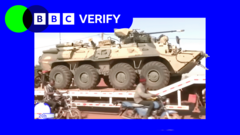
A Russian cargo vessel carrying tactical vehicles isn't defying an international consensus; it is operating in an entirely different financial and geopolitical reality. Western analysts look at these shipments as anomalies—glitches in an otherwise orderly global trade matrix. They are not glitches. They are the new baseline.
Why Bamako Chose Pragmatism Over Paperwork
Let us look at this from the perspective of a sovereign state facing an existential insurgency. For a decade, foreign military missions operated in Mali with massive budgets, high-altitude surveillance, and endless press releases. The security situation deteriorated anyway.
When a government faces immediate collapse, abstract diplomatic norms matter very little. They do not care about resolutions passed in glass towers thousands of miles away. They care about armored personnel carriers that can clear an ambush on a contested supply route by Tuesday morning.
If the choice is between waiting for a Western humanitarian export license that takes eighteen months of committee reviews or wiring rubles for a rusted-out freighter hauling heavy hardware next week, any rational actor chooses the freighter.
Western capitals love to frame these choices as moral failings. They are not moral failings; they are cold, hard operational calculations. Mali is buying utility, not ideology.
The Logistics of Shadow Fleets
Let us dismantle the mechanics of how these shipments actually move, because the media coverage portrays them as James Bond operations when they are actually mundane exercises in modern logistics arbitrage.
- Flag Hopping: Vessels routinely cycle through permissive registries in jurisdictions that do not share intelligence with Western naval task forces.
- AIS Dark Zones: Transponders go dark not out of amateur panic, but as a systematic routing procedure once vessels enter high-risk or contested transit corridors.
- Insurance Isolation: Traditional maritime protection and indemnity clubs require Western compliance. The shadow fleet simply uses state-backed domestic reinsurance pools, making financial blacklisting completely toothless.
When you remove the dependency on Western capital, maritime insurance, and primary reserve currencies, sanctions lose their teeth. They become angry letters written on expensive stationery.
The Cost of Strategic Arrogance
The real danger here is not that a freighter made port in West Africa. The danger is that Western foreign policy establishments are so addicted to the illusion of control that they refuse to diagnose their own obsolescence.
Every time a sanction is bypassed without consequence, the deterrence value of the next sanction drops exponentially. It is the economic equivalent of crying wolf until the village stops looking up from the fields.
Imagine a scenario where a major global power spends a decade building an intricate web of financial tripwires, only to discover that half the world has simply stepped outside the room and started trading in another currency entirely. You do not need to imagine it. Look at the current map.
What Actually Works
If policymakers actually wanted to shift dynamics in the Sahel, they would stop pretending that economic isolation works against states with zero domestic credit exposure to Western banks.
Instead of threatening secondary sanctions that alienate neutral regional powers, western capitals need to rethink their value proposition. If you cannot offer faster delivery, better terms, or more reliable security than a sanctioned freighter from the Baltic, complaining about the competition is just embarrassing.
The era of uncontested economic hegemony is over. The sooner Washington and Brussels accept that cargo will always flow to wherever the buyer holds cash and the seller asks no questions, the sooner they can formulate a foreign policy based on reality rather than nostalgia.
Stop tracking the ships. Start fixing the strategy.