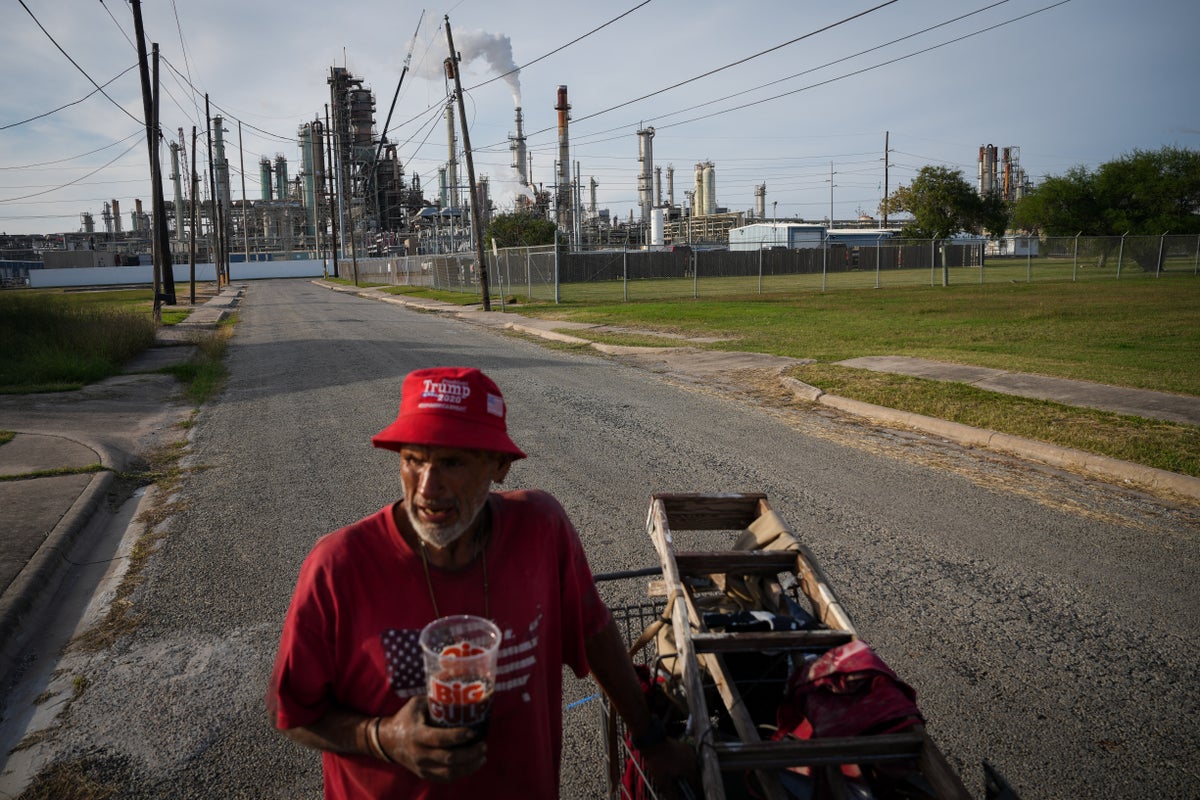
The dust in Corpus Christi doesn’t just sit. It stings. It’s a fine, alkaline grit that settles into the creases of your palms and hitches a ride on the salt spray coming off the Gulf of Mexico. For decades, this stretch of the Texas coast has defined itself by what it moves: oil, gas, and grain. It is a place of massive steel silhouettes and the constant, low-frequency hum of global commerce. But lately, the hum sounds more like a rattle.
Texas is thirsty. That isn’t a new headline, but the irony in Corpus Christi is particularly cruel. The city sits on the edge of a vast, shimmering expanse of water, yet its taps are running on borrowed time. The Port of Corpus Christi has become the top exporter of U.S. crude oil, a titan of energy that fuels far-off economies. Yet, the very industry that provides the city’s paycheck is now competing with the kitchen sink for every drop of fresh water.
Consider a person like "Elena," a lifelong resident who remembers when the Nueces River felt like an infinite resource rather than a dwindling bank account. To Elena, the drought isn't a statistic about acre-feet or reservoir percentages. It’s the brown, brittle skeleton of her lawn. It’s the skyrocketing utility bill that feels like a fine for existing. When she looks toward the Port, she sees the gleaming infrastructure of a multibillion-dollar boom, and she wonders how a place surrounded by water ended up so desperately dry.
The math of a drought is cold. The Choke Canyon Reservoir and Lake Corpus Christi, the two primary lungs that breathe water into the region, have been exhaling more than they take in for years. When combined levels drop below 30%, the sirens start to wail. Not literal sirens, but the administrative kind—the kind that trigger Stage 2 restrictions, banning sprinklers and tightening the screws on a community already feeling the heat.
But the industrial giants aren't just bystanders. They are the engines of the region, and engines require coolant. A single large-scale industrial facility can consume millions of gallons of water a day. When the sky stops giving, the tension between the "Port" and the "People" moves from the boardroom to the dinner table. If the water runs out, the refineries stop. If the refineries stop, the city’s heart stops beating.
The proposed solution sounds like a miracle from a science fiction novel: Desalination.
It’s a simple concept on paper. You take the ocean, strip away the salt, and pour the remains into the city’s pipes. It is the ultimate insurance policy against a sky that refuses to rain. But in the real world, miracles come with a receipt, and this one is written in brine and billions.
Building a desalination plant is an exercise in brutal engineering. You have to suck in massive quantities of seawater, which brings in larvae, small fish, and the delicate microorganisms that form the base of the bay’s food chain. Then, after the reverse osmosis filters have done their work, you are left with a hyper-salty sludge known as brine.
Where do you put it?
If you dump it back into the shallow, sensitive ecosystem of Corpus Christi Bay, you risk creating "dead zones." Imagine a heavy, salty blanket settling on the floor of the bay, suffocating the seagrass and driving away the shrimp and redfish that have supported local families for generations. For the fishermen who haunt the piers at dawn, the Port’s "solution" looks a lot like a different kind of disaster. They see a choice being made between the oil that leaves the docks and the life that lives beneath them.
The cost is another ghost in the room. Estimates for these plants have soared into the hundreds of millions. Who pays? The Port argues that these plants are necessary for "regional reliability." Critics argue that the public is being asked to subsidize the water needs of massive corporations under the guise of municipal thirst. It is a high-stakes poker game where the chips are literal drops of water.
This is the invisible friction of the energy transition. We talk about hydrogen hubs and carbon capture—both of which the Port of Corpus Christi is aggressively pursuing—but we rarely talk about the fact that these "green" or "future" technologies are often more water-intensive than the old ways of doing business. You cannot "unleash" a new energy era if you don't have the water to wash its face.
The struggle in South Texas is a preview of a coming attraction for the rest of the world. We are entering an era where the proximity of resources no longer guarantees their availability. You can live on a coast and die of thirst. You can sit atop an oil goldmine and be unable to afford the water to process it.
Elena watches the tankers move out toward the horizon, sitting low in the water with the weight of their cargo. They look invincible. But back on land, the soil is cracking. The city council debates "interruptible" water contracts and "drought surcharges," terms that mask the raw anxiety of a community realizing its foundation is liquid.
The Port says it is protecting the future. The environmentalists say they are protecting the soul of the coast. The residents just want to know if they’ll be able to take a shower five years from now without feeling guilty.
There is no easy villain here. The Port provides the jobs that buy the groceries. The refineries provide the tax base that builds the schools. But the climate doesn't care about tax bases. The heat is indifferent to export volumes. It simply evaporates what is left, leaving behind a crust of salt and a growing realization that the most valuable commodity in Texas isn't the black gold flowing out of the ground. It’s the clear, cool, increasingly rare liquid that makes life possible in the first place.
As the sun sets over the bay, the water reflects a brilliant, deceptive blue. It looks like plenty. It looks like more than enough. But as the tide pulls back, it reveals the mudflats, the skeletons of old piers, and the mounting cost of a growth model that forgot to check the rain gauge. The tankers keep moving, the pumps keep straining, and the people of Corpus Christi wait for a cloud that never seems to come.