The water in the Great Bahama Bank is a deceptive shade of turquoise. From the deck of a modern research vessel, it looks like glass. It looks peaceful. But if you stare down long enough, the shifting light plays tricks on your eyes, blurring the line between the sky and the sandbar.
Beneath that placid surface lies a graveyard. You might also find this related story insightful: The Illusion of the Safe Haven (And Why No Door Code Can Protect You).
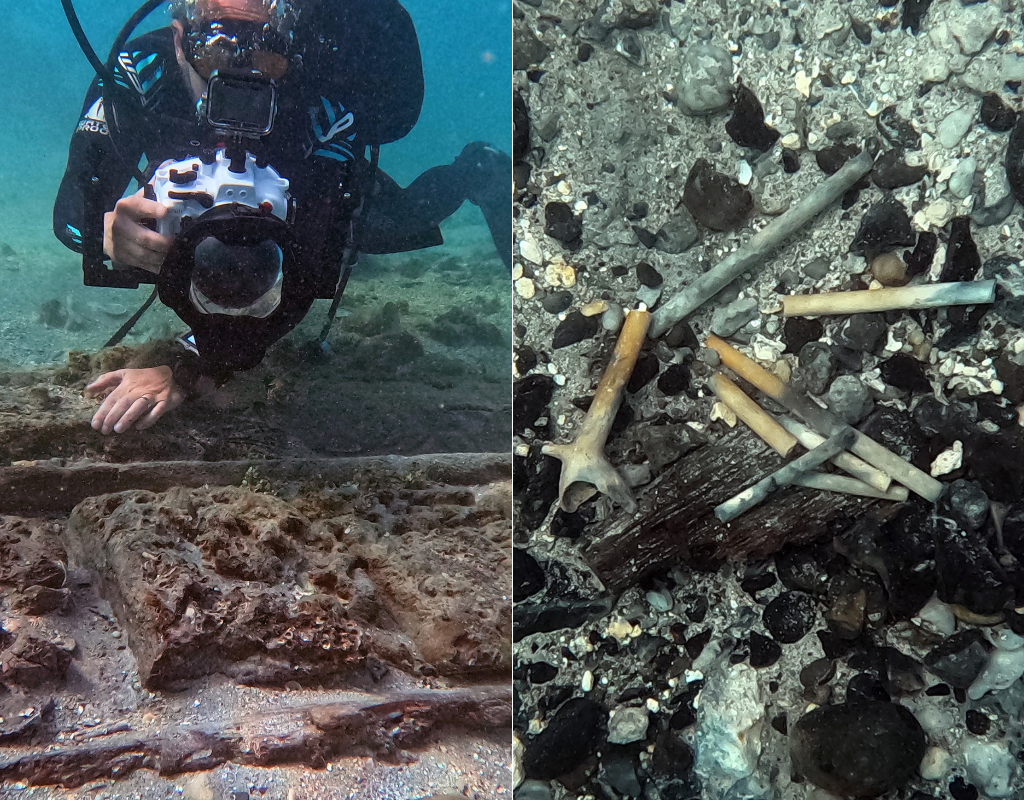
Marine archaeologists recently uncovered the timber bones of ships dating back to the early 1700s—the violent, brief zenith of the Golden Age of Piracy. The news reports handled the discovery the way mainstream media usually does. They listed the coordinates. They cataloged the encrusted iron cannons. They estimated the bullion value. They treated the wreck like a sunken museum exhibit, frozen in time and stripped of its humanity.
They missed the point entirely. As discussed in latest articles by The Points Guy, the results are significant.
To understand what these shattered hulls actually mean, you have to stop looking at them as historical artifacts. You have to smell the rotting oak, the damp black powder, and the sweat of desperate men. You have to realize that these ships were not just instruments of crime. They were floating pressure cookers filled with people who had run out of choices.
The Economics of Despair
Let us construct a hypothetical observer to make sense of this wilderness. Call him Thomas. In 1715, Thomas is twenty-two years old, standing on a dock in Bristol or London. His hands are calloused from hauling hemp ropes, and his teeth are loose from scurvy. He works on a British merchant vessel.
The life of an honest sailor in the 18th century was a slow death sentence. The food was infested with weevils. The discipline was enforced by the cat-o'-nine-tails, a whip that tore the skin off a man’s back for the slightest infraction. Worst of all, the pay was routinely withheld for months, sometimes years, to prevent desertion.
Then came the peace of 1713. The War of the Spanish Succession ended, and suddenly, tens of thousands of mariners were cut loose by the Royal Navy. No pensions. No safety nets. Just a massive influx of desperate, highly skilled laborers abandoned on the waterfronts of the New World.
When a pirate ship closed in on a merchant vessel, it rarely fired a shot. The pirates would hoist the "Jolly Roger"—often a black flag meant to signal that quarter would be given if the ship surrendered, or a blood-red one meaning no mercy. The captain of the merchant ship would order his men to fight.
And men like Thomas would look at their captain, look at their miserable rations, look at the scars on their backs, and simply lay down their muskets.
The real secret of the Golden Age of Piracy is that it was an armed labor mutiny. The ships recently discovered in the shallow waters of the Bahamas were the physical spaces where these mutineers tried to rewrite the rules of survival.
A Radical Experiment in the Turquoise Void
When you dive on an 18th-century wreck, the first thing that strikes you is the scale. These vessels were small. A typical sloop was no longer than a modern city bus, yet it carried seventy, eighty, sometimes a hundred men.
Space was a luxury that did not exist.
Yet, inside these claustrophobic wooden walls, something extraordinary happened. The men who sailed them created the most progressive societies on the planet at the time. Long before the American or French revolutions, pirate crews were practicing pure democracy.
They elected their captains. If a captain became too tyrannical, too greedy, or showed cowardice in battle, the crew held a vote and deposed him. They drew up written articles—constitutions—that every man signed before the voyage.
Consider the sophistication of their legal framework. The articles outlined strict systems of workman's compensation. Lose an eye in battle? You received a set amount from the common chest. Lose a leg? A higher payout. They shared the plunder with astonishing equality, the captain often receiving only one and a half or two shares to a common sailor’s single share. In the Royal Navy, a captain took home thousands of times what his crew earned.
The Bahamas became the epicenter of this experiment because of geography. The thousands of low-lying islands, intricate channels, and shifting sandbars were a nightmare for heavy, deep-draft warships of the Royal Navy. But for a shallow-draft pirate sloop, the Bahamas were a labyrinth of perfect hiding spots.
New Providence, the island that now hosts the bustling tourist hub of Nassau, was then a lawless tent city. It was a place where a runaway slave, an outcast sailor, and a disgraced privateer could sit at the same table and drink punch brewed from local limes and stolen rum.
The Illusion of Freedom
It is easy to romanticize this. The temptation is to view these newly discovered shipwrecks as monuments to liberty.
The truth is much darker.
The freedom of the pirate was a frantic, paranoid thing. The life expectancy of a man who signed pirate articles was measured in months, not years. They were hunted by every empire on earth. They were plagued by tropical diseases like yellow fever and malaria.
And then there was the weather.
The Bahamas are beautiful, until the sky turns the color of a bruised plum. The Atlantic hurricane season tore through these shallow waters with apocalyptic fury. Without modern meteorology, a crew could be trapped in a dead calm one day and swallowed by a forty-foot wall of water the next.
Many of the wrecks currently being mapped by archaeologists do not show signs of battle. There are no cannonballs embedded in the timber, no charred wood from a magazine explosion. Instead, they lie tilted on their sides, driven onto the coral reefs by the sheer force of the wind.
Imagine the final moments on a ship like that. The rudder snaps. The pumps clog with ballast sand. The dark water rises past the floorboards of the hold. There is no rescue coming. There are no lifeboats for a crew of ninety men. There is only the realization that the wild, lawless freedom they traded their souls for has run out of time.
What the Sand Reveals
The artifacts recovered from the Bahamian sands tell stories that gold coins never could.
Archaeologists found a small brass dividers tool, used for navigation. It was bent, likely ruined during the chaos of a grounding. They found pewter buttons, a handful of clay tobacco pipes, and a massive quantity of animal bones—the remnants of the salted beef and turtle meat that kept the crew alive.
These mundane items break your heart because they remind you how ordinary these men were. They were not legends. They were not cinematic antiheroes with clever one-liners. They were poor, illiterate, terrified young men who wanted a hot meal and a pocketful of silver before the world forgot they existed.
The discovery of these ships matters because we live in an era that feels increasingly fractured, where people feel chewed up and spat out by massive, impersonal economic systems. We look back at the 18th century and recognize the same human desperation.
The pirates of the Bahamas tried to build a world outside the system. They failed, inevitably. Their republic of rogues lasted barely a decade before the British crown sent Woodes Rogers to clean out Nassau with an iron fist and a row of gallows.
The sea always wins in the end. It grinds the oak to splinters and covers the iron in rust. But as long as the wood remains beneath the turquoise water, it serves as a quiet, stubborn reminder of what happens when human beings are pushed too far into the dark.


