The maritime cat-and-mouse game between Kyiv and Moscow just entered a violent new phase. On May 3, 2026, Ukrainian naval drones successfully disabled two more Russian "shadow fleet" tankers at the gates of Novorossiysk, Russia’s primary oil hub on the Black Sea. These weren't random acts of desperation; they were the latest targeted strikes in a coordinated campaign to dismantle the financial engine of the Kremlin’s war effort by literally sinking its transport logic.
For two years, the shadow fleet has been a ghost in the machine of global trade. These aging, under-insured vessels, often operating under flags of convenience and hidden behind layers of shell companies, have allowed Russia to bypass G7 price caps and move millions of barrels of crude to thirsty markets. But the sanctuary of the high seas is evaporating. Ukraine is now deploying what military analysts call "kinetic sanctions"—using cheap, explosive-laden sea drones to do what diplomats and regulators could not.
The Death of the Safe Harbor
The strike at Novorossiysk is particularly stinging for the Russian Ministry of Energy. Since Ukraine successfully pushed the Russian Black Sea Fleet away from Sevastopol, Novorossiysk had become the de facto fortress for both naval assets and energy exports. By hitting tankers at the port's very entrance, Ukraine has signaled that no Russian maritime terminal is off-limits.
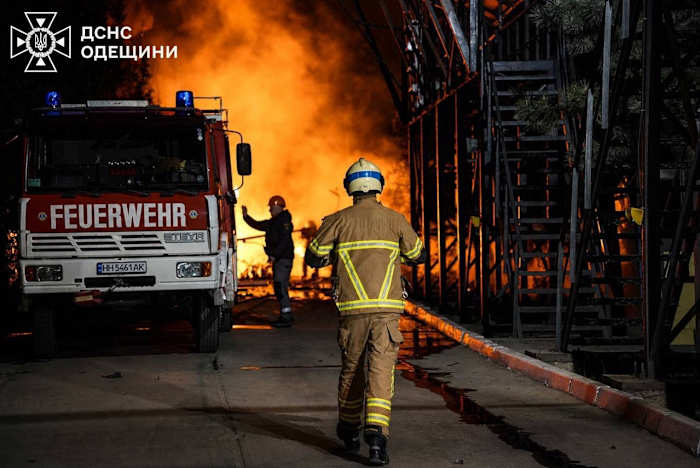
Simultaneously, long-range aerial drones reached deep into the Baltic, hitting the Primorsk terminal near the Finnish border. Primorsk and its neighbor, Ust-Luga, handle roughly 40% of Russia’s sea-borne oil exports. The message to the global shipping industry is clear: if you carry Russian "blood money" oil, you are no longer a neutral merchant. You are a combatant.
The Mechanics of the Shadow Fleet
To understand why these strikes matter, one must look at the fragile nature of Russia’s logistics. The shadow fleet is estimated to include over 1,000 vessels. Most are over 15 years old, nearing the end of their operational lives. They frequently turn off their Automatic Identification Systems (AIS) to hide their tracks, engaging in risky ship-to-ship transfers in the middle of the ocean.
Ukraine is exploiting the physical vulnerability of these ships.
A standard oil tanker is a massive, slow-moving target with a thin skin. A single Magura V5 or Sea Baby naval drone, packing 300 kilograms of high explosives, does not need to sink the ship to achieve its objective. A strike to the engine room or the rudder assembly renders the vessel a multi-million dollar liability. Once hit, these "ghost ships" become pariahs. Because they often lack legitimate insurance (P&I clubs), they cannot easily be towed into international ports for repair, and no reputable shipyard will touch them for fear of secondary sanctions.
Beyond the Black Sea
While the Black Sea strikes get the most headlines, the aerial campaign against Baltic infrastructure represents a massive leap in Ukrainian reach. The May 3 strike on Primorsk involved drones traveling over 1,000 kilometers from the Ukrainian border. This isn't just about blowing up a few storage tanks; it's about the psychological and economic pressure on the Russian elite.
- Insurance Premiums: Every successful strike sends war-risk insurance rates through the roof. Even for the shadow fleet, the cost of operating is becoming prohibitive.
- Infrastructure Degradation: Russia relies heavily on Western-made pumps and specialized loading equipment at its ports. Sanctions make replacing these parts difficult; Ukrainian drones make it necessary.
- Diversion of Air Defenses: To protect its ports in the Baltic and Black Seas, Russia must pull Pantsir and S-400 systems away from the front lines in the Donbas.
The human cost of these operations is also shifting. On April 29, the tanker Marquise was hit 130 miles southeast of Tuapse while its transponder was dark. When these vessels are disabled at sea, the risk of environmental disaster is high. In Tuapse, previous strikes have already led to significant oil leaks. Russia’s refusal to allow international inspectors to assess the damage only complicates the cleanup, turning the Russian coastline into a contaminated zone of its own making.
The Technology of Asymmetric Warfare
Kyiv is no longer relying on Western cast-offs. They have built an indigenous drone industry that produces hardware at a fraction of the cost of traditional missiles.
Consider the economics of a single engagement. A Ukrainian naval drone costs roughly $250,000 to manufacture. A Russian tanker, even an old one, is worth $30-50 million, carrying a cargo worth another $60 million. When the drone hits, the return on investment is staggering. Russia is forced to spend millions on electronic warfare and physical booms to protect assets that are inherently difficult to defend.
The "Flamingo" cruise missile and the latest iterations of the "Sea Baby" drone are proving that technological superiority isn't just about stealth fighters or aircraft carriers. It is about the ability to strike the enemy's wallet with precision and frequency.
The End of the Ghost Ship Era
The strategy has shifted from containment to attrition. By targeting the shadow fleet, Ukraine is attacking the bridge between Russia’s oil fields and the global markets that still fund the war. It is a brutal, high-stakes gamble. If an aging, poorly maintained tanker were to break apart in the Black Sea after a strike, the environmental fallout would be catastrophic for every nation on the coast, including Ukraine and NATO members like Turkey and Romania.
However, from Kyiv's perspective, the risk of environmental damage is outweighed by the certainty of continued bombardment if Russia’s revenues remain intact. The "kinetic sanctions" are designed to make the shadow fleet uninsurable, unseaworthy, and ultimately, unprofitable.
As the smoking hulls of tankers near Novorossiysk prove, the shadows are no longer a place to hide. The global oil market is being forced to reckon with a reality where the transport of Russian crude is not just a legal risk, but a physical one. This is the new front line of the energy war, and it is being fought one drone at a time.