Stop applauding royal photo-ops in crisis zones.
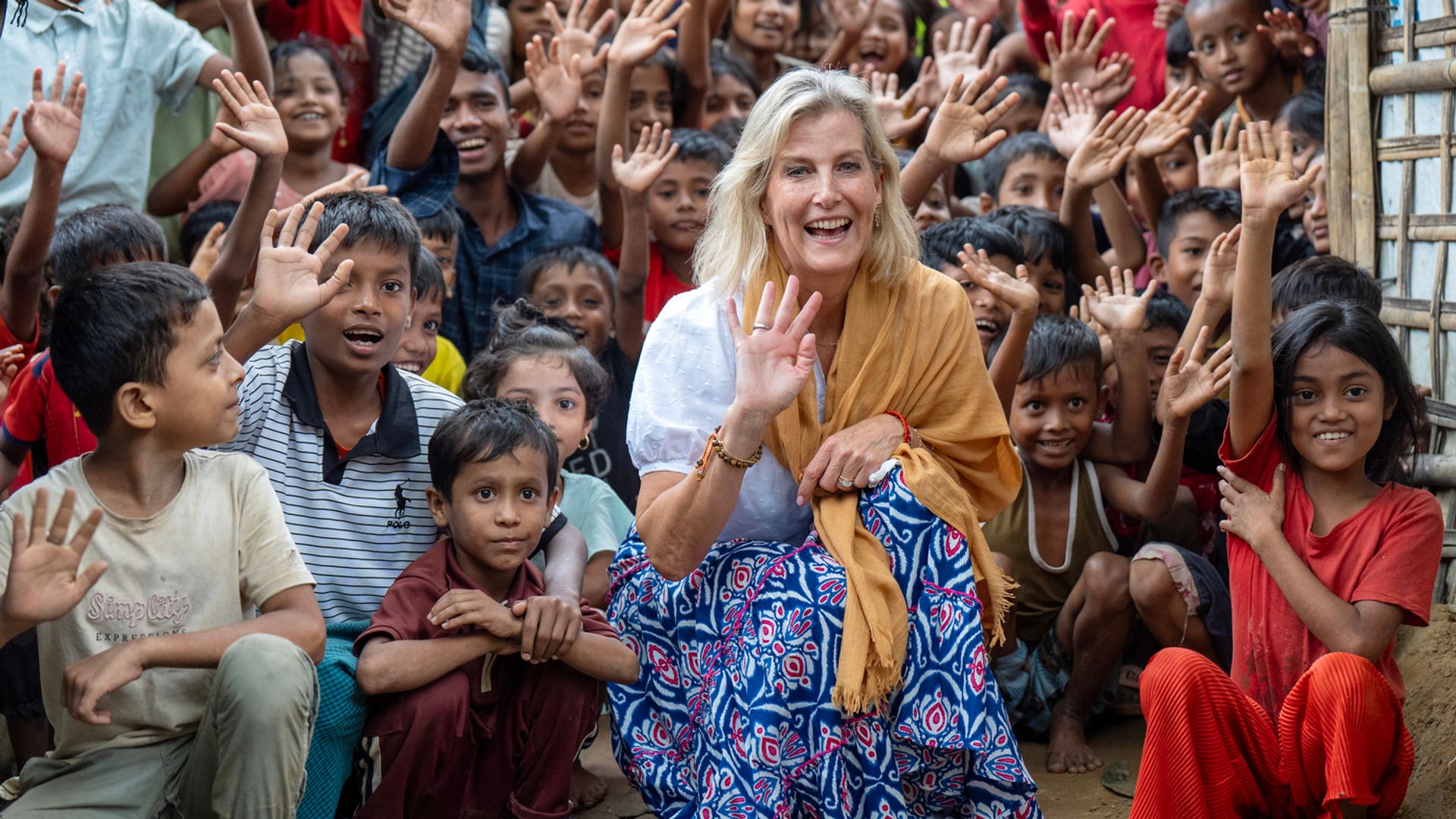
When Sophie, Duchess of Edinburgh, recently touched down in Bangladesh to tour the Rohingya refugee camps in Cox’s Bazar, the mainstream press rolled out the exact same script they have used since the 1980s. Breathless coverage. Somber facial expressions. A flurry of press releases praising the royal family for "shining a spotlight" on one of the world’s largest humanitarian crises.
They missed the point entirely. Worse, they are actively cheering for a broken model of disaster diplomacy that prioritizes Western public relations over measurable structural change.
After fifteen years working on the ground with international NGOs and tracking how institutional aid money actually moves through South Asia, I have watched this exact theater play out dozens of times. A high-profile dignitary flies in with a massive security detail. Local field operations grind to a halt for seventy-two hours to pave roads, erect temporary shade canopies, and rehearse scripted interactions with vetted camp residents. The cameras click. The headlines run for forty-eight hours. Then the entourage flies back to London, leaving behind the exact same chronic funding deficits and geopolitical deadlocks they found upon arrival.
If you want to understand why modern humanitarian relief is stalling out, look closely at the mechanics of the royal charity tour.
The Myth of "Raising Awareness" in a Hyper-Connected Era
The standard defense of Sophie’s visit—and every celebrity or royal trek like it—rests on a single, lazy assumption: If the world sees a Duchess standing in the mud of Kutupalong, donors will open their wallets.
That logic died in 2010.
We do not suffer from an awareness deficit regarding the Rohingya crisis. Over one million refugees have been trapped in the sprawling, densely populated settlements of Cox's Bazar since the military crackdowns in Myanmar escalated in 2017. Every major donor government—from the United States and the United Kingdom to Japan and the European Union—has detailed satellite mapping, real-time epidemiological data, and daily situation reports from the United Nations High Commissioner for Refugees (UNHCR) sitting on their desks.
Decision-makers in Whitehall and Washington do not allocate multi-million-dollar foreign aid budgets because they saw a sympathetic photograph in a Sunday tabloid. They allocate funds based on strategic national interests, domestic political pressure, and diplomatic leverage.
When media outlets frame a royal visit as a heroic act of awareness-building, they are selling a comforting fiction to Western readers. It allows the public to feel morally engaged simply by consuming content about a royal caring deeply. Meanwhile, the United Nations' Joint Response Plan for the Rohingya Humanitarian Crisis routinely struggles to hit even sixty percent of its required annual funding. Rations get cut. Schools close. Gang violence inside the camps spikes. Awareness did not stop the World Food Programme from slashing food vouchers down to pennies a day.
The Hidden Operational Tax of VIP Visits
Nobody talks about the logistical bill. When an NGO hosts a senior member of the British royal family, the operational cost is staggering, even when the palace covers its own commercial airfare and hotel suites.
Consider what happens on the ground in a place like Cox’s Bazar during a high-level diplomatic visit.
- Security lockdowns: Bangladesh’s Armed Police Battalion (APBn) and international security teams lock down entire sectors of the camps. Aid workers cannot reach clinics. Supply trucks are rerouted or delayed at checkpoints.
- Staff diversion: Senior country directors, logistics coordinators, and communications officers spend weeks preparing briefing books, conducting security sweeps, and managing protocol instead of negotiating with local contractors or fixing broken sanitation infrastructure.
- The "Potemkin" effect: Dignitaries rarely see the unvarnished reality of a protracted refugee crisis. They are guided through model learning centers, flagship women’s empowerment hubs, and solar-powered water treatment plants that represent the top one percent of camp infrastructure.
I have sat in post-visit debriefs in Dhaka and Geneva where field directors admitted that a single three-day VIP tour cost their local mission the equivalent of two months of primary healthcare delivery in lost productivity and security overhead. You will never see that line item in a palace press release.
Soft Power Diplomacy Is Not Humanitarian Aid
To understand why Sophie was actually in Bangladesh, you have to stop viewing the trip through the lens of charity and start viewing it through the lens of soft power—a concept coined by political scientist Joseph Nye to describe a nation's ability to co-opt rather than coerce.
The British Foreign, Commonwealth & Development Office (FCDO) does not deploy working royals out of pure altruism. They deploy them as strategic diplomatic assets.
Look at the broader itinerary of the Duchess's trip. Alongside the camp visits, she met with Bangladeshi political leadership, toured garment factories, and engaged with local business networks. The UK has massive trade, security, and historical ties with Bangladesh. At a moment when global alliances are shifting and China is pouring billions into South Asian infrastructure through the Belt and Road Initiative, Britain uses royal diplomacy to maintain cultural warmth and diplomatic access in Dhaka.
There is nothing inherently evil about soft power. Every major nation uses cultural and ceremonial figures to advance foreign policy goals. The problem arises when the press—and the public—conflates statecraft with humanitarian intervention.
When we pretend a royal tour is primarily about helping refugees, we let governments off the hook for their actual policy failures. Look at the numbers:
| Mechanism | Primary Goal | Measurable Outcome |
|---|---|---|
| Royal Charity Tour | Bilateral goodwill, positive press coverage, soft power projection | Temporary spike in search traffic; zero binding policy changes |
| Direct Cash Transfers | Immediate refugee autonomy, local market stimulation | Verified caloric intake increase; lower administrative overhead |
| Diplomatic Sanctions & Trade Leverage | Pressuring perpetrators, forcing repatriation guarantees | Tangible shifts in geopolitical accountability |
The UK government has repeatedly slashed its overall Official Development Assistance (ODA) budget over the past few years, dropping from its long-standing target of 0.7 percent of Gross National Income down to 0.5 percent. Sending a Duchess to shake hands with aid workers while cutting the underlying institutional funding pool is not leadership. It is window dressing.
Answering the Questions Nobody Wants to Ask
Whenever a royal steps into a humanitarian zone, the public asks predictable questions. Most of them are rooted in a fundamental misunderstanding of how global crisis response works.
Does a royal visit actually increase donations to refugee camps?
Rarely in any sustained way. While the specific charities on a royal’s itinerary might see a minor, forty-eight-hour bump in individual web traffic, individual micro-donations make up a tiny fraction of what is required to sustain a million displaced people. Protracted crises like the Rohingya displacement require multi-year institutional commitments from sovereign states and multilateral banks. A spike in individual ten-pound donations does not build desalination plants or fund secondary education systems for three hundred thousand children.
Should celebrities and royals stop visiting disaster zones completely?
No—and pretending they have zero utility is just as dishonest as pretending they are saviors. There is a specific, narrow scenario where high-profile visits work: when they are tied directly to an immediate, concrete policy lever or an emergency pledging conference.
If a royal visit happens forty-eight hours before a major international donor summit in Geneva, and the royal uses their platform to explicitly call out wealthy nations for failing to meet their pledges, that is strategic leverage. If the visit happens in a policy vacuum, divorced from any legislative or financial deadline, it is merely content generation.
What is the alternative to the traditional charity tour?
Silent, unglamorous, structural pressure. If the British establishment wants to materially improve the lives of the Rohingya in Bangladesh, the work does not happen on a muddy footpath in Cox’s Bazar. It happens in closed-door meetings in London, Brussels, and New York.
It looks like pushing for legal pathways that allow refugees in Bangladesh to work legally and access formal banking, rather than keeping them trapped in permanent dependency on food aid. It looks like applying targeted economic pressure on the military junta in Myanmar and the supply chains that fund them. None of that makes for heartwarming television. All of it actually saves lives.
The White Savior Industrial Complex Has Upgraded Its Wardrobe
In 2012, Nigerian-American writer Teju Cole famously critiqued the "White Savior Industrial Complex," pointing out that much of Western humanitarianism is less about justice and more about the emotional satisfaction of the outsider.
Over the last decade, the palace PR machine has become vastly more sophisticated at insulating itself from that critique. You will no longer see clumsy photos of royals cradling orphaned children for the cameras. Today, the optics are carefully calibrated. Sophie wears practical, understated field attire. She sits at eye level with female entrepreneurs. She listens intently to survivors of gender-based violence. The language in the press briefings emphasizes "local resilience," "partnership," and "amplifying voices."
Do not be fooled by the aesthetic upgrade. The underlying power dynamic remains completely intact.
Imagine a scenario where a devastating flood hits a working-class town in northern England, displacing fifty thousand families into temporary shipping containers for seven years. Now imagine a foreign princess flying in from abroad, touring the flooded streets with an armed escort, nodding sympathetically at the displaced residents, praising their "resilience," and flying home without announcing a single pound in reconstruction funding or a single policy change to fix the broken levees.
The British public would be furious. They would call it patronizing, performative, and insulting. Yet when the exact same script is executed in the Global South, Western commentators hail it as a masterclass in compassionate leadership.
What Needs to Happen Before the Next Flight Takes Off
We cannot stop the royal family from traveling, nor should we expect media outlets to stop covering them. The attention economy demands visuals, and a Duchess in a humanitarian zone guarantees clicks.
What we can demand is a radical shift in how these visits are structured, reported, and measured. If humanitarian organizations and diplomatic corps insist on using royal patrons, they need to enforce three non-negotiable rules:
- Ban the "awareness" excuse. Every single VIP trip must be anchored to a hard financial pledge, a bilateral policy agreement, or a specific legal reform announced during the visit. No deliverable, no photo-op.
- Audit the operational footprint. Host NGOs must publicly account for the security, logistical, and staff hours diverted to facilitate VIP tours, ensuring those costs are reimbursed directly by the visiting government's diplomatic budget—never pulled from emergency relief funds.
- Shift the camera to the architects, not the visitors. Media coverage must center the Bangladeshi first responders, local civil society leaders, and Rohingya community organizers who actually run the camps 365 days a year without a security detail or a press secretary.
Until those rules are enforced, stop treating royal visits to refugee camps as acts of humanitarian heroism. They are diplomatic theater—polished, expensive, and designed entirely to make the audience back home feel good about doing nothing at all.