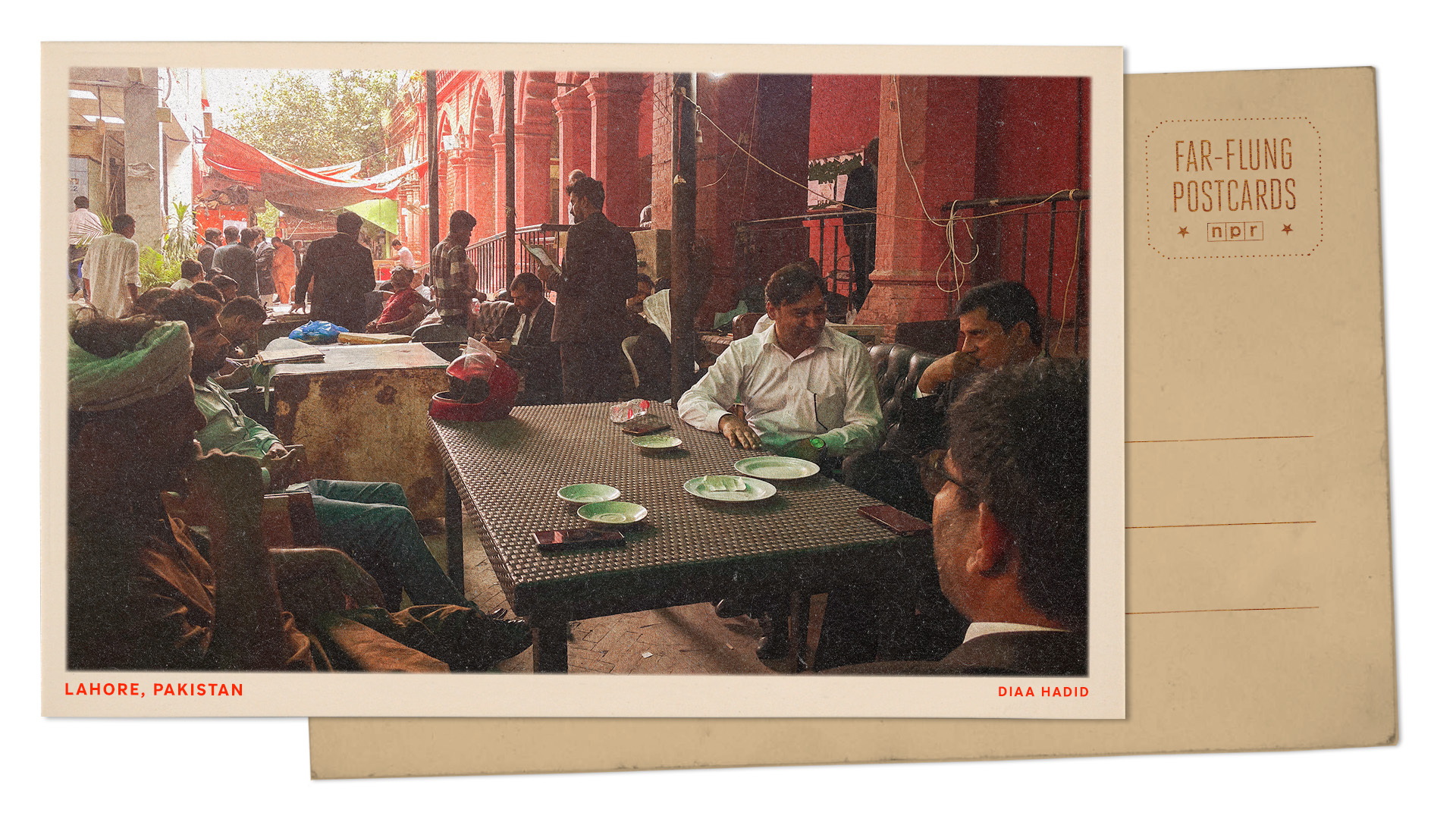
Romanticism is a tax on pragmatism. Every time a travel writer or a legal tourist stumbles into the Lahore High Court and publishes a breathless dispatch about its shaded lawns, the ambient chatter, or the steaming porcelain cups of chai, they commit a quiet violence against the people who actually need the place to function. They look at a crumbling colonial relic choked by administrative gridlock and mistake institutional failure for rustic charm.
Let us dispense with the pastoral daydreaming. For an alternative perspective, see: this related article.
An oasis is a place you go to survive a desert. A high court is not an oasis. It is a dispute resolution factory. When benches are bogged down by millions of pending cases, turning the courtyards into open-air social clubs where lawyers gossip over cardamom-spiced tea is not a sign of cultural warmth. It is a symptom of a system moving at glacial speed while citizens wait decades for a verdict on land grabs, wrongful imprisonment, and broken contracts.
The lazy consensus holds that these communal spaces humanize the law. The exact opposite is true. When access to justice requires navigating an informal bazaar of petition writers, chai vendors, and fixers, the law ceases to be an equalizer. It becomes a persistent test of stamina. Related analysis on this trend has been provided by USA Today.
The Myth of the Slow Lane
For decades, cultural commentators have praised South Asian bureaucratic architecture for its porous boundaries. The argument goes that Western courts are sterile, cold, and hyper-efficient, whereas Eastern legal hubs invite the community inside.
This is romantic fiction invented by people who have never had to wait twenty years for a property title dispute to clear the appellate stage.
Efficiency is not the enemy of empathy. Efficiency is the only moral obligation of a court system. When a Lahore High Court hearing is adjourned because a barrister is finishing his second smoke and tea break under a neem tree, a human being’s life is put on hold. Property values rot. Families fracture. Debts compound.
The institutional design of these heritage buildings encourages lingering. Wide verandahs and sprawling lawns were engineered by British administrators to project imperial majesty, not to foster democratic deliberation. Repurposing them into neighborhood gathering spots creates a perverse incentive structure: the longer a case drags out, the more integral the social ecosystem of the courtyard becomes to the daily routine of the legal class.
Who Actually Benefits From the Chai Break
Look closer at who occupies the benches beneath the shade trees. It is rarely the litigant from rural Punjab who spent three hours on a crowded bus to reach G.O.R. I. It is the network of intermediaries.
The legal economy of the sub-continent relies on friction. When processes are transparent and swift, middlemen starve. When cases crawl through endless cycles of adjournments, the courtyard economy booms. Tea stalls, photocopying shacks, stamp vendors, and junior associates running errands form a micro-economy that thrives on delay.
By framing this ecosystem as a charming cultural touchstone, observers provide cover for structural stagnation. They confuse the symptom for the culture. Drinking tea is fine; drinking tea while a docket of five million pending cases gathers dust across Pakistan is an indictment of priorities.
Dismantling the Colonial Architecture of Delay
If you want to fix the administration of justice in Pakistan, you do not start by preserving the romantic atmosphere of the high court. You start by bulldozing the cultural acceptance of wasted time.
Modern jurisprudence requires digital case management, strict adherence to trial timelines, and aggressive penalties for frivolous adjournments. It requires spaces designed for focused adjudication, not social networking. Singapore and Dubai did not build their legal hubs by cultivating charming garden cafes outside the courtrooms. They did it by treating litigants' time as a scarce and sacred resource.
The next time someone tells you that the Lahore High Court offers a peaceful sanctuary from the chaos of modern life, ask them how peaceful it feels to be a widow waiting thirty years for her inheritance to clear probate.
The chai is hot. The trees are old. The justice is absent. Stop praising the picnic. Fix the machine.