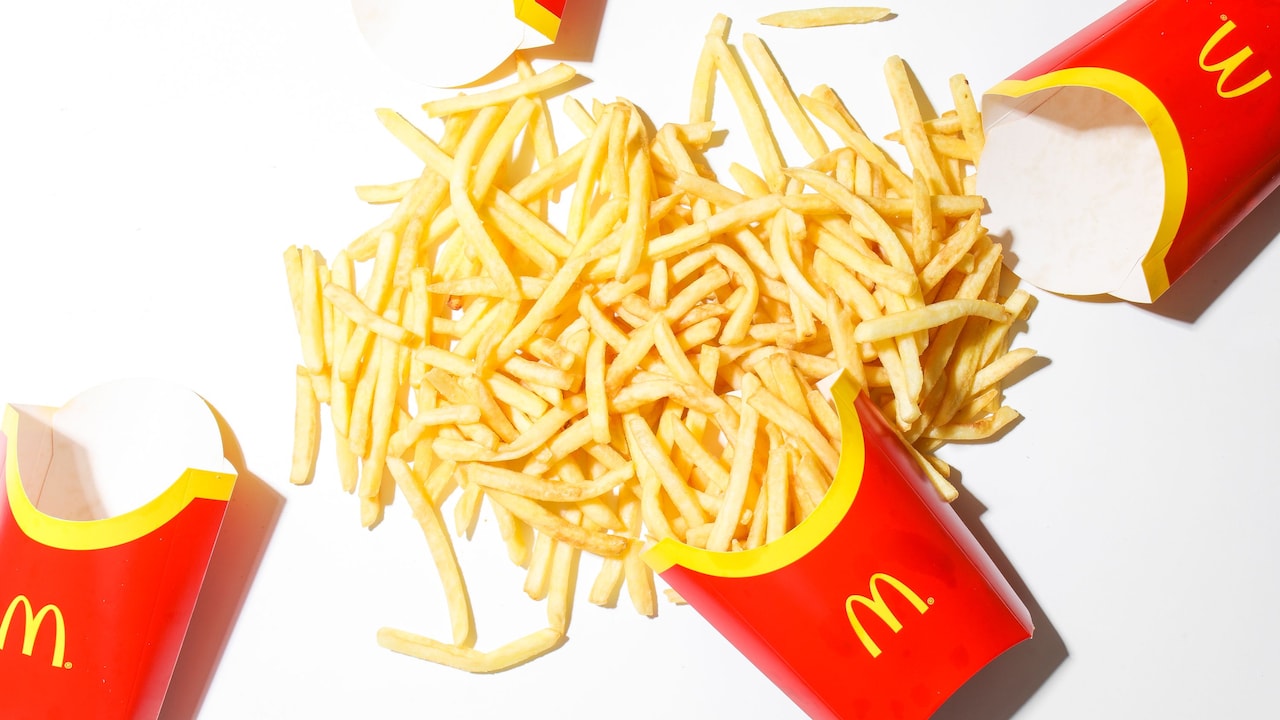
The Frictionless Customer Myth Meets Thermodynamics
Every few months, a personal injury lawyer secures a headline by filing a suit against a fast-food conglomerate because a customer suffered a standard, biological reaction to high-temperature starch. The latest headline—a New York woman suing McDonald's over mouth burns from "scalding" French fries—follows a tired, predictable blueprint. The plaintiff claims shock, the media frames the issue as a systemic failure of corporate quality control, and the public nods along, convinced that giant corporations are recklessly weaponizing potato oil.
It is a completely absurd narrative. And it fundamentally misunderstands the physics of commercial fry production, culinary operations, and consumer expectations.
You cannot demand piping hot, crispy, fresh food delivered in under ninety seconds while simultaneously suing when that food possesses thermal energy. We have engineered a culture of hyper-convenience where consumers demand contradictory outcomes: instant heat without temperature, crunch without residual moisture evaporation, and industrial speed without personal responsibility.
The outrage is fake. The physics are absolute.
The Physics of Crispiness vs. Burns
Let's look at what actually happens inside a commercial fry vat.
French fries are not cooked; they are subjected to a rapid moisture-displacement process. Standard corporate specifications dictate that potato strips are submerged in oil held between 335°F and 350°F. The goal is to flash-boil the water trapped within the outer cellular structure of the potato, creating a rigid, porous crust while steaming the interior starch into a soft, pillowy core.
+------------------+-----------------------+---------------------------------------+
| Component        | Target Temperature    | Physical Reality                      |
+------------------+-----------------------+---------------------------------------+
| Fry Cooking Oil  | 335°F – 350°F         | Necessary to crisp outer potato crust |
| Internal Vapor   | ~212°F (Steam)        | Trapped water turns to steam inside   |
| Human Oral Cavity| ~98.6°F (Baseline)    | Burns begin occurring above 120°F     |
+------------------+-----------------------+---------------------------------------+
When those fries are pulled from the fryer, drained, salted, and boxed, the outer crust drops in temperature rapidly. But the interior? The interior is a sealed pocket of trapped water vapor sitting at or near 212°F.
When you bite into a fresh fry immediately after receiving it, you rupture that outer crust, releasing localized, superheated steam directly against the tissue of your tongue and palate. Epithelial tissue begins to experience thermal damage at temperatures as low as 120°F if exposed long enough. At 160°F or higher, tissue injury occurs almost instantly.
The customer doesn't burn their mouth because McDonald's made a mistake. The customer burns their mouth because McDonald's executed the recipe perfectly.
To serve a French fry that is physically incapable of burning a human mouth upon immediate consumption, you would have to serve a fry with an internal temperature below 120°F. Do you know what a 115°F French fry tastes like? It is a limp, congealed, oil-soaked sponge of retrograded starch. It is unpalatable, unmarketable garbage.
You cannot have a hot, crisp product without thermal risk. The crispiness is the heat.
The Ghost of 1994: Why Liebeck v. McDonald’s Drive-Thru Still Confuses Everyone
Every time a hot-food lawsuit surfaces, critics invoke the famous 1994 Liebeck case—the infamous "hot coffee" lawsuit. But comparing a fry burn suit to Liebeck reveals a total failure to understand legal precedent and basic thermal dynamics.
In Liebeck, McDonald's was holding coffee at 180°F to 190°F in a drive-thru setting—a temperature significantly higher than industry competitors, creating third-degree burns within seconds through cotton sweatpants. The core of that case wasn't just that the coffee was hot; it was that the heat was egregiously out of line with reasonable serving standards, creating a defect in the product's safety profile without providing a tangible benefit to the consumer.
French fries are fundamentally different.
- Oil is not water: Water boils at 212°F; oil boils far higher. You cannot fry a potato in water. The heat applied to fries is not an arbitrary choice by corporate executives trying to extend shelf life; it is an unalterable chemical requirement of the Maillard reaction and starch gelatinization.
- Structural containment: Liquids spill and saturate clothing, holding heat against the skin. Solid food requires active, voluntary ingestion. You have to physically place it in your mouth, bite down, and compress the trapped heat against your own tissue.
- The expectation gap: Nobody orders fries with the expectation that they have been sitting under a heat lamp for twenty minutes. In fact, fast-food hacks routinely advise customers to order "fries with no salt" specifically to force the kitchen to drop a fresh batch.
When you demand food fresh off the line, you are explicitly demanding food at its peak thermal state. Suing when you receive exactly what you asked for is the ultimate logical breakdown of the modern consumer.
The Real Operational Choice: Settle or Redesign?
I have sat in boardrooms where risk management teams evaluate these exact operational dilemmas. The legal strategy for quick-service restaurants usually devolves into two equally unappealing paths:
- The Warning Sign Escalation: Slap cautionary labels on every box, bag, and receipt. "Caution: Contents may be hot." This is defensive legal theater. It does nothing to improve safety; it merely builds an evidentiary trail to defeat summary judgment motions.
- The Operational Slowdown: Force employees to hold food under warming lights for a mandatory three-minute thermal equilibration period before bagging.
Path number two is a death sentence for QSR metrics. Fast food relies on throughput. The moment you introduce a mandatory cooling buffer, drive-thru times skyrocket, drive-thru queues spill into street traffic, and customer satisfaction scores collapse because the fries arrive lukewarm and soggy.
There is a genuine downside to taking a hard line here. If a enterprise refuses to settle and fights every frivolous injury suit to a jury verdict, they risk localized PR nightmares. Jurors are consumers, and consumers routinely sympathize with an injured individual over a billion-dollar brand, regardless of the underlying thermodynamics.
Yet, capitulating to these suits creates a moral hazard that damages the entire industry. It incentivizes a culture of predatory litigation where basic physical realities—like steam being hot—are treated as corporate negligence.
Stop Blaming the Fryer for Your Bad Decisions
The issue isn't temperature control. The issue is a total refusal to accept personal agency in a world of instantaneous gratification.
Imagine a scenario where a diner orders a sizzling cast-iron ribeye at a steakhouse, grabs the 400-degree skillet with their bare hand the second it hits the table, and then sues the restaurant for failing to insulate the handle. We would rightly identify that as an obvious failure of basic human caution.
Yet, because fast food is cheap, standardized, and served through a window, we treat the interaction as if the laws of nature are suspended. We expect the corporate entity to act as a surrogate parent, insulating us from the fundamental properties of cooked matter.
Here is the brutal truth:
- If your fries are piping hot, the system worked.
- If your mouth gets burned, you acted faster than your sensory nervous system could evaluate the threat.
- If you want fries that cannot burn you, go eat them out of a vending machine at a bowling alley.
Fast food cannot engineer away the laws of physics to protect you from your own impatience. Wait ten seconds. Let the steam escape. Respect the heat, or accept the burn.