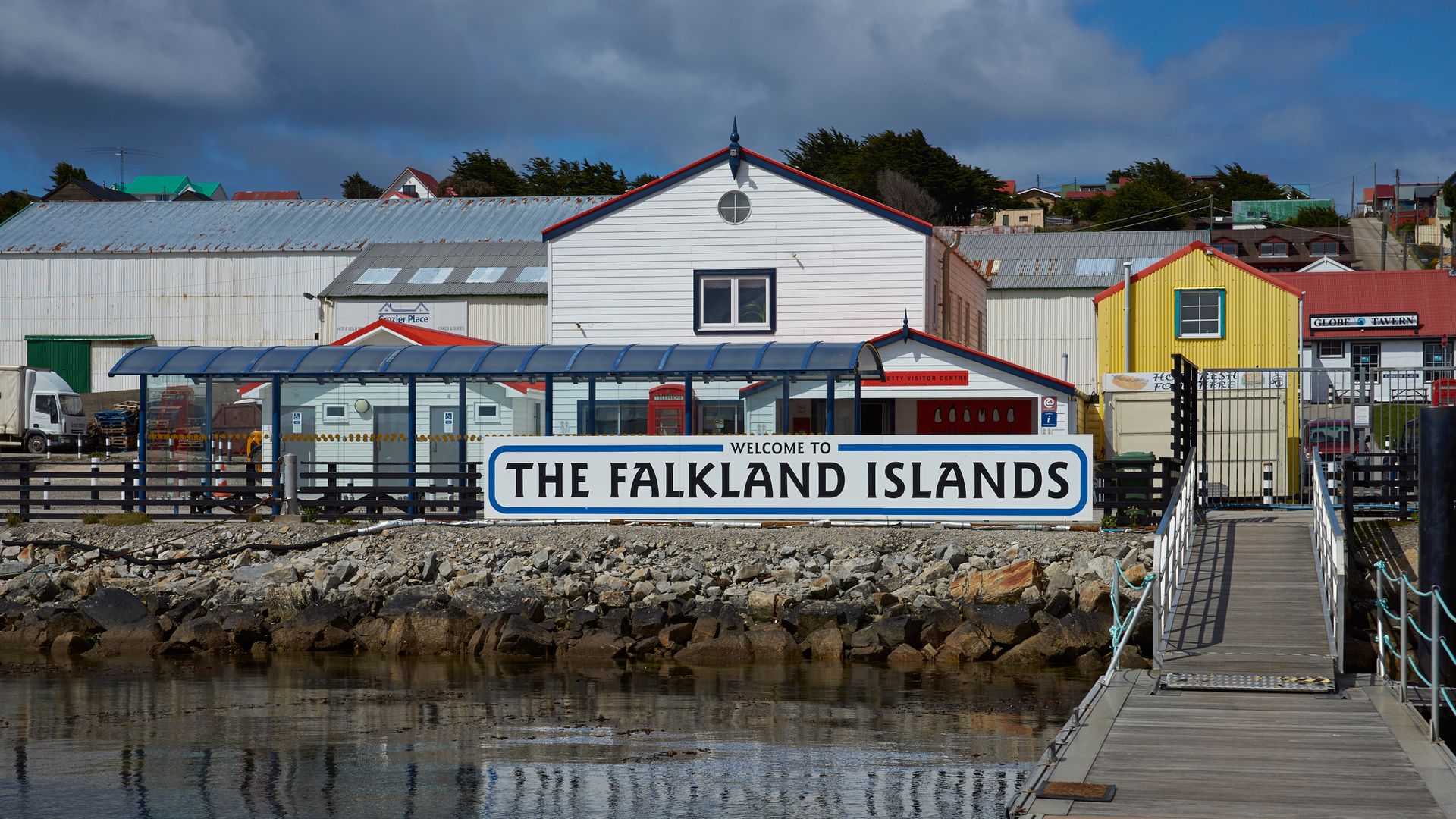
Operating a commercial retail enterprise in the Falkland Islands requires navigating a complex matrix of maritime supply chains, low population density, and high fixed overhead costs. When British frozen food specialist Iceland Foods announced plans to open a franchised standalone store in Stanley in December 2026, media coverage focused heavily on geopolitical posturing and the novelty of a domestic UK high street brand establishing a South Atlantic footprint. Observers missed the underlying operational mechanics that make this specific market entry model viable. Deploying a franchise structure via local operator Kelper Stores, a subsidiary of the Fortuna group, allows Iceland to bypass the capital intensity of direct asset ownership while capitalizing on an isolated consumer base characterized by high disposable incomes and limited retail choice.
Evaluating this market entry requires breaking down the core economic variables governing retail logistics in remote territories. Consumer markets with restricted geographic footprints face severe supply chain friction. Stanley houses the vast majority of the islands' population, creating a hyper-concentrated micro-market. Traditional retail models fail in these environments due to inventory holding costs and irregular shipping cadences. By anchoring the new retail point on Ross Road East through an established local partner, Iceland shifts the burden of inventory management, local regulatory compliance, and store-level labor operations onto a firm with pre-existing domestic infrastructure.
The logistical architecture of supplying a frozen food retail outlet in the Falklands dictates inventory turnover speed and product margin preservation. Ocean freight transit from the UK to Port Stanley introduces multi-week lead times, demanding precise demand forecasting to prevent stockouts of staple items and proprietary product lines such as Cathedral City, MyProtein, and TGI Fridays. Cold chain integrity across thousands of miles of transit requires rigid temperature-controlled containerization. Iceland mitigates these operational vulnerabilities by relying on the distribution capabilities already tested by the Fortuna group, insulating the parent brand from maritime volatility while securing a steady wholesale revenue stream through product exports.
Geopolitical positioning frequently overshadows the pure economic calculus of remote island retail, yet sovereignty context dictates consumer preference patterns in British overseas territories. Consumer demand in Stanley heavily favors UK-sourced goods due to cultural alignment and established trade pathways. While political friction surrounding the islands periodically surfaces in international headlines, commercial entities evaluate expansion through the lens of purchasing power parity and addressable market volume. The Falklands feature a high GDP per capita driven by fisheries, tourism, and agriculture, translating into robust consumer spending power that can absorb premium pricing necessary to offset long-distance freight penalties.
Franchising into isolated markets creates distinct risk distribution parameters between the brand owner and the local operator.
- The brand owner monetizes intellectual property, supply chain volume, and proprietary product formulations without incurring direct exposure to local real estate fluctuations or localized labor shortages.
- The local operating partner leverages a recognizable international brand name to capture market share from incumbent general merchants like the Falkland Islands Company, driving higher basket sizes through imported product exclusivity.
- The consumer base absorbs higher landed costs in exchange for product variety and brand familiarity, replacing generic alternatives with recognizable domestic high street labels.
This structural alignment explains why international retail expansions into micro-economies succeed when direct-investment models fail. Capital efficiency remains the primary driver of the Stanley venture. Rather than establishing corporate subsidiaries or managing foreign retail real estate, Iceland uses an asset-light export-franchise hybrid. This limits downside exposure while testing the viability of deeper South Atlantic distribution channels.
Scale constraints impose a natural ceiling on store-level revenue growth in Stanley. With a total island population hovering around three thousand five hundred residents, volume expansion is bounded by biological consumption limits rather than market acquisition tactics. Consequently, revenue optimization relies entirely on margin capture and product mix elevation. Introducing branded frozen convenience goods targets a consumer segment willing to pay a premium for imported variety, bypassing the commoditized price competition that dominates saturated domestic UK markets.
Retailers evaluating similar isolated territories must prioritize partner selection over localized market research. In environments where municipal infrastructure and supply chain conduits are tightly controlled by legacy conglomerates, attempting de novo market entry without local operational integration guarantees excessive friction. By slotting proprietary inventory into an established retail network, Iceland secures immediate shelf space and regulatory navigation without building logistics infrastructure from scratch.
Execute retail expansion into isolated micro-economies by securing exclusive supply agreements with entrenched local operators, capping capital expenditure through asset-light franchise structures, and utilizing long-tail export volume to offset the fixed cost penalties of multi-week cold chain transit.