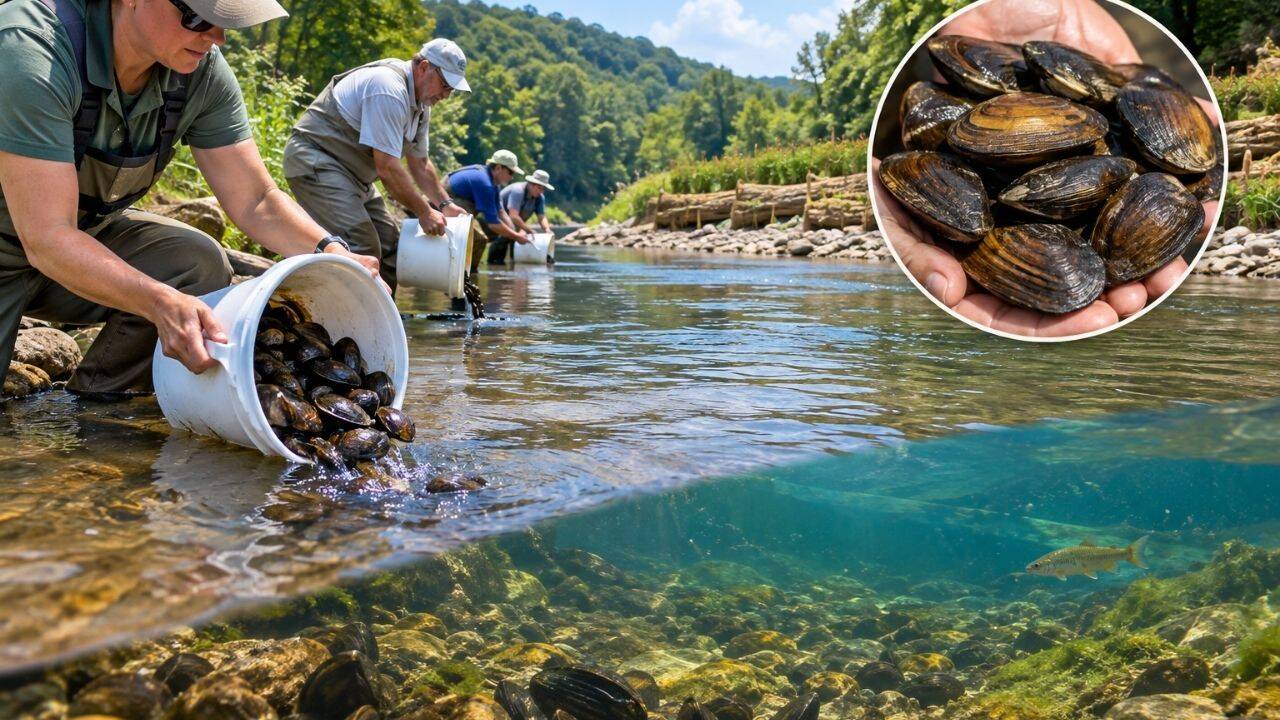
Freshwater biodiversity management operates under a persistent capital-allocation problem: capital expenditure on structural rehabilitation—such as streambank stabilization and barrier removal—yields diminishing ecological returns unless the biological vector for water filtration is actively restored. The recent reintroduction of 1,500 rare native freshwater mussels into the Paint Rock River in northeast Alabama by state and federal partners highlights a shift from passive habitat protection to active biotic engineering.
To evaluate this intervention, one must examine the multi-agency framework, the operational bottlenecks of watershed recovery, and the biological mechanics that convert localized mussel stocking into system-wide water quality improvements.
The Architecture of Watershed Degradation
The Paint Rock River basin represents one of the most biologically diverse river systems in North America, yet it has historically suffered from cumulative anthropogenic stress. Anthropogenic disruption in temperate river systems typically follows a predictable sequence:
- Riparian zone deforestation destabilizes streambanks, increasing sediment load.
- Fine particulate sediment fills interstitial spaces in the benthic substrate, suffocating benthic organisms and burying spawning grounds.
- Nutrient loading from agricultural runoff alters trophic dynamics, triggering algal blooms and depressing dissolved oxygen levels.
- Channel modifications and low-head dams fragment aquatic populations, preventing genetic exchange and isolating remnant colonies.
Traditional remediation often focuses exclusively on phase one and two metrics: engineering hard stabilization structures or planting riparian buffers. However, physical stability does not guarantee biological functionality. Without active biotic intervention, sediment-choked substrates can remain biologically dead zones for decades.
The Biotic Engine: Mussels as Ecosystem Services
Freshwater mussels function as natural biofilters, performing ecosystem services that mechanical water treatment cannot replicate at scale. A single adult freshwater mussel can filter significant volumes of water daily, consuming suspended particulate matter, phytoplankton, and bacteria.
The operational mechanics of this filtration yield three distinct ecological outputs:
- Nutrient sequestration and recycling: Mussels ingest suspended organic matter, retaining carbon, nitrogen, and phosphorus in their biomass while pseudofaeces are deposited to the benthic zone, providing a localized nutrient subsidy for benthic invertebrates.
- Water clarity enhancement: By removing suspended solids from the water column, mussels increase photic depth, enabling aquatic macrophytes to re-establish and stabilize the riverbed through root networks.
- Habitat creation: Empty mussel shells provide hard substrate and structural complexity in soft-bottom streams, creating microhabitats for insect larvae, darters, and other small aquatic organisms.
Because unionid mussels possess complex life cycles requiring specific fish hosts for their parasitic larvae (glochidia), their presence indicates a functioning, multi-trophic aquatic network. Reintroducing mussels is therefore not merely a species-addition exercise; it is an attempt to jumpstart the river's self-cleaning feedback loop.
Collaborative Mechanics Across Fractured Land Ownership
A primary constraint in American watershed management is land tenure fragmentation. More than 95 percent of land in Alabama is privately owned, meaning watershed recovery cannot be achieved through public land management alone.
The multi-decade rehabilitation of the Paint Rock River illustrates a coordinated public-private capital model involving the Alabama Department of Conservation and Natural Resources (ADCNR), the U.S. Fish and Wildlife Service, The Nature Conservancy, the Tennessee Valley Authority, local county governments, and private landowners.
The operational success of this coalition depends on aligning economic and environmental incentives:
- Technical and Financial Subsidies: Programs such as the U.S. Fish and Wildlife Service's Partners for Fish and Wildlife Program reduce the capital barrier for private landowners to execute streambank fencing, off-stream watering, and riparian plantings.
- Targeted Propagation: Rather than harvesting from declining wild populations, conservation agencies utilize specialized propagation facilities to breed rare and endangered species—such as the Cumberland Moccasinshell, Pale Lilliput, and Tennessee Bean—ensuring genetic diversity without depleting source populations.
- Cumulative Scale: Long-term tracking indicates that over 53,000 mussels across six species have been reintroduced into the Paint Rock River system since 2010. The recent addition of 1,500 specimens represents a tactical deployment aimed at bolstering density thresholds in the middle reaches of the river, where certain species have been absent for generations.
Strategic Deployment for Long-Term System Resilience
The viability of mussel reintroduction hinges on habitat carrying capacity and hydrological stability. If stocking occurs before upstream sediment sources are mitigated, the reintroduced cohorts experience high mortality rates due to smothering.
Future interventions must prioritize dynamic monitoring frameworks that track post-release survival rates against variable flow regimes and temperature anomalies driven by climate volatility. By treating native mussels as living infrastructure, resource managers can transition from perpetual remediation to self-sustaining biological equilibrium.


